IN Brief:
- KNDS has converted the former Alstom rail factory in Görlitz into a modern defence manufacturing site.
- The site will support the company’s planned production ramp-up and delivery of vehicle systems to Germany and partner nations.
- The conversion reflects Europe’s wider effort to reuse heavy industrial capacity for armoured vehicle production and sustainment.
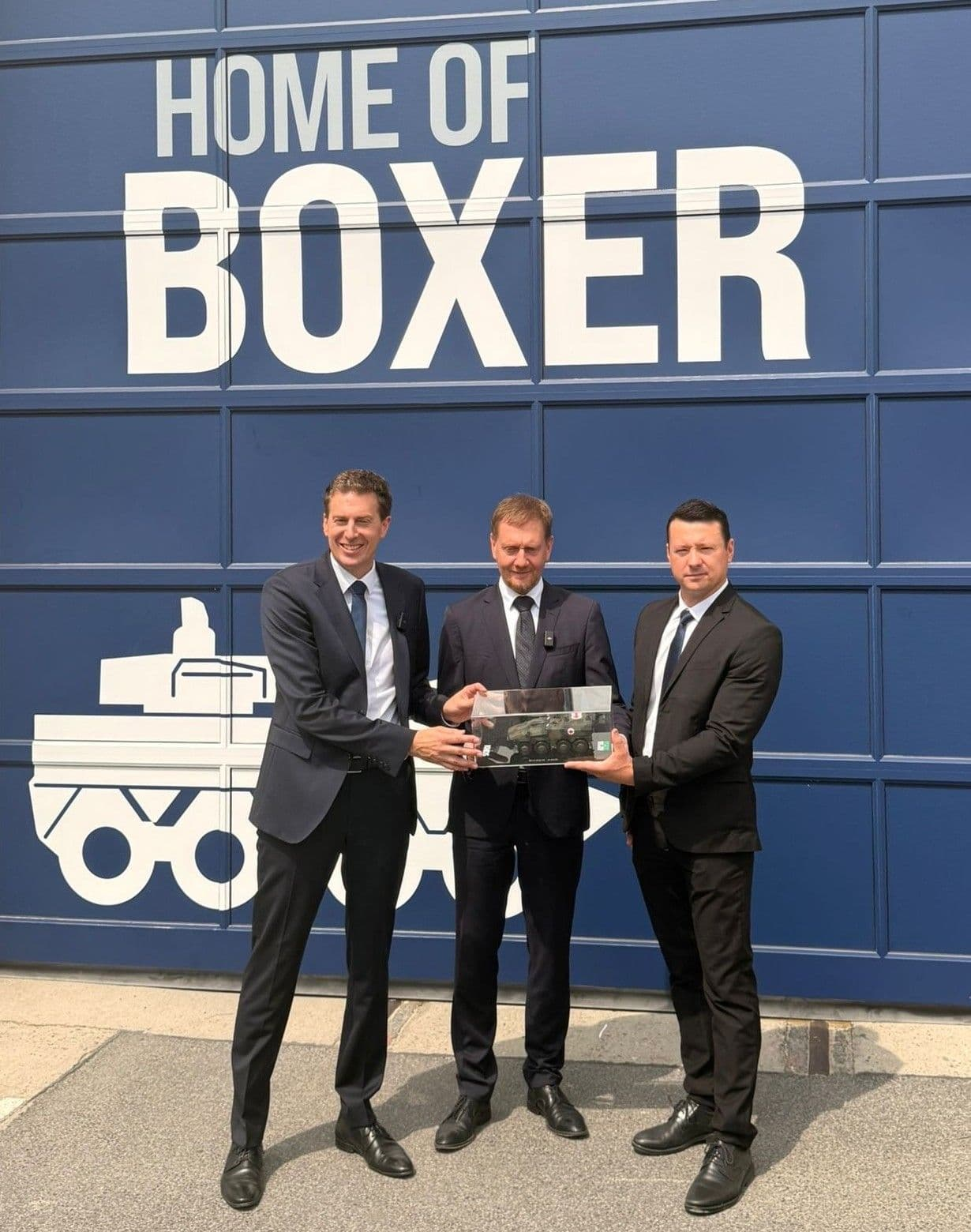
KNDS has transformed the former Alstom rail factory in Görlitz into a modern defence manufacturing site, giving the European land-systems group additional capacity for armoured vehicle production at a time when demand for platforms, components, and sustainment is rising sharply.
The site moved from acquisition agreement to operational industrial pillar in just over a year. KNDS signed the framework agreement to acquire the Görlitz facility from Alstom in February 2025, and the location has now become part of the company’s planned production ramp-up. The site will support faster and more comprehensive delivery of vehicle systems to the Bundeswehr and partner forces.
The conversion shows how Europe is trying to rebuild defence manufacturing capacity without waiting for entirely new factories. A rail plant already brings heavy engineering disciplines: large assemblies, welding, machining, production logistics, quality systems, skilled labour, and safety processes. Armoured vehicle manufacturing adds a different security and qualification burden, but the industrial foundations are closer than they would be in a greenfield site.
Capacity has become a strategic issue across land systems. Leopard 2 modernisation, Boxer production, Puma support, artillery requirements, and protected mobility programmes are competing for factory time, subassemblies, skilled workers, and qualified suppliers. The war in Ukraine has exposed the limits of European stockpiles and maintenance reserves, while NATO force planning has pushed governments back toward heavier formations after years of lower production tempo.
A converted plant cannot solve all of that, but it can shorten the route to output. Existing buildings, utilities, workforce availability, transport links, and regional supplier networks reduce the time needed to establish production. Defence-specific adaptation then begins: secure areas, controlled documentation, military quality assurance, export-compliance processes, classified systems handling, ballistic protection work, and traceable supply chains.
The same industrial logic is visible in Finland’s role in MLRS and HIMARS fire-control sustainment, where European support capacity is being pulled closer to the forces that rely on it. Görlitz belongs to that broader pattern. Production and sustainment are no longer being treated as back-office industrial functions. They are part of readiness.
Workforce conversion is central to the project. Rail manufacturing and armoured vehicle production are not identical, but both depend on disciplined assembly, inspection, documentation, systems integration, and mechanical skill. Workers with experience in heavy transport manufacturing can transfer valuable knowledge into defence if the company invests in retraining, clearance processes, and military production standards. Europe’s defence industrial base is short not only of factories, but of people who know how to build complex hardware under controlled conditions.
The site may support vehicle families such as Leopard 2, Boxer, Puma, and tactical logistics vehicles through components, assemblies, and production support. That breadth is important because land-system ramp-up is rarely about one vehicle line in isolation. A turret programme may depend on electronics suppliers. A hull programme may depend on armour materials and welding capacity. A wheeled vehicle line may need driveline, suspension, protection, and mission-kit suppliers to move at the same tempo.
Repurposing civilian heavy industry also carries political value. Defence expansion is easier to sustain when it preserves industrial jobs, protects regional skills, and gives communities a role in national and European security. Görlitz sits in Saxony, a region with a strong industrial and research base, and KNDS is using that foundation to support longer-term growth.
Europe’s challenge is coordination. Governments want faster output, but production lines need predictable orders rather than short bursts of urgency. Companies can invest in plants and people, but suppliers need confidence that demand will last beyond the current budget cycle. Armoured vehicle production cannot be switched on and off without cost. Tooling, welding qualifications, armour supply, and integration teams need stability.
Görlitz is therefore more than a factory conversion. It shows how Europe’s defence manufacturing rebound will depend on reusing existing industrial capacity, retraining skilled workers, and reconnecting civilian engineering assets with military production. If Europe wants more tanks, armoured vehicles, and support capacity, the answer will be found as much in places like Görlitz as in the boardrooms of prime contractors.