IN Brief:
- Babcock’s FMSP extension keeps Royal Navy surface-ship engineering support in place for another two years.
- The work covers frigates, amphibious ships, minehunters, and landing craft, centred on Devonport and Rosyth.
- The contract sustains skilled dockyard workload at a point when naval readiness depends heavily on maintenance throughput.
Babcock has secured a two-year extension to its Future Maritime Support Programme work for the Royal Navy’s surface fleet, keeping a core layer of engineering delivery and management in place across some of the service’s most heavily used platforms.
The extension maintains the full scope of the existing arrangement, covering Type 23 frigates, amphibious warfare ships, Sandown-class minehunters, and landing craft. Delivery remains centred on Devonport and Rosyth, where Babcock’s teams handle the engineering, maintenance, and support tasks that underpin fleet availability.
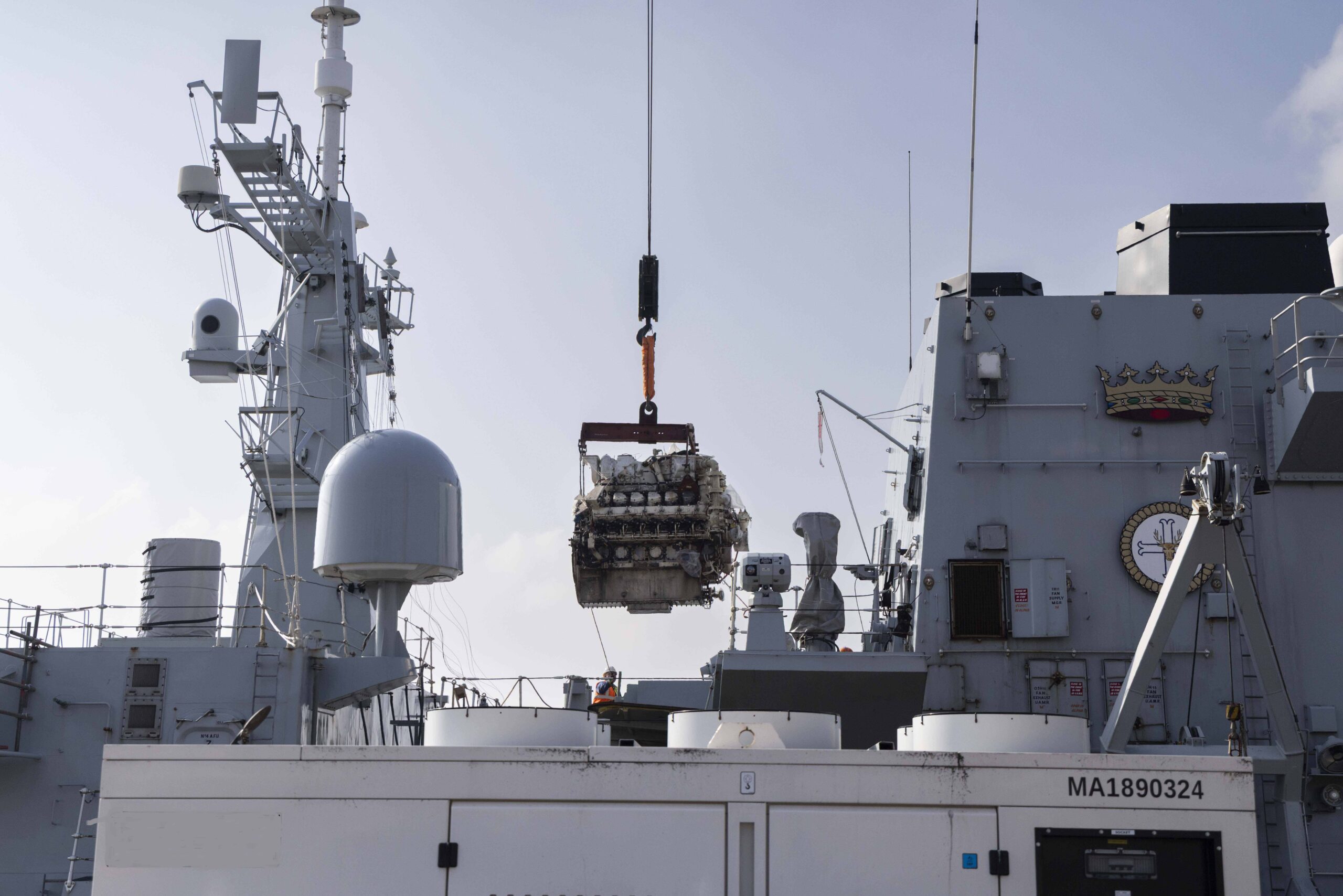
For the Royal Navy, surface-fleet readiness is tied to dockside execution as much as procurement. Scheduled maintenance, engineering assurance, upgrades, defect rectification, spares handling, and platform management all sit inside the same industrial ecosystem. The extension supports continuity in the labour, infrastructure, and supplier networks that keep ships moving through maintenance cycles.
Sustainment remains a live industrial workload
Surface-ship support on this scale functions as a rolling production environment. Ships arrive with planned work packages, emergent defects, and equipment changes that have to be absorbed without breaking availability cycles. That creates continuous demand for welders, marine engineers, planners, systems specialists, logistics teams, and subcontractors, alongside the yard infrastructure needed to move ships through work periods.
Devonport and Rosyth remain central because naval support is not easily relocated. The workforce needs familiarity with platform class, safety procedures, documentation, and the realities of legacy systems that rarely behave exactly as drawings suggest. In practice, the extension keeps specialist ship-support capacity active at a time when rebuilding it from scratch would be slower and more expensive.
Fleet transition keeps pressure on the yards
The contract lands while the Royal Navy continues to manage platform transition across parts of the surface fleet. Older classes still demand intensive maintenance even as replacement programmes advance, creating overlap between sustainment demand and future-force planning.
That overlap can be awkward for budgets, but it keeps engineering teams active, protects accumulated know-how, and gives primes and suppliers steadier workload than a stop-start contracting cycle. For UK naval manufacturing and support businesses, readiness continues to run through the yards.