IN Brief:
- BAE Systems opened a fully automated large-calibre explosive filling facility at Glascoed on 20 November.
- The melt-cast line uses robotics and automated guided vehicles within a broader £180m investment.
- The company targets a sixteen-fold increase in 155mm shell production capacity once trials and scaling are complete.
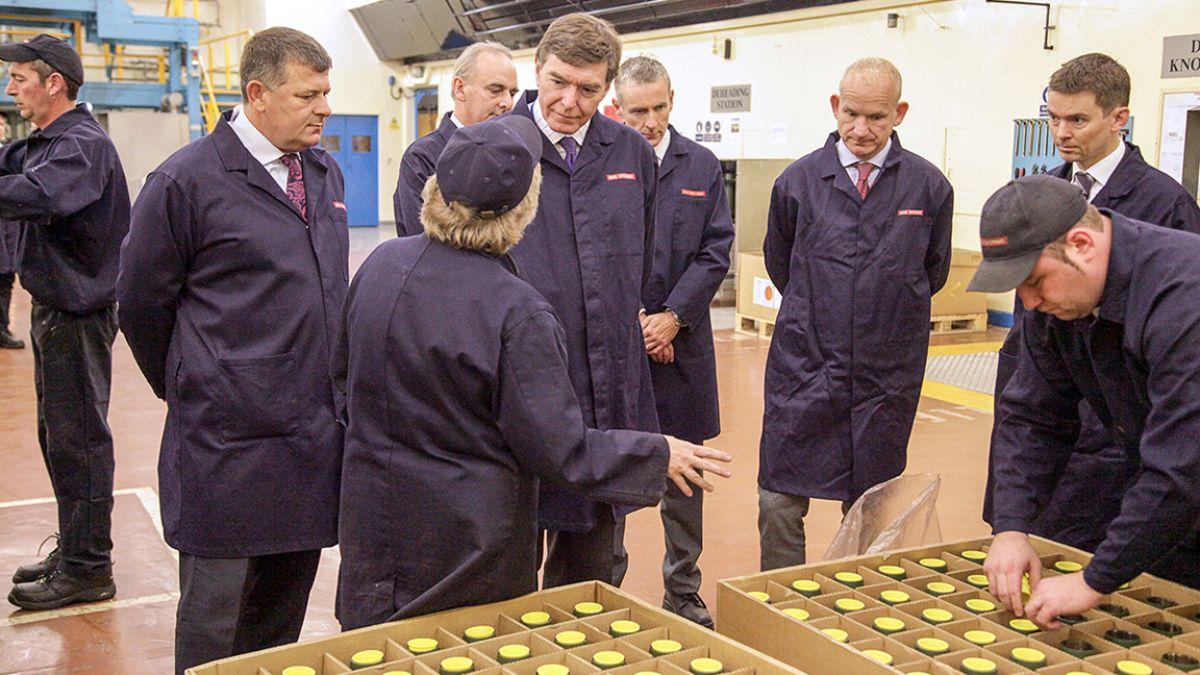
BAE Systems opened a fully automated explosive-filling facility at Glascoed in South Wales on 20 November, adding a new melt-cast line at one of the UK’s established munitions sites. The company describes it as Britain’s first fully automated large-calibre ammunition factory. The facility forms part of a £180 million investment intended to enable a sixteen-fold increase in BAE’s 155mm shell production capacity. That is a future capacity objective: production at scale will follow an initial period of live trials.
Robotic equipment and autonomous guided vehicles will handle material movement and repeatable tasks within the new operation, according to BAE. Automated handling reduces the need for people to work directly at every stage of the production sequence and is intended to allow longer operating hours. The company describes the resulting environment as more precise, safe, and secure, but has not published throughput figures, inspection acceptance rates, or a date when the full capacity target will be reached. Those measures will be needed to distinguish installed capability from sustained output.
Melt-casting is a specialised stage within the manufacture of certain explosive-filled rounds. An explosive composition is processed into a castable condition, introduced into the shell body, and allowed to solidify before the round advances to subsequent manufacturing and assembly stages. The critical industrial requirement is repeatability: each unit must meet the prescribed material, fill, and inspection requirements. Public details of Glascoed’s new plant do not disclose operating temperatures, formulations, process settings, or equipment sequences, and those particulars are not necessary to assess the manufacturing announcement.
Replacing manual handling with automated movement can change how a production line is organised. Guided vehicles carry items between controlled work areas, while robotic equipment can perform repetitive operations within defined tolerances. In an explosives facility, physical segregation, interlocks, monitoring, maintenance procedures, and emergency arrangements remain central to the safety case regardless of the degree of automation. Machinery does not eliminate the need for trained people; it changes where operators, engineers, and safety specialists are positioned within the process and what interventions they are required to make.
Before the new line begins production at scale, BAE plans an initial period of live trials. These allow an integrated process to be tested against engineering, operating, and product acceptance requirements rather than measuring capacity solely from the design rating of individual machines. A robotic installation may be capable of extended operating hours, but its sustained output also depends on material supply, maintenance intervals, equipment uptime, and the rate at which finished items pass inspection. The company has not released the trials timetable or the expected initial production volume.
The Glascoed complex has operated since the 1940s and already undertakes specialised munitions and energetic-materials work. The new line is therefore being introduced within an established regulated explosives manufacturing environment rather than on a site without previous production. The new investment still requires its own commissioning, validation, and integration with upstream supplies and downstream assembly. An expansion at one production stage cannot independently guarantee corresponding increases throughout the manufacturing chain.
A 155mm artillery round depends on more than an explosive fill. Shell bodies, energetic constituents, propelling charges, fuzes, packaging, quality assurance, and acceptance testing all form part of an integrated industrial supply system. Increasing fill capacity can remove one constraint while exposing another if components or specialist materials are not available at the necessary rate. A factory’s theoretical output accordingly differs from the quantities ultimately accepted by a customer. BAE has not disclosed a revised delivery rate that would establish the latter figure.
The Glascoed expansion runs alongside a separate Ministry of Defence grant competition for UK energetic materials manufacturing. That government scheme has a £90 million envelope, with individual project awards capped at £45 million and at half of eligible capital costs. Applications opened in November, but no recipient factories have yet been confirmed under the scheme. Its public funding should not be added to BAE’s £180 million investment or treated as financing specifically awarded to the Glascoed line.
The increased use of robotic systems will put greater demands on controls engineering, maintenance planning, process monitoring, and specialist fault diagnosis. An automated line must maintain inspection and safety procedures through any extended shifts, while spare parts availability and recovery from equipment faults shape its effective operating hours. BAE has not provided staffing numbers or performance data for the new installation. The automation investment therefore defines the intended production method, while trials and subsequent operating records will establish how consistently it performs.
Glascoed’s next confirmed programme step is the period of live trials preceding scaled production. The sixteen-fold target is for 155mm shell production capacity and should not be converted into a present delivery total or an assumed annual number of finished rounds. Production records, acceptance rates, and customer delivery data will determine whether the new line achieves its design objective without upstream materials or downstream assembly becoming constraints.