IN Brief:
- Dstl and 33 Engineer Regiment have trialled AI-enabled drones to detect mines and explosive ordnance across varied terrain.
- The system combines small uncrewed aircraft, sensor payloads, and retrainable AI models to identify new threat types faster.
- For industry, the challenge now shifts from a successful trial to ruggedised sensing, software assurance, and scalable deployable kits.
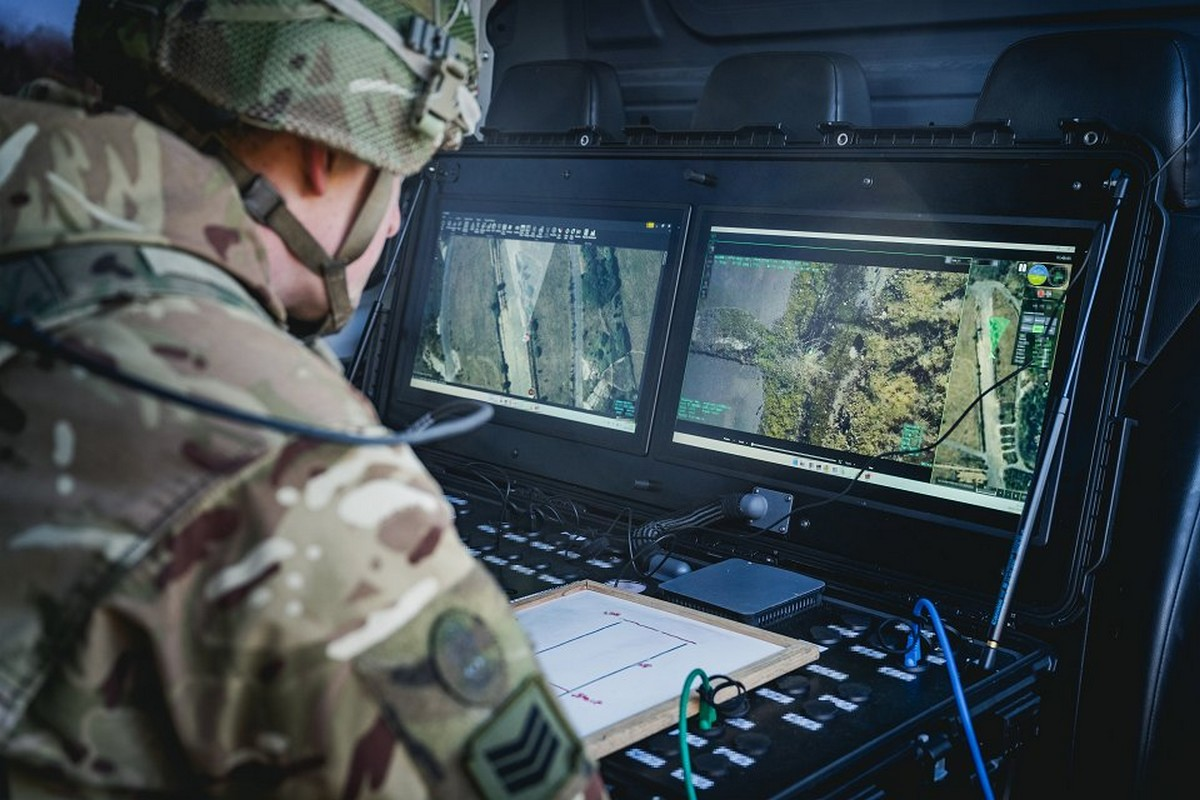
The British Army has moved another autonomy project closer to field relevance after trials in Essex showed AI-enabled drones can help detect landmines and explosive ordnance across varied terrain. The work, led by the Defence Science and Technology Laboratory with 33 Engineer Regiment, used small uncrewed aerial systems carrying sensors that fed data back to operators, who then used AI tools to locate and classify buried hazards.
The immediate attraction is obvious. Explosive ordnance disposal and route-clearance teams still work against time, fatigue, and exposure, particularly when threat patterns change quickly. A drone-based sensing layer does not remove the need for engineers and disposal specialists, but it can push the first search further forward and reduce the amount of ground that must be cleared by slower, more dangerous methods.
Equally important is the Army’s emphasis on retraining. A system trained only on one mine family or one soil condition will not last long in a modern theatre. The claim that the models were retrained to recognise new threat types and different environments points to a more useful military proposition — one in which software updates become part of the search capability rather than an afterthought.
Production and integration pressure
For the supply chain, the hard part starts after the demonstration. A credible deployable system needs more than an airframe and an algorithm. It needs stable multi-sensor payloads, edge processing that can run under field conditions, secure software pipelines, usable operator interfaces, and a support model that allows models to be refreshed without introducing new vulnerabilities.
That makes this as much an industrial packaging problem as a science project. Defence primes and specialist autonomy suppliers alike will be looking at how to combine commercial drone hardware with military-grade communications, calibration standards, and assurance processes that stand up to Army procurement.
From trial asset to deployable capability
If the UK wants this to become more than an experiment, it will have to buy in volume and sustain in volume. Search systems are consumed by use, weather, training demand, and software obsolescence. The business case therefore runs well beyond a single platform order and into data management, maintenance, battery support, payload replacement, and recurring software updates.
That is where the programme becomes interesting for defence manufacturing. A retrainable search drone may look light on the flight line, but behind it sits a heavier requirement: repeatable production, trusted model governance, and a support chain capable of keeping pace with a threat that keeps changing.