IN Brief:
- The Netherlands has extended the deployment of air-defence frigate HNLMS Evertsen in support of the Charles de Gaulle carrier group and Cyprus.
- The ship’s mission rests on high-end radar, missile, and close-in defence systems designed for layered air and missile protection.
- For naval industry, the story points to sensor availability, missile inventory depth, and long-cycle sustainment of specialised escorts.
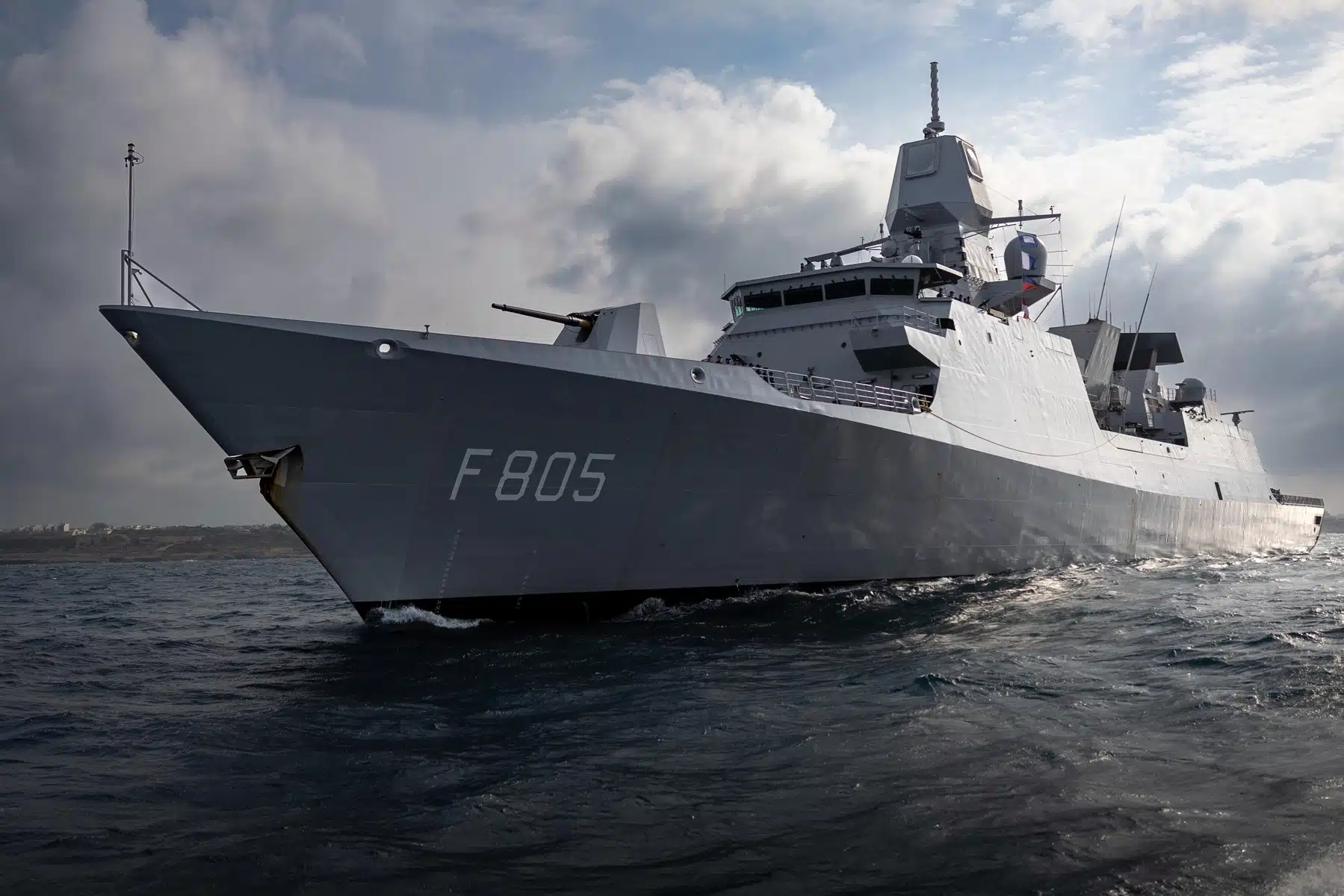
The Netherlands has extended the deployment of HNLMS Evertsen in the eastern Mediterranean, keeping the air-defence and command frigate in support of the French carrier group centred on Charles de Gaulle while also contributing to the defence of Cyprus and allied territory. The decision preserves one of Europe’s more capable naval air-defence platforms in a theatre where drones, cruise missiles, and compressed warning times have altered the value of escort ships.
Evertsen is not just another hull in the screen. The ship’s design centres on area air-defence and command functions, and that makes its continued presence significant. A frigate built around long-range detection, fire-control quality, and layered missile defence offers something increasingly scarce in European fleets: mobile protection that can move with a task group but still contribute to wider allied defence.
The extension also follows recent evidence of live air-defence activity and training in theatre, reinforcing that such deployments are now judged on readiness rather than symbolism. A forward escort only matters if its sensors are trusted, its weapons are stocked, and its crew can sustain the detection-to-engagement chain without interruption.
The industrial weight of a specialist escort
The De Zeven Provinciën-class was built for precisely this kind of mission, but specialist ships bring specialist sustainment burdens. SMART-L and APAR radar performance, vertical-launch availability, missile integration, and close-in weapon support all sit on maintenance routines that are neither cheap nor easily improvised.
A deployment extension therefore feeds back into the industrial base in practical ways. It puts pressure on spare parts, radar support, software maintenance, and missile replenishment. It also reinforces the case for keeping highly capable escorts fully funded through mid-life support, rather than treating them as legacy assets that can coast on earlier investment.
Missile depth and European air-defence demand
There is also a wider European signal here. Naval air defence is no longer a niche requirement confined to carrier operations. It is part of a broader demand curve for sensors, interceptors, and battle-management systems able to deal with low-cost drones alongside faster and more complex threats.
That shifts attention from platform count to usable combat mass. One frigate on station is valuable, but only if the industrial system behind it can sustain radar availability, missile stocks, and integration updates over repeated rotations. Evertsen’s extension is therefore a deployment decision with a distinctly manufacturing-shaped shadow.