IN Brief:
- France is moving toward a decision on replacing its remaining LRU rocket-artillery capability.
- Updated military planning also starts studies in 2026 for a 2,500 km-class conventional ballistic missile.
- The combined effort raises the industrial stakes across launchers, rockets, guidance, propulsion, and sovereign deep-strike supply chains.
France is drawing the lines of a broader long-range fires reset, pairing a near-term decision on rocket artillery with a more ambitious move into conventional ballistic strike.
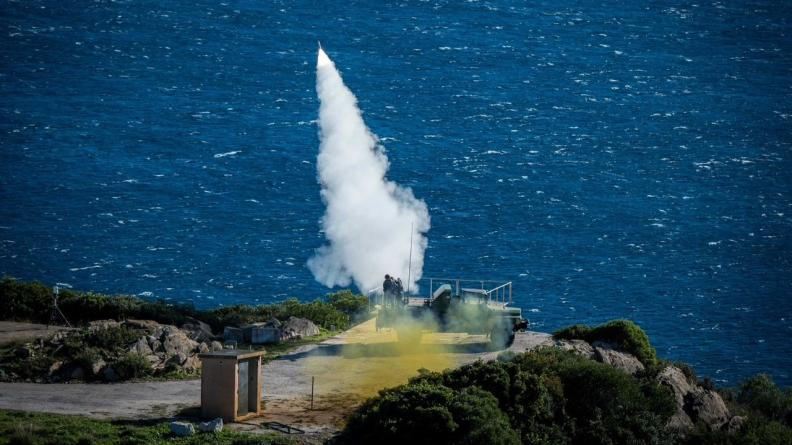
The immediate issue is the replacement of the Army’s remaining Lance-Roquettes Unitaires fleet. France has only a small number of launchers left, and the question is no longer whether they need replacing but how far Paris wants to lean into off-the-shelf speed versus sovereign industrial control. At the same time, the updated military programming law opens studies from 2026 for a conventional ground-to-ground ballistic missile in the 2,500 km class, with a first capability targeted for the middle of the next decade.
That combination takes the story beyond a standard launcher contest. The rocket-artillery decision addresses an urgent operational gap in deep fires. The ballistic-missile line points to a wider effort to expand reach, build national depth in critical technologies, and strengthen control over the supply chain behind long-range strike.
The launcher decision extends far beyond the vehicle
Rocket artillery is never just about the launcher. The harder questions sit behind it: which rockets, which guidance chains, which reload architecture, which warhead options, and how much of that can be built, qualified, and replenished domestically or through trusted European production.
France’s choice will therefore shape more than Army capability. It will influence which industrial teams gain a foothold in long-range fires, how quickly sovereign or co-produced munitions can be fielded, and whether future stockpiles depend on external supply under pressure. In a market where artillery rockets are consumed at industrial rates, launcher commonality without munitions depth offers limited reassurance.
A ballistic programme shifts the supply-chain map
The conventional ballistic-missile element pushes the industrial task into a different bracket. Range, re-entry, guidance, propulsion, materials, thermal management, and test infrastructure all place demands far beyond standard field-artillery production. Even early studies begin to shape supplier ecosystems, because propulsion houses, electronics specialists, missile-integration teams, and systems laboratories all need to align well before any production line is established.
For Europe’s defence-industrial base, France’s move signals a state prepared to spend on deep-strike sovereignty at two levels at once: a nearer-term rocket-artillery replacement and a longer-term missile programme with broader strategic reach. Neither comes cheaply. Both create sustained industrial demand.