IN Brief:
- France’s April military planning update has landed amid growing official scrutiny of Eurodrone.
- Parliamentary material has highlighted delay, industrial complexity, maintenance burden, and infrastructure demands.
- The pressure point is now whether the platform still fits rapidly changing drone requirements.
Pressure is increasing on the Eurodrone programme in France as the country’s updated military planning debate collides with long-running concerns over timetable, industrial structure, and operational relevance. Paris has not formally walked away from the programme, but scrutiny has tightened as requirements shift and the wider drone market moves faster.
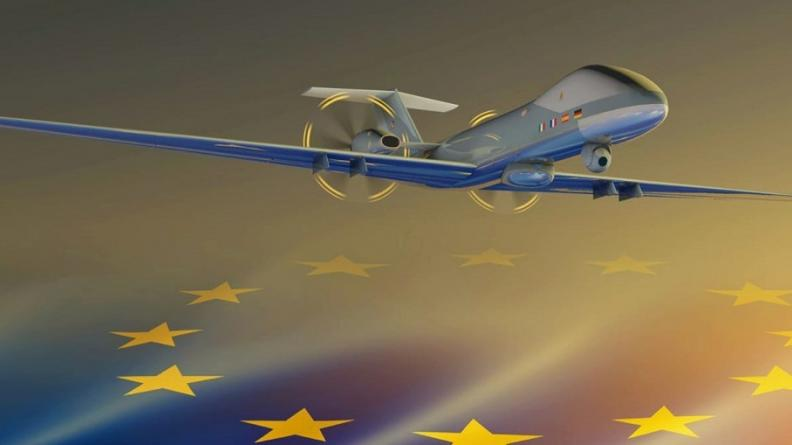
Eurodrone was designed to anchor a sovereign European medium-altitude long-endurance capability with industrial workshare across France, Germany, Italy, and Spain. It is now being judged against a harder set of questions: whether it can arrive soon enough, whether its infrastructure and support demands still make sense, and whether a large collaborative system fits a battlespace that increasingly rewards speed, adaptability, and lower-cost uncrewed mass.
French official and parliamentary scrutiny has focused on those tensions with unusual clarity. Delay remains a central issue, but it now sits alongside questions over maintenance burden, platform scale, and the accumulated complexity that comes with multinational coordination across multiple users and industrial partners.
Industrial complexity becomes programme risk
Eurodrone’s difficulties are tied closely to the structure that was meant to support it. Collaborative programmes spread cost and preserve national workshare, but they also introduce more validation paths, more requirement compromises, and more points where political ownership slows technical decision-making. That can turn industrial coordination into a source of schedule risk in its own right.
For suppliers, that has practical consequences. Long development timelines complicate investment planning, tooling decisions, and workforce continuity, especially when production ramps remain distant and the market around the programme changes more quickly than the programme itself.
The drone market is moving on
The industrial problem cannot be separated from the operational one. Drone procurement is now being shaped not only by endurance, payload, and regulated-airspace access, but also by deployability, survivability, cost, and the ability to adapt rapidly to changing mission requirements. That puts slower, heavier programmes under more pressure than they would have faced even a few years ago.
Eurodrone still offers value where sovereign control, NATO interoperability, and certified access matter. Even so, the programme is now being measured by industrial tempo as much as by performance. In a market moving at far shorter cycles, delay itself has become part of the capability debate.