IN Brief:
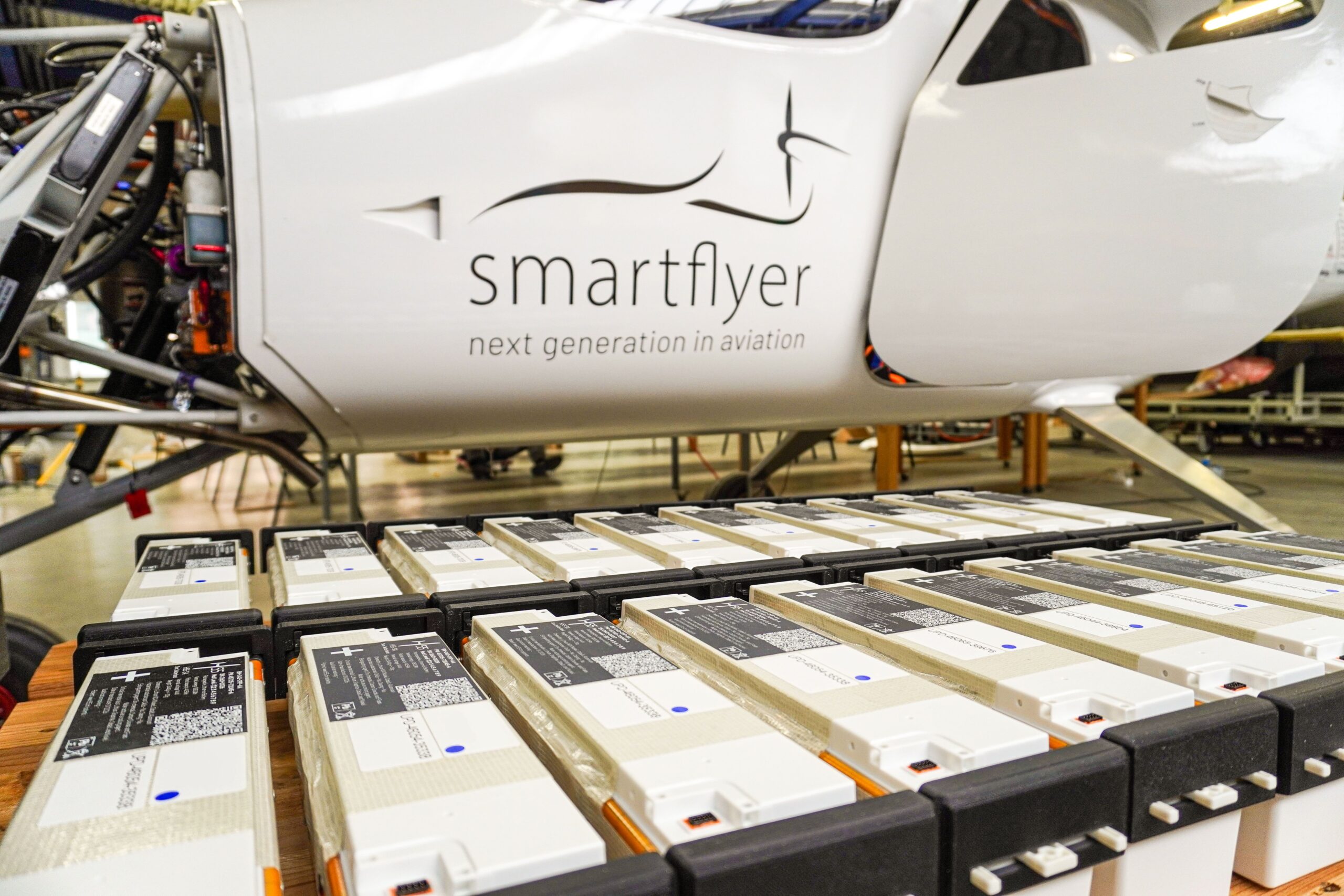
- H55 has delivered the first Adagio battery modules for Smartflyer’s SFX1 proof-of-concept aircraft.
- The programme now shifts into system integration ahead of ground testing this summer and a targeted first flight in autumn.
- The bigger aerospace-manufacturing signal is the move towards certifiable battery modules as repeatable production hardware rather than experimental subsystems.
H55 has delivered the first batch of Adagio battery modules to Smartflyer for integration into the SFX1 aircraft, taking the Swiss programme into a more demanding phase of system-level work.
The immediate step is practical. The modules are moving out of component qualification and into the aircraft, where they will be tied into propulsion architecture, energy-management logic, and the rest of the systems needed before ground testing can begin. Smartflyer is targeting those tests for the summer, with a first flight planned for autumn.
That schedule matters, but the deeper manufacturing significance sits inside the battery hardware itself. H55 says the Adagio system has completed the certification tests required by regulators, which is the dividing line many electrified aviation concepts still struggle to cross. Aerospace programmes can absorb prototypes, but they become much harder to industrialise when batteries must also be certifiable, traceable, repeatable, and supportable in service.
Battery modules are becoming production hardware
That raises the manufacturing bar sharply. Aviation battery suppliers are not simply packaging cells. They are running qualification campaigns, cell screening, thermal-management design, redundancy engineering, fault containment, and documentation chains that can survive regulatory scrutiny and support serial delivery.
H55 has been pushing that position for some time, and its earlier partnership with Smartflyer set the ground for this handover. The result is that the battery is no longer a placeholder inside the SFX1. It has become installed programme hardware with a defined integration path.
Modular aircraft design increases the integration burden
Smartflyer’s aircraft concept adds another industrial angle. The SFX1 family uses a modular nose architecture intended to switch between different energy setups, including battery and hybrid configurations. That places a premium on interface discipline. Mechanical fit, electrical architecture, cooling, balance, safety logic, and maintenance access all have to work cleanly across configurations.
For aerospace manufacturers watching electrified flight, that is the useful lesson here. Certification-grade batteries and modular aircraft architecture are converging into a more mature production conversation. The closer those pieces move to repeatable integration, the less electric aviation looks like an experimental branch line and the more it starts to resemble mainstream aerospace manufacturing.