IN Brief:
- HMS Active has completed float-off at Rosyth as the second ship in the Type 31 class.
- The milestone shifts the vessel from major structural build into outfit, integration, and commissioning activity.
- The programme remains a major UK shipbuilding workload, supporting jobs at Rosyth and across the wider supply chain.
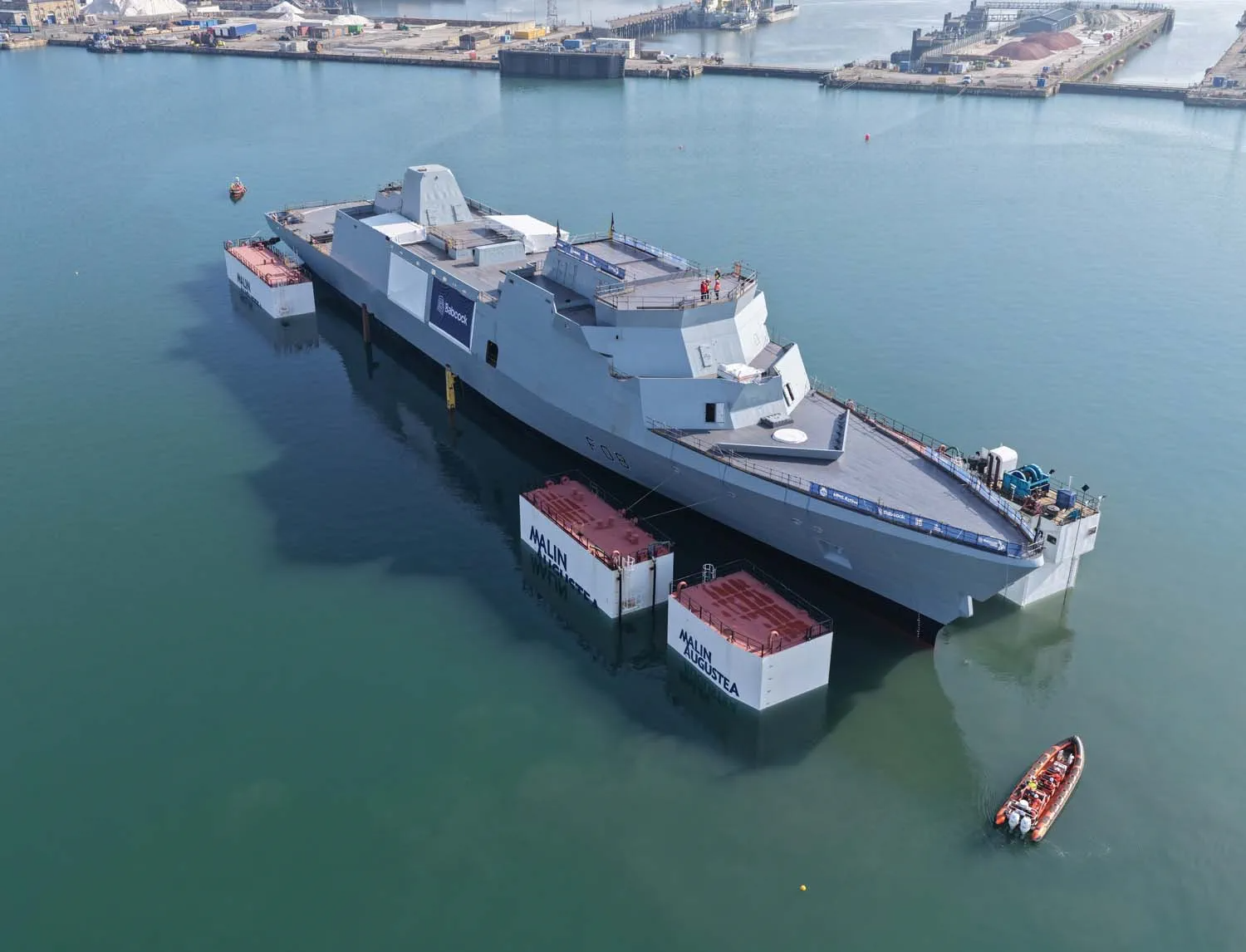
HMS Active has completed float-off at Babcock’s Rosyth yard, marking the latest manufacturing milestone for the Royal Navy’s Type 31 frigate programme. The ship, which emerged from the build hall earlier in the spring, was manoeuvred on to a semi-submersible barge and brought into the water in Rosyth’s basin, allowing the programme to move cleanly into its next phase.
For the yard, the significance is practical rather than ceremonial. Float-off closes out the heaviest block and structural work and opens the door to a different kind of production effort — one centred on outfit, systems completion, cable routing, equipment installation, harbour trials, and the long process of turning a largely assembled hull into an operational warship.
The Type 31 line has become one of the clearest markers of the UK’s attempt to rebuild steady, serial naval construction rhythm. HMS Venturer has already given Rosyth a first-of-class learning cycle, and HMS Active now benefits from that earlier work, even as the yard continues to push later ships through the production flow.
Production and yard implications
Float-off is important because it demonstrates that Rosyth’s build strategy is now working as an industrial system rather than as a one-off event. The use of a semi-submersible barge and basin launch method reduces complexity at a sensitive transition point and helps the yard manage schedule, risk, and labour more efficiently than a more exposed launch evolution.
The wider programme continues to support a substantial workload in Scotland and across the UK. That extends beyond steel fabrication into piping, electrical systems, combat-system interfaces, accommodation fit-out, testing, logistics support, and specialist marine equipment. In other words, the value creation shifts decisively from hull build into integration-heavy work, where schedule discipline is often tested far more sharply.
Fit-out and integration pressures
The hardest industrial work on a modern frigate usually comes after the hull touches water. Fit-out compresses multiple trades into the same spaces, while combat systems, sensors, mechanical systems, and platform management functions all need to be installed, connected, tested, and signed off in sequence.
That is where lessons from HMS Venturer should begin to pay back. If Rosyth can carry those learning effects through Active and the later ships, the Type 31 programme becomes more than a ship order — it becomes evidence that UK naval production can stabilise around repeatable process, not just isolated peaks of activity.