IN Brief:
- Anduril is exploring Nissan’s Oppama plant as a potential site for Japanese military drone production.
- The factory is due to close in 2028 and includes production, research, testing, and port facilities across a large coastal site.
- A deal would test whether automotive production skills can be converted into scalable autonomous weapons manufacturing.
Anduril is exploring Nissan’s Oppama assembly plant near Tokyo as a potential production site for military drones, opening the possibility that one of Japan’s best-known automotive factories could be converted into a defence manufacturing hub.
The Oppama plant opened in 1961 and has produced around 18 million vehicles, including the Nissan Leaf. Nissan plans to close the site in 2028 as part of a wider restructuring programme, with workers offered roles elsewhere in Japan. Spread across a large coastal footprint, the site includes factory, research, testing, and port facilities, while its location near Yokosuka places it close to major Japanese and US naval infrastructure.
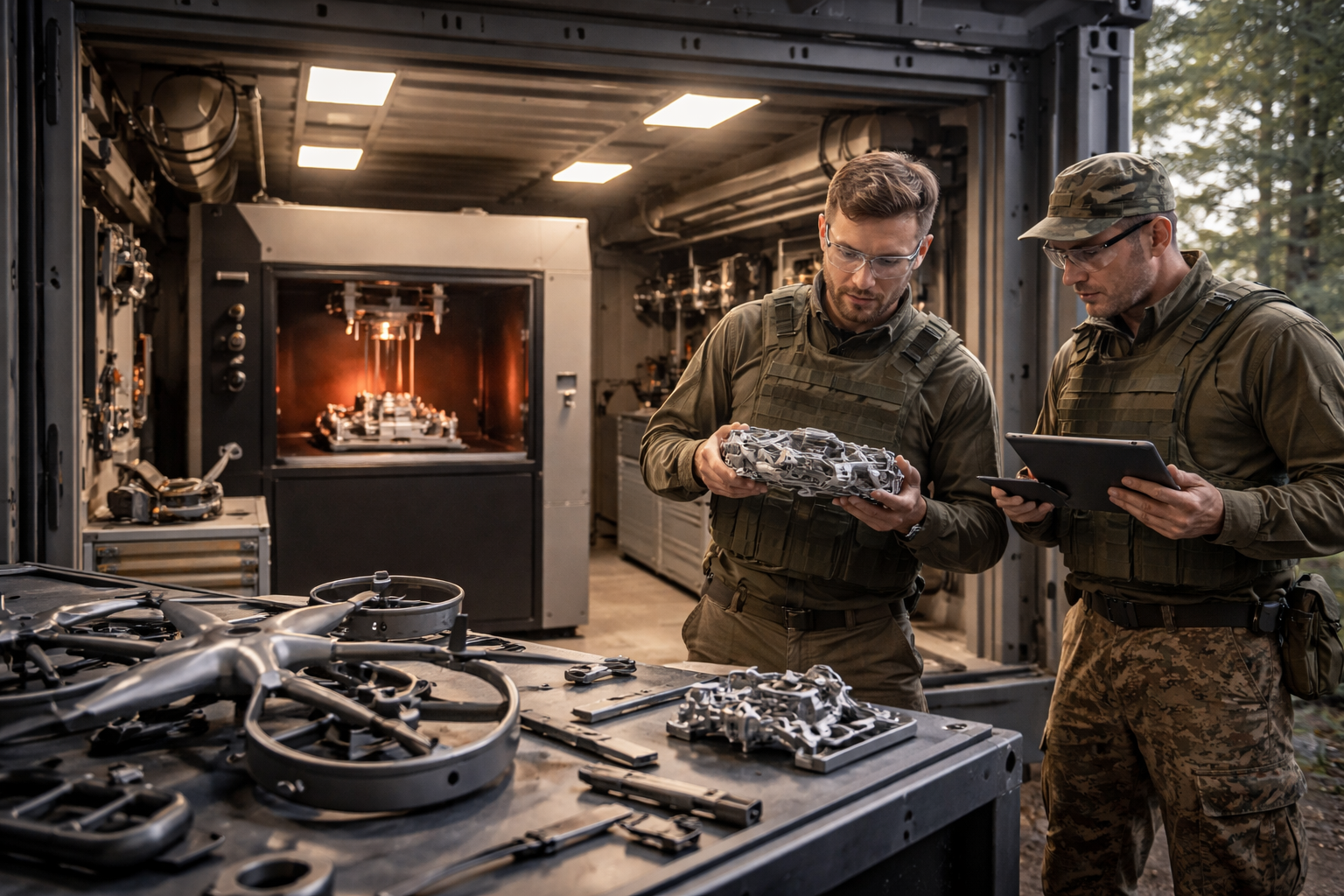
The attraction for a defence technology company is clear. Autonomous systems production increasingly needs industrial campuses rather than small prototype units. Military drones require airframes, propulsion, sensors, payload integration, secure software loading, communications equipment, test procedures, spares, documentation, and quality control. A mature automotive plant cannot be converted overnight, but it brings floor space, logistics, production discipline, and a workforce familiar with complex assembly.
Japan’s security environment is pushing that kind of conversion closer to the mainstream. Tokyo is expanding spending on drones, munitions, missiles, and other military systems as it prepares a new national security strategy and seeks to strengthen domestic production capacity. Civil manufacturing has long been one of Japan’s strategic strengths. The challenge is now whether part of that capacity can be redirected into defence without losing the process control and efficiency that made it valuable in the first place.
Oppama also highlights a wider shift in autonomous weapons production. Drone warfare has weakened the traditional assumption that advanced military platforms will be produced slowly, in small numbers, and through long acquisition cycles. Attritable systems, loitering munitions, and uncrewed aircraft need volume, iteration, and rapid replacement. Those demands sit closer to high-rate manufacturing than conventional aerospace procurement, though military standards still require far tighter security, traceability, and qualification than commercial production.
Workforce conversion would be central to any deal. Automotive workers bring experience in tooling, quality systems, line balancing, production scheduling, and supplier coordination. Defence production would add export controls, restricted facilities, controlled software, sensitive electronics, military documentation, and security procedures. Retaining experienced manufacturing labour while retraining it for defence could give Japan a faster route into drone output than building an entirely new workforce.
The supplier base would still need careful development. A drone assembly line is only as strong as its engines, batteries, optics, communications equipment, processors, airframe materials, and payload suppliers. Inexpensive airframes can be built at speed, but military value sits in the full system: resilient navigation, secure datalinks, mission autonomy, sensor quality, payload flexibility, and maintainable ground equipment. Production failures often begin outside the final assembly hall.
There is a useful parallel with the pressure on small turbojet production for affordable strike systems. Airframes and concepts can move quickly, but propulsion, electronics, energetics, and testing capacity decide whether output can scale. A converted automotive plant would face the same discipline. Large buildings and trained workers would help, but the bottlenecks may sit in qualified subsystems and secure software rather than assembly space.
Japan’s domestic-content expectations will also shape the route forward. US-designed equipment made in Japan has often been produced under licence by domestic companies, and a foreign-owned defence manufacturing site would attract scrutiny. Anduril has already demonstrated a Kizuna prototype using Japanese components, which points toward a local supply-chain model rather than pure import assembly. The depth of that localisation would decide how much industrial value remains in Japan.
The location brings operational logic, but factory design will matter more than proximity. A defence drone plant needs secure digital infrastructure, restricted access, environmental testing, calibration spaces, electromagnetic compatibility control, software update procedures, and potentially weapons-safety arrangements if payload integration moves beyond surveillance systems. Automotive production gives a strong starting point, yet military autonomy requires a different security and assurance culture.
If the Oppama conversion proceeds, it would be a visible marker of Japan’s defence-industrial transition. A plant associated with post-war automotive growth would become part of a new production base for uncrewed systems. The useful measure will be output quality and rate: whether skilled automotive labour, autonomous systems design, domestic content, and military assurance can be combined into a production model that delivers drones in meaningful numbers.