IN Brief:
- Kongsberg is showcasing JSM, HUGIN Edge, sonar, and mobile radar systems at Sea-Air-Space 2026.
- The company is linking that product mix to its role as an integrated maritime systems supplier.
- The backdrop is a growing US industrial footprint, with missile manufacturing and sustainment capacity moving into Virginia.
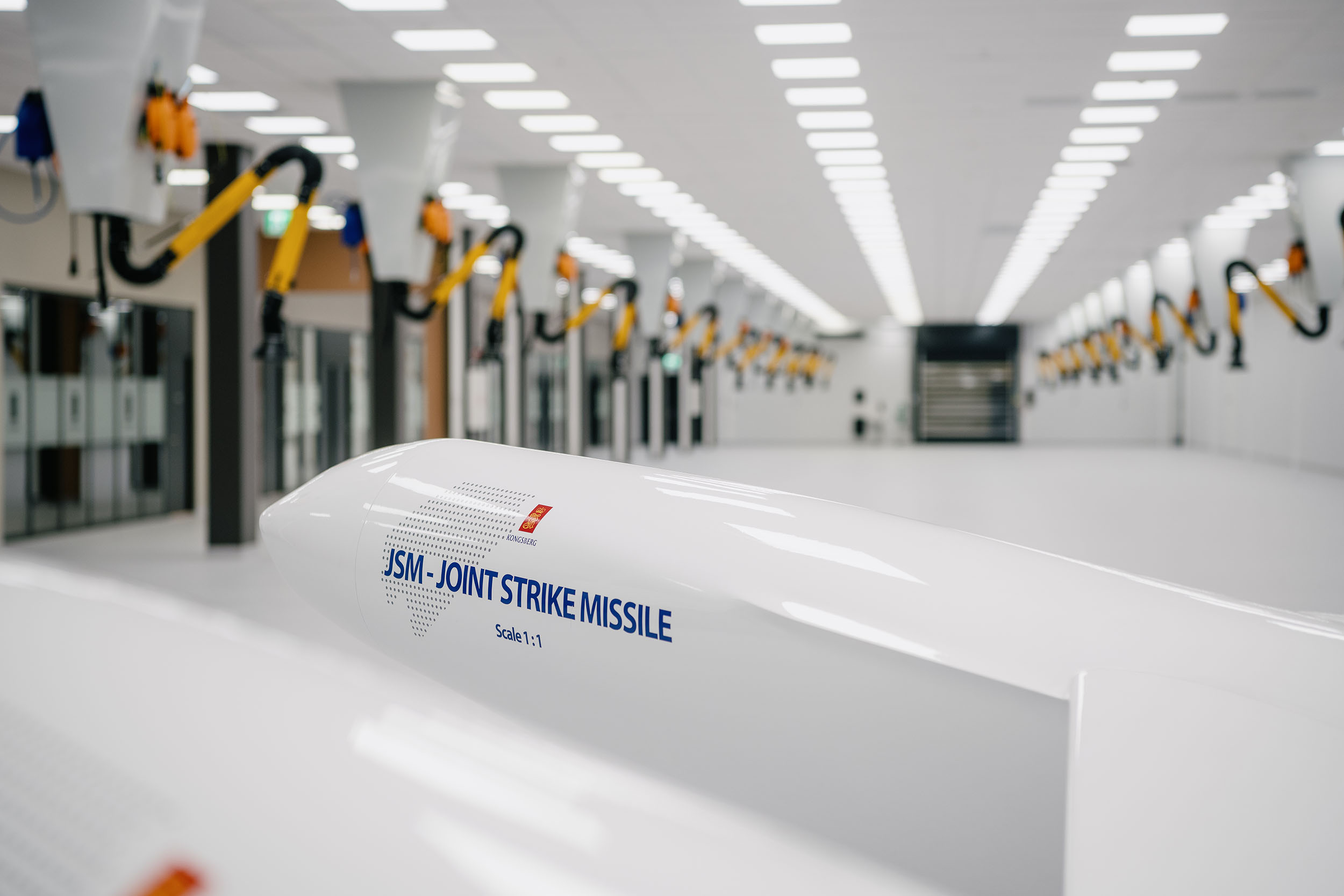
Kongsberg has used Sea-Air-Space 2026 to present a broader maritime defence proposition, bringing missile, undersea, sonar, and surveillance products together under a single stand and a more explicit systems-integrator message.
The centrepieces are the Joint Strike Missile and the HUGIN Edge autonomous underwater vehicle, backed by displays around variable-depth sonar, navigation sonar, and a containerised radar sensor package for maritime domain awareness. The line-up gives a clear sense of where the company wants to sit in the US and allied maritime market: not as a supplier of isolated products, but as a business linking strike, sensing, and uncrewed capability within one naval offer.
The timing also helps. Sea-Air-Space arrives just before Kongsberg Discovery and Kongsberg Defense & Aerospace merge into the new KONGSBERG structure, giving the company a strong incentive to show portfolio breadth rather than product-line separation.
Virginia adds industrial depth to the missile story
The more consequential element is the manufacturing footprint. Kongsberg has said Joint Strike Missile production will be onshored in Virginia, building on earlier announcements around a new missile facility in James City County. That gives the exhibition presence a firmer industrial basis than product display alone.
For the US market, onshoring is tied directly to capacity. Missile demand now centres on available production slots, final assembly, sustainment, technology refresh, and the ability to support allied orders without stretching existing lines. Virginia therefore becomes part of the production answer rather than simply a local-presence move.
Maritime integration widens the supplier footprint
The wider display matters for a second reason: it broadens the industrial footprint around the missile line. HUGIN Edge, sonar systems, and containerised sensors bring different engineering and supply-chain demands, from composites and autonomous-control hardware to acoustic processing, electronics, and deployable infrastructure.
That aligns with a procurement environment that increasingly favours fewer seams between sensing, decision support, and effectors. Kongsberg’s exhibition strategy reflects that shift. The next test is whether manufacturing expansion keeps pace with the breadth of the offer.