IN Brief:
- Kontron has started manufacturing VX307H 3U VPX computing boards at its Nextek operation in Huntsville, Alabama.
- The hardware uses Intel Xeon D processors, with configurations supporting up to 20 cores and 100 Gigabit Ethernet.
- Kontron is moving VX307H towards build-to-stock availability, with the VX3060 and VX30101 identified for subsequent US production.
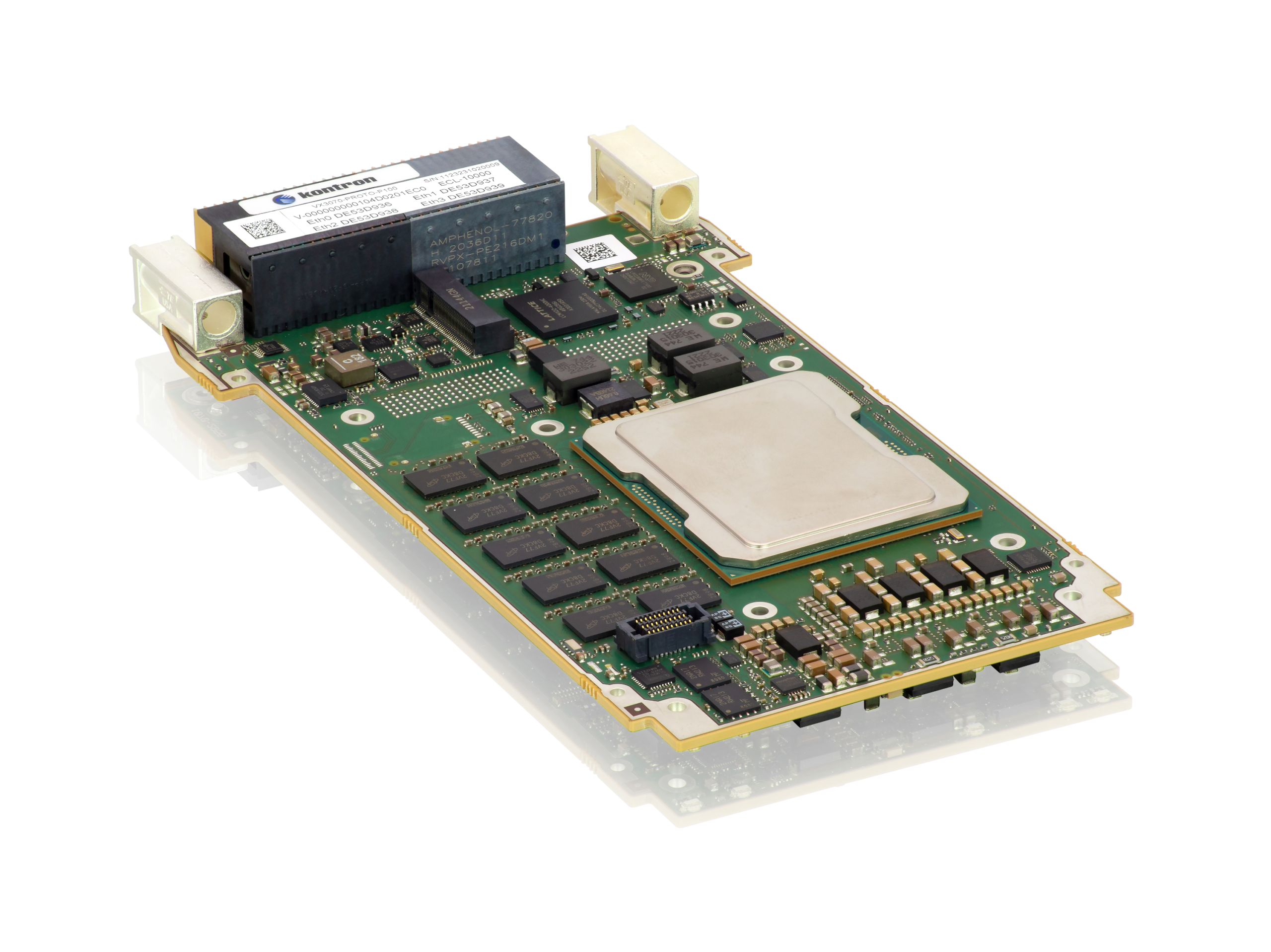
Kontron has started US manufacturing of its VX307H rugged computing platform at subsidiary Nextek in Huntsville, Alabama, establishing domestic production of a 3U VPX processor board intended for defence and aerospace systems. The operation covers printed circuit-board assembly, final integration and testing, while supporting a planned transition from manufacturing against individual orders towards keeping established configurations in stock for faster customer delivery.
The VX307H was introduced in 2023 and is designed for computing applications including sensor fusion, military command systems and autonomous platforms. Its manufacture in Huntsville represents an expansion of Kontron’s production arrangements rather than the launch of a new processor board. Customers will be able to obtain equipment assembled and tested in the United States, although the company explicitly describes the product as built in America using globally sourced components. No manufacturing volume, inventory target or measured lead-time reduction has been disclosed.
Nextek’s work begins with assembly of the printed circuit boards carrying the processor, memory and associated electronics. After components have been mounted and soldered, assemblies undergo inspection and testing before the completed board is configured and verified. These processes must identify problems that could affect electrical operation or reliability, including assembly defects and components that do not meet the specified requirements. The Huntsville facility will also provide access to US-based technical support, although Kontron has not announced a change to the location of every upstream supplier.
The VX307H is based on Intel Xeon D-2700 and D-2800 processor technology, with configurations supporting up to 20 cores. Its architecture provides high-speed data interfaces, including PCI Express Gen4 and Ethernet connectivity reaching 100 Gigabits per second in supported configurations. The product documentation also identifies onboard memory with error correction and a hardware root of trust. Performance and interface availability depend on the selected processor and board configuration, so the highest published specifications should not be treated as common to every variant.
Such processing capability is intended for embedded systems that must handle large volumes of information without relying entirely on external computing infrastructure. A radar installation, for example, may need to process measurements from multiple sensors before forwarding useful tracks to a command system. Autonomous equipment can require simultaneous handling of sensor inputs and control software, while communications applications need sufficient throughput to move information between connected devices. The board provides a computing component for these architectures, but application performance depends on the wider system and the software running on it.
VPX is a modular embedded computing architecture used in demanding applications where processor, networking and specialist input/output cards are installed within compatible chassis and backplanes. The VX307H uses the compact 3U form factor and is designed in accordance with Sensor Open Systems Architecture (SOSA) requirements. Aligning equipment with defined interface profiles can assist integrators combining components from different suppliers, although mechanical compatibility, backplane assignments and software support must still be checked for each system. Kontron has not described the new production arrangement as a separate SOSA certification.
Thermal management is another constraint on high-performance embedded computing. The processor and surrounding electronics produce heat that must be transferred to the host equipment’s cooling arrangement, even when conventional airflow is restricted. Kontron offers VX307H configurations designed around relevant VITA cooling provisions, including Air Flow Through approaches. The selected cooling method must be matched to processor power, installation requirements and environmental conditions. These factors influence the available sustained performance when a board is installed inside a military vehicle, aircraft or other confined electronic enclosure.
The company’s stated hardware root of trust provides a foundation for security functions associated with device start-up and software integrity. Its effectiveness depends on how the feature is configured and used within the host system; the presence of security hardware does not, by itself, establish that the complete platform satisfies every military cybersecurity requirement. Defence equipment also needs controlled handling of firmware versions and software updates, particularly when boards are replaced during long-running programmes.
Kontron identifies several existing quality and manufacturing credentials at Nextek, including AS9100 and ISO 9001 certification, ITAR registration, IPC workmanship standards and component traceability. These arrangements support documented production and inspection processes for demanding aerospace and defence applications. They do not establish that every globally sourced component is manufactured domestically, nor that all finished configurations are independently approved for export. Customer-specific qualification and acceptance requirements remain separate from the facility’s management-system credentials.
Moving towards build-to-stock changes the way supply is organised. Under the previous build-to-order approach, production was scheduled around customer demand, while the new arrangement is intended to make standard configurations available from finished inventory. Stockholding can reduce fulfilment time when a customer requires a configuration already manufactured, although delivery still depends on inventory levels, component availability and any additional integration work. Maintaining stock also creates responsibilities for managing hardware revisions and preventing unsuitable substitutions as individual electronic components reach the end of their production lives.
Stephanie Perdue, Kontron’s director of products for North America, identified improved availability and closer technical support as objectives of the manufacturing expansion. Nextek president Dan Meeks also emphasised the relationship between local production, testing and continuing support. The company has not identified a newly awarded defence customer contract associated with the move, making the start of US manufacturing and the proposed stocking arrangements the substantive developments announced in October.
Kontron intends to expand the Huntsville programme to include its VX3060 and VX30101 VPX products, although their production start dates and expected quantities remain undisclosed. Adding further board families would extend the facility’s responsibilities across different processing and integration configurations, with each requiring appropriate assembly instructions and verification procedures. The first confirmed milestone is the commencement of VX307H production; the success of the inventory strategy will depend on actual product availability and delivery performance as customer demand develops.