
Land
-

STARK has validated Gambit’s warhead against representative lightly armoured targets. The German test integrated TDW’s qualified multi-effect warhead, fuze, and safety system with the company’s man-portable Gambit loitering munition.
-

Croatia has approved 18 K239 Chunmoo launchers from South Korea. The €544.05 million package combines Hanwha launchers and ammunition with a WB Electronics command-and-control system.
-

Sweden has approved HIMARS procurement to expand long-range fires capacity. First deliveries are due in 2027, alongside Finnish cooperation covering training, maintenance, production, and security of ammunition supply.
-

MBDA has opened a new missile support centre in Poland. The Czosnów facility will provide maintenance, logistics, and training for PILICA+ while extending UK-Polish industrial cooperation around ground-based air defence.
-
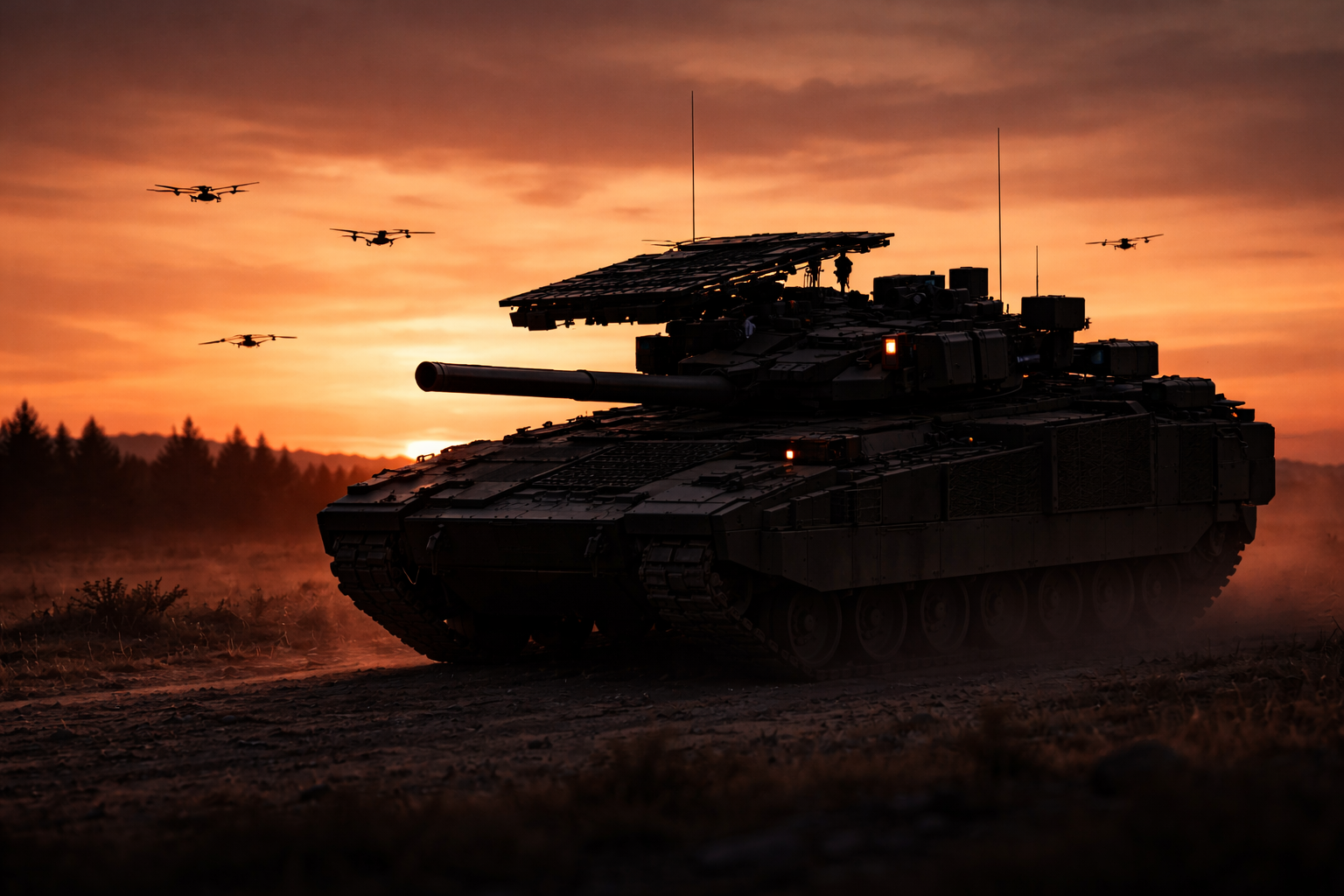
Pakistan has publicly unveiled China’s HQ-17AE mobile short-range air-defence system. The PAF video confirms the system is in its inventory, while procurement quantities, support arrangements, and unit allocations remain undisclosed.
-
Adani will supply Indian-made ammunition for India’s AK-203 rifle programme. The five-year IRRPL agreement links Kanpur ammunition output with Korwa rifle production and adds private-sector capacity to a 601,427-rifle localisation programme.
-
India has approved another major package of domestic defence acquisitions. The ₹1.10 lakh crore package spans land, naval, aerospace, electronic warfare, and support capabilities, with about 98% intended for Indian industry.
-

Dynetics will build fourteen production-representative air-defence radar systems for Marines. The $40.8 million modification also covers software, logistics, manuals, engineering changes, and retrofit work on earlier MRADR and MELPS prototypes.
-
Northrop Grumman has secured $862.8 million precision artillery production work. The five-year Army contract covers manufacture, inspection, testing, packaging, and delivery of M1156 Precision Guidance Kits and associated variants.
-
The US Air Force is seeking gun-based airbase defence systems. Its market survey prioritises affordable ammunition, rapid deployment, integrated sensing, and engagements against cruise missiles and unmanned aircraft.