IN Brief:
- The Malaysian Army is expecting four leased Leonardo AW149 helicopters from the national rotorcraft modernisation programme.
- The aircraft form part of a wider 28-helicopter package delivered through a 15-year leasing structure with training and support in-country.
- The industrial significance is in sustainment, localisation, and production maturity as much as the airframes themselves.
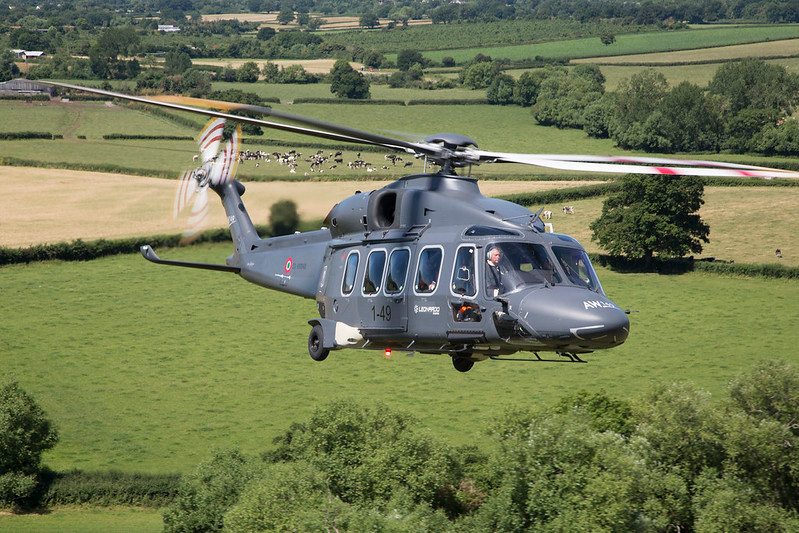
Malaysia’s Army is moving closer to fielding the Leonardo AW149, with the first four helicopters expected under the country’s long-term rotorcraft leasing programme. The delivery marks the next practical step in a wider fleet renewal effort that spreads aircraft across multiple government users while shifting support and sustainment into a structured lease model.
The AW149 is entering service in Malaysia as a multi-role military platform rather than as a narrow utility replacement. The helicopter has been developed for troop lift, resupply, casualty evacuation, special operations, personnel recovery, and command-and-control work, with an open-architecture mission system and a reconfigurable cabin intended to support different configurations without rebuilding the aircraft around each task.
That flexibility helps explain the programme logic. Malaysia is not just bringing in a single type for a single service. The wider arrangement covers a mixed fleet delivered through Weststar and backed by local support and training. For the Army, that means earlier access to a current-generation platform while avoiding the full immediate burden of ownership.
Leasing changes the sustainment model
In practical terms, the leasing model shifts the pressure from capital acquisition to service availability. The Army still needs trained crews, infrastructure, and operational doctrine, but the heavy lift in maintenance planning, support contracting, and availability management moves towards the service provider.
That can shorten the route into service, but only if the sustainment system is robust. Helicopter fleets do not earn their keep on signing day. They earn it through spare parts availability, technician competence, repair turnaround, and predictable mission-readiness rates. The Malaysian programme has been designed with local support and training embedded for that reason.
Production maturity underpins the offer
The AW149 is no longer an early-stage proposition. Leonardo’s wider industrial effort around the type includes an established product line, certification work, and current production in Poland for that country’s armed forces. That gives the Malaysian programme a more stable manufacturing base than a first-of-type procurement would carry.
For suppliers and aerospace manufacturers, that is the more interesting point. The AW149 story in Malaysia is not only about four helicopters arriving. It is about how production, training, lifecycle support, and fleet modernisation are increasingly being packaged together as one industrial offer.