IN Brief:
- NHIndustries and NAHEMA have launched a €15 million, two-year Block 2 architecture study for the NH90.
- The work targets modular avionics, faster technology insertion, better fleet availability, and lower lifecycle cost.
- For industry, the programme is about keeping a mature European helicopter family relevant well into the next several decades.
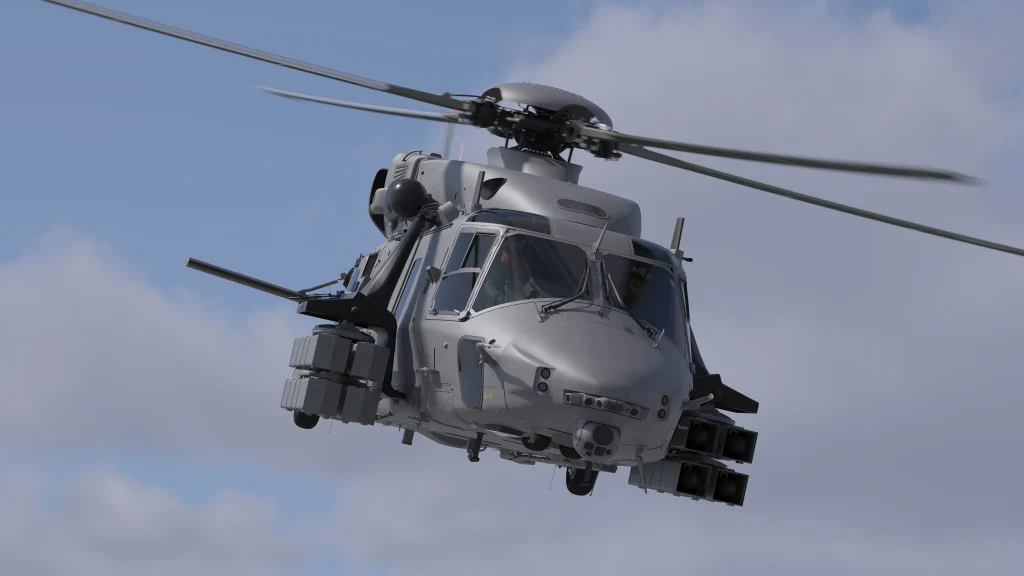
NHIndustries has formally started the NH90 Block 2 architecture study under a €15 million contract from NAHEMA, opening the next structured phase in the helicopter’s long-term evolution. The two-year effort is intended to define the technical baseline for a future configuration able to meet battlefield requirements into the 2040s and beyond.
The study follows ongoing Block 1 and Software Release 3 work on the existing fleet, but Block 2 reaches further. It is aimed at a more modular and scalable avionics architecture, better connectivity, collaborative combat functions, crewed-uncrewed teaming, and a simplified maintenance plan intended to improve both availability and lifecycle cost.
That is a logical next move for a fleet that has already accumulated substantial service use and remains embedded across multiple European operators. The NH90 has shifted from development-era arguments to the more difficult question every mature military rotorcraft faces: how to stay relevant without turning each upgrade into a custom engineering programme.
Open architecture becomes the upgrade path
The strongest signal in the Block 2 study is the move towards architecture rather than a single headline subsystem. Open, modular avionics matter because they shorten future integration cycles. If new sensors, mission software, electronic-warfare elements, or uncrewed interfaces can be added with less redesign, the platform stays commercially and militarily credible for longer.
That also matters for exportability and support. Countries do not only buy a helicopter’s present specification. They buy confidence that the aircraft can absorb future capability without spiralling cost and downtime.
Sustainment remains part of the capability case
The maintenance element is just as important. Availability remains one of the decisive measures of a helicopter fleet, and industrial credibility rests heavily on spare parts, repairability, support engineering, and predictable operating cost. A simplified maintenance plan is therefore not a support footnote. It is part of the aircraft’s combat value.
For the NH90 consortium, the Block 2 study also reinforces a wider European industrial point. The aircraft sits inside a multinational production and support structure built around Airbus Helicopters, Leonardo, and GKN Fokker. If the programme can translate architecture work into lower upgrade friction and stronger sustainment performance, it keeps a long-running European rotorcraft line active on capability, not habit.