IN Brief:
- Saab UK and Kraken developed and sea tested an autonomous counter UAS surveillance vessel in less than seven months.
- The prototype combines Saab's Giraffe 1X radar with Kraken's 8.4 metre K3 Scout uncrewed surface vessel.
- The current configuration provides sensing and early warning rather than an onboard drone defeat capability.
Saab UK and Kraken Technology Group have developed and sea tested an autonomous maritime counter UAS prototype that combines Saab’s Giraffe 1X radar with Kraken’s K3 Scout uncrewed surface vessel. The companies moved from initial concept to a working vessel in less than seven months.
The prototype turns K3 Scout into a mobile radar carrier intended to provide early warning around shipping, ports, offshore energy infrastructure and other maritime assets. Kraken’s composite vessel is 8.4 metres long, has a maximum speed of 55 knots and can carry up to 600kg of payload. Its stated range is 650 nautical miles at 25 knots, while mission dependent endurance can extend to 30 days.
Those characteristics give the platform enough payload, range and persistence to move an air surveillance sensor away from the asset it is protecting. Instead of placing every radar on a ship, harbour structure or offshore installation, an autonomous surface vessel can patrol an approach or move to a sector where geography, superstructure or local clutter limits the view from a fixed sensor.
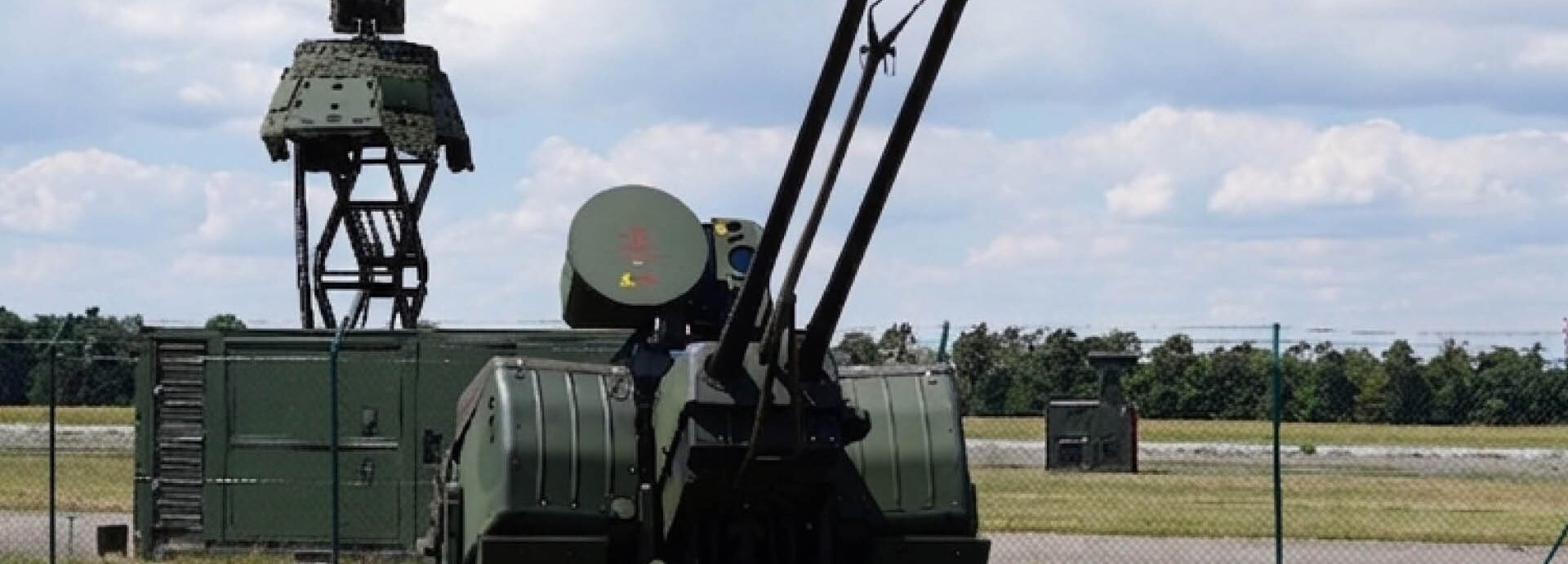
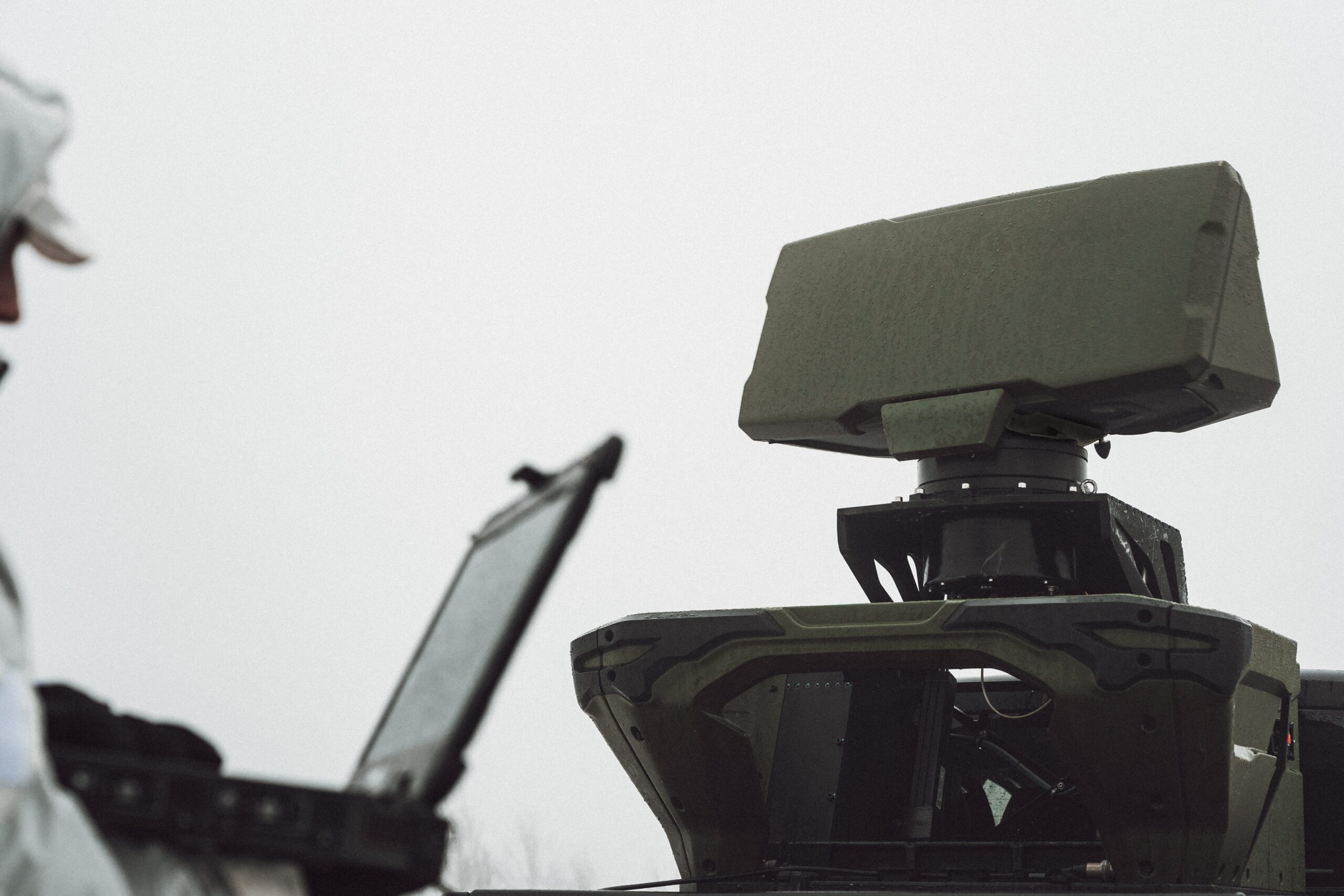
Giraffe 1X was selected partly because its physical footprint suits smaller mobile platforms. Saab gives the complete radar a weight below 150kg, including a topside unit weighing about 100kg, and says the sensor covers its entire search volume every second. It is designed to detect and track low, slow and small targets and can identify a UAV lighter than a milk carton at up to four kilometres under stated conditions.
Installing the radar on a moving vessel introduces a different set of operating conditions from a fixed ground position. Pitch, roll and yaw continually alter the relationship between the antenna, horizon and target, while waves, sea clutter, coastlines and nearby vessels can produce returns that the processing chain has to distinguish from small airborne objects. The vessel’s navigation data and radar processing therefore have to maintain a coherent picture while both the sensor platform and the target may be moving.
Saab and Kraken have already used a series of sea trials to examine radar behaviour in that environment, but neither company has published detection ranges achieved during the campaign, sea state limits or detailed information about how the radar picture is compensated for vessel motion. The current evidence establishes a working experimental integration rather than an operationally qualified system.
Mobility changes the geometry available to a maritime counter UAS network. An autonomous radar vessel can move farther out from a protected asset, cover a blind sector or reposition as a threat axis changes. Several mobile sensors could in principle also contribute tracks to a common command picture, although Saab and Kraken have not announced a multi-vessel network or described the communications architecture used by this prototype.
The current vessel is a seeker rather than a complete drone defeat system. No onboard jammer, missile, gun or other effector has been announced, so a detected track would have to move into another command and control or weapon system before the threat could be engaged. Track quality, communications latency and identification confidence will determine how useful that separation between sensor and effector becomes in practice.
Counter UAS surveillance at sea also has to manage false tracks without flooding operators. Saab says Giraffe 1X can distinguish small drones from birds and is designed to reduce false alarms, but maritime conditions add surface reflections and rapidly changing background geometry to the classification task. Those conditions become more important as the radar is placed farther from a crewed ship and expected to operate for prolonged periods with limited direct supervision.
K3 Scout’s modular design gives the partners room to develop the concept beyond the initial sensor fit. Kraken already positions the vessel for maritime awareness, force protection, logistics and precision strike missions, so the same basic hull can accept different payloads rather than becoming a dedicated radar boat. That flexibility also means the available electrical power, payload allowance and communications equipment have to be divided between whichever mission systems are selected.
Further testing will have to establish the environmental limits and network architecture around the prototype. Radar stabilisation, data links, autonomous navigation, operation in heavier sea states and integration with external command systems will all influence whether the concept progresses into a deployable counter UAS sensor. The first seven months have demonstrated that the radar and vessel can be integrated and taken to sea; qualification will determine how reliably that combination can maintain useful surveillance away from a fixed or crewed platform.