IN Brief:
- The UK has now received the last aircraft in its initial 48-jet F-35B order.
- The programme’s industrial emphasis now shifts from deliveries toward support, readiness, and weapon integration.
- RAF Marham infrastructure, carrier operations, and UK workshare will shape the next phase of the Lightning fleet.
The UK has received the final aircraft in its initial 48-jet F-35B order, completing the first contracted Lightning fleet and closing a long delivery phase that has sat at the centre of British carrier strike planning. The milestone adds little drama on its own, but it changes the industrial emphasis around the programme. Once the last aircraft is delivered, the burden shifts from acceptance and fleet growth to availability, upkeep, software management, and upgrade planning.
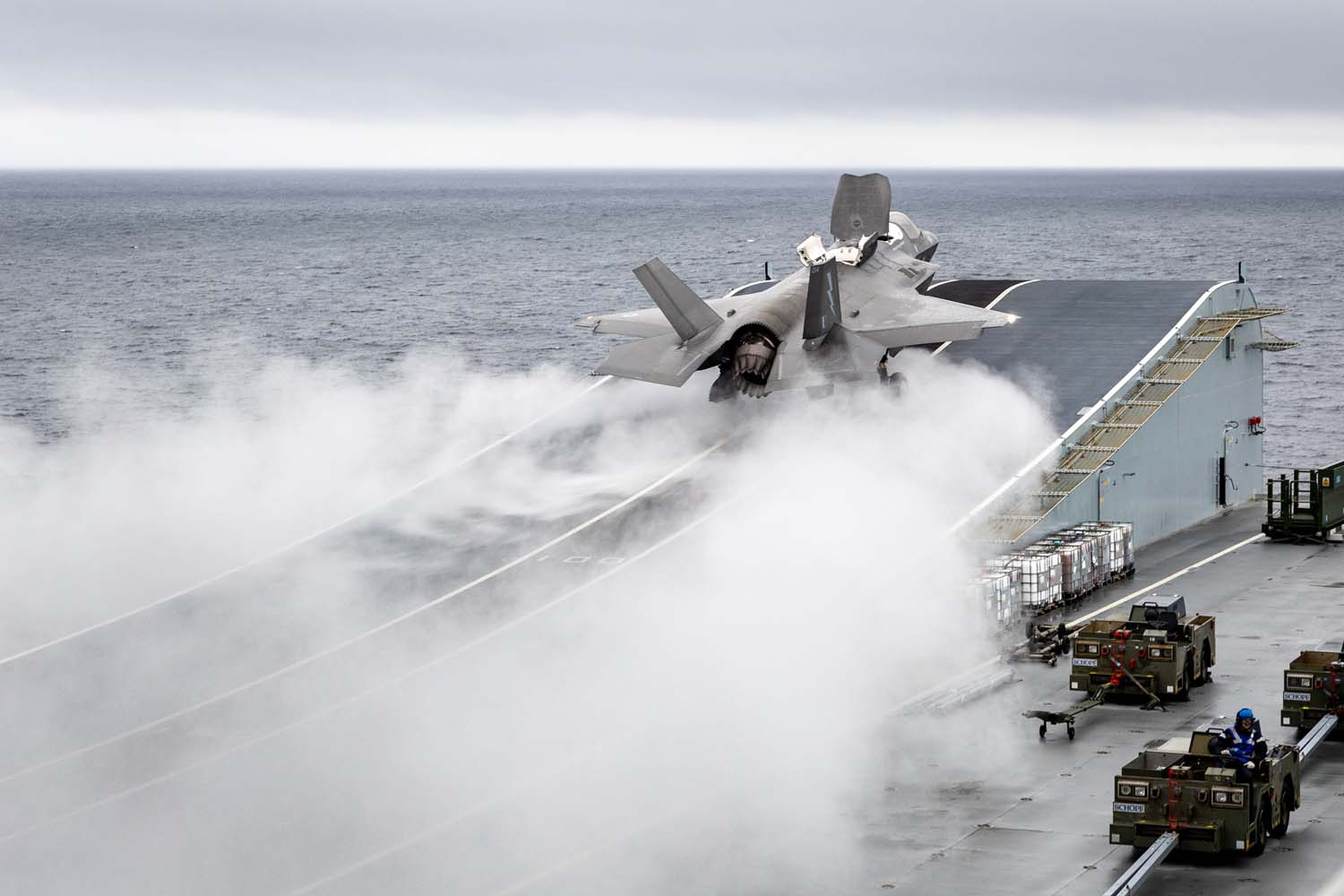
That transition matters for both the RAF and the Royal Navy. The F-35B underpins the UK’s carrier strike model while also operating from RAF Marham, which means readiness depends on more than aircraft numbers. Engineering depth, spares resilience, infrastructure capacity, and the speed of maintenance turnround all begin to weigh more heavily once a fleet reaches its planned initial size.
The industrial dimension extends well beyond frontline squadrons. The UK has long presented its role in the programme in terms of national workshare and long-term participation in the broader F-35 enterprise. That work reaches across manufacturing, support, and specialist systems contribution, and it becomes more visible as the conversation moves away from deliveries and toward how the fleet is sustained through decades of service.
The delivery phase gives way to sustainment pressure
At RAF Marham, the operating challenge now becomes steadier and less forgiving. A completed batch removes the simple narrative of airframes arriving and replaces it with a more complex one built around routine engineering performance. Availability rates are shaped by repair loops, test equipment, software baselines, maintenance manpower, and the ability to support aircraft rotating between land-based activity and carrier operations.
For a short-take-off and vertical-landing aircraft, those pressures are not trivial. Deck operations, heat management, coatings maintenance, and mission-system support each add to the through-life workload. The more mature the fleet becomes, the more obvious it is that programme value sits not only in procurement, but in the engineering systems that keep aircraft usable at the required pace.
Upgrades now matter as much as numbers
The next industrial phase will also be shaped by capability insertion. Future software updates, weapons integration, mission-data support, and broader refresh activity will do as much to determine fleet credibility as any further headline order. The UK’s first 48 aircraft may now all be delivered, but the capability is not static, and neither is the support model around it.
That leaves the programme entering a more demanding part of its life. A delivery milestone is useful, but it is only a milestone. What follows is the slower industrial work of sustainment, upgrade planning, infrastructure use, and long-horizon support discipline. For the UK, that is where the Lightning fleet now begins to prove its value in practical rather than ceremonial terms.