IN Brief:
- The FY2027 request includes $1.44 billion for FF(X) and $1 billion in advance procurement for BBG(X).
- Budget documents also show $1.9952 billion for the surface ship industrial base.
- The package points to a surface-fleet reset built around new hulls, long-lead materials, and yard capacity.
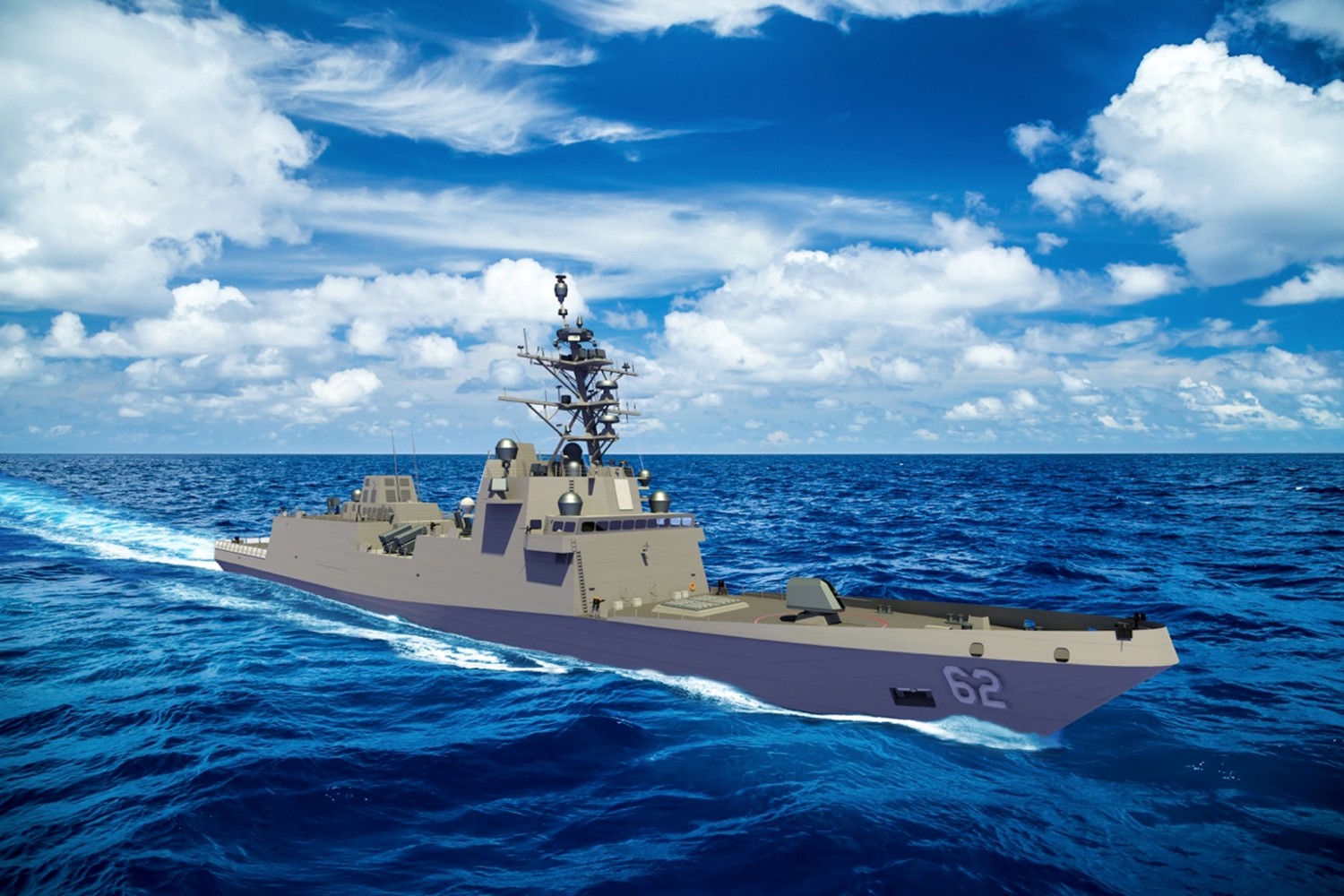
The US Navy’s FY2027 budget request has reopened the surface-combatant pipeline with funding for a new FF(X) frigate and advance procurement for BBG(X), pairing new hull money with a further injection into industrial capacity. Budget documents show $1.44 billion for FF(X), $1 billion in advance procurement for BBG(X), and $1.9952 billion for the surface ship industrial base through the Maritime Industrial Base Fund.
Taken together, the figures amount to more than a routine line-item adjustment. They point to a procurement reset in which ship design, long-lead buying, and yard capacity are being pushed in parallel rather than treated as separate problems. The Navy’s own Constellation-class fact file already reflects a strategic shift away from the broader earlier frigate path, with only the lead ships continuing under the revised arrangement. That makes the FY2027 request look less like continuation funding and more like a deliberate attempt to rebuild momentum around a new surface-combatant mix.
The underlying requirement has not disappeared. The Navy still needs multi-mission surface ships able to carry credible air warfare, anti-submarine warfare, surface warfare, and electronic-warfare loads, and the Constellation design remains the most visible recent benchmark for that requirement. What has changed is the route to getting capacity into the water and keeping the industrial base from stalling between programme decisions.
Yard workload and long-lead procurement
Surface combatants are built long before steel is cut. Funding at this stage shapes procurement of long-lead materials, production planning, combat-system integration schedules, propulsion-chain commitments, and supplier ordering behaviour. Once uncertainty creeps into that sequence, the result is not just delay at the shipyard. It travels backwards into castings, forgings, power systems, electronics, cable, software, and specialist labour. Budget clarity matters because naval programmes amplify hesitation across the whole supplier stack.
Industrial base funding and production discipline
The separate surface-ship industrial base allocation is a reminder that the Navy is trying to fix capacity as well as buy ships. Yard modernisation, workforce stability, and supplier resilience are now as important as the top-line procurement number. That said, money alone does not clean up a surface programme. Stable requirements, frozen interfaces, and disciplined design decisions still decide whether yards build rhythm or absorb disruption. The FY2027 request creates room to move, but the production case will depend on how tightly the Navy holds the programme architecture from here.