IN Brief:
- The UK has awarded Boeing Defence UK a £879 million, three-year contract covering Apache and Chinook support.
- The agreement brings both fleets under one Rotary Wing Enterprise arrangement for the first time.
- The work falls heavily on maintenance, logistics, training, repair capability, and long-term sustainment capacity across the UK.
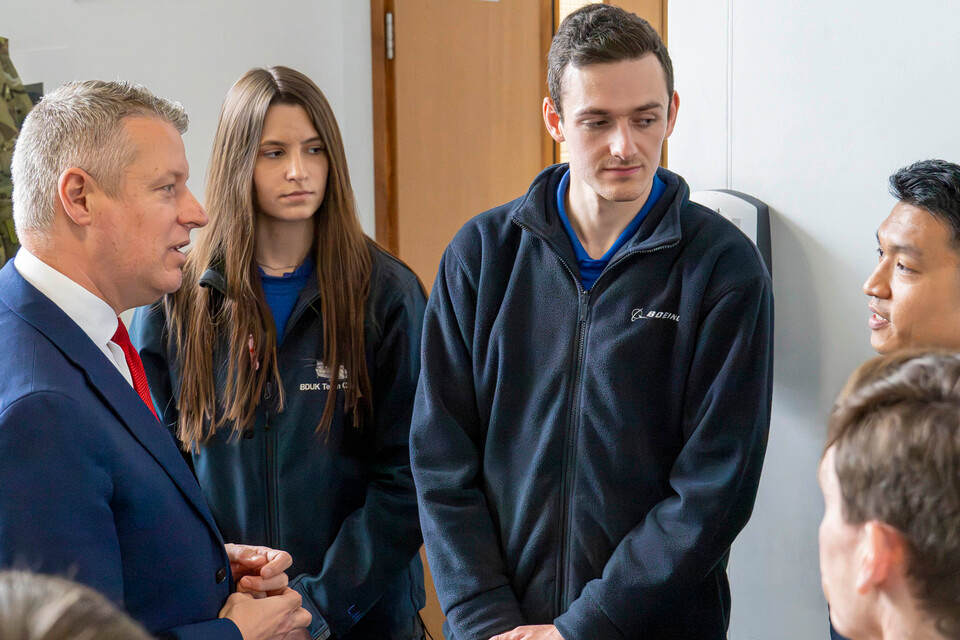
Boeing Defence UK has secured a three-year, £879 million contract to maintain and support the British Army’s AH-64E Apache attack helicopters and the RAF’s Chinook heavy-lift fleet. By bringing both platforms under a single Rotary Wing Enterprise arrangement for the first time, the award creates a more consolidated support structure around two of the UK’s most heavily used military helicopter fleets.
The contract is significant less for novelty than for workload. Apache and Chinook sit on different parts of the rotary-wing mission set, yet both impose demanding sustainment requirements across technical services, logistics, training, repair, and fleet management. Folding them into one framework is intended to reduce duplication and tighten availability, but it also concentrates a large amount of engineering and support effort into one industrial lane.
The work extends across Boeing Defence UK sites including Middle Wallop, Wattisham, Odiham, Bristol, Gosport, Yeovil, and Almondbank, with additional load carried into the wider supply chain. That gives the award weight well beyond fleet support alone. It is also a major piece of rotary-wing industrial continuity in the UK.
Sustainment as industrial capacity
In Britain’s helicopter sector, deep support contracts of this scale are closely tied to the manufacturing base. They sustain specialist labour, preserve repair and overhaul expertise, and maintain the engineering infrastructure that supports structural work, component refurbishment, mission-system upkeep, and the steady management of obsolescence.
That matters because support is rarely a passive activity on complex fleets. Availability depends on how well the industrial chain can absorb peaks in maintenance, manage spares shortages, and shorten turnaround times without creating fresh bottlenecks elsewhere in the system.
Why the award carries production value
Although the aircraft are already in service, contracts like this still drive production-grade work. Subassembly repair, overhaul, modification activity, specialist tooling, and long-lead parts support all place recurring demand on UK-based suppliers and engineering teams. Readiness, in practice, is a manufacturing and logistics outcome as much as an operational one.
For the UK defence industrial base, the value of the deal lies in that continuity. It funds the skilled workforce, support processes, and engineering depth required to keep mission-critical rotorcraft available over time.