IN Brief:
- The UK will deliver at least 120,000 drones to Ukraine this year across strike, ISR, logistics, and maritime roles.
- Most of the spend is set to flow through UK-based suppliers, pushing unmanned production beyond prototype volumes.
- The industrial challenge now is less about invention than pace, supply resilience, and rapid battlefield iteration.
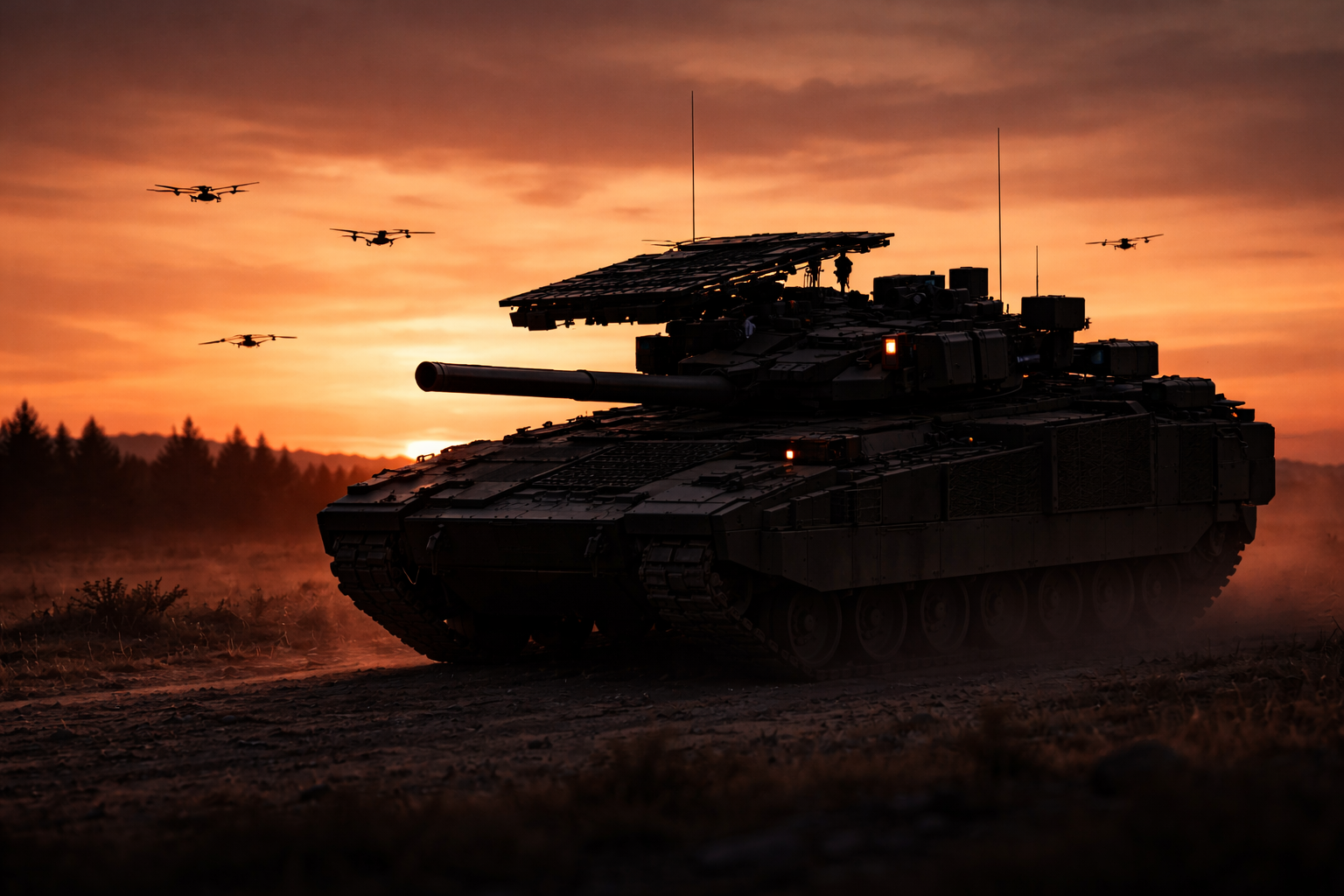
The UK has announced its biggest drone package yet for Ukraine, with at least 120,000 systems due this year and deliveries already under way. The package spans long-range strike drones, intelligence and reconnaissance platforms, logistics drones, and maritime systems, giving the programme more industrial breadth than a single-category buy.
Most of the funding is set to flow through UK-based suppliers, including Tekever, Windracers, and Malloy Aeronautics. That turns the move into more than a military support package. It is also a test of how far Britain’s unmanned manufacturing base can sustain output across different drone classes while keeping pace with rapid operational change.
That is not a light manufacturing challenge. Drone production at this scale depends on more than airframe assembly. Battery supply, power electronics, datalinks, payload integration, mission software, navigation resilience, and repair loops all have to move together if the output is to remain useful under wartime conditions.
Ukraine has been an unusually harsh proving ground for this kind of industrial learning. Systems that perform well in a demonstration cycle can fail quickly if countermeasures evolve, components become scarce, or integration teams cannot adapt fast enough. That has pushed manufacturers toward shorter design cycles and a more continuous production mindset.
From adaptation to sustained output
The pressure on British suppliers is now shifting from ingenuity alone to repeatable throughput. Smaller drone companies often perform strongly when rapid modification is needed, but larger volume commitments introduce a different set of constraints around supplier resilience, workforce depth, testing capacity, and production discipline.
That is especially true when multiple mission types are being built at once. A maritime system, a logistics platform, and a strike drone may all sit under the same broad package, but they place very different demands on structures, propulsion, control software, and mission integration. Scaling across all three is a more serious industrial exercise than scaling one successful product.
The supply chain now carries the strategic weight
As output rises, weak points emerge further down the stack. Battery cells, propulsion components, sensor modules, secure communications hardware, and payload sub-systems can all become bottlenecks if even one supplier struggles to keep up. Labour is another pressure point, especially where testing and final integration rely on relatively small specialist teams.
The package therefore says something larger about Britain’s defence industrial direction. Drones are no longer being treated as an urgent niche capability. They are moving into the category of standing production requirement, where industrial continuity and replenishment speed matter as much as technical novelty.