IN Brief:
- Dynetics has secured a $617.2 million Army contract for the FY2026 production buy of IFPC Increment Two systems.
- The award covers launchers, retrofit work, magazines, training devices, logistics support, spares, and engineering services.
- It marks a shift from prototype activity toward broader production and fleet-standardisation work inside layered air defence.
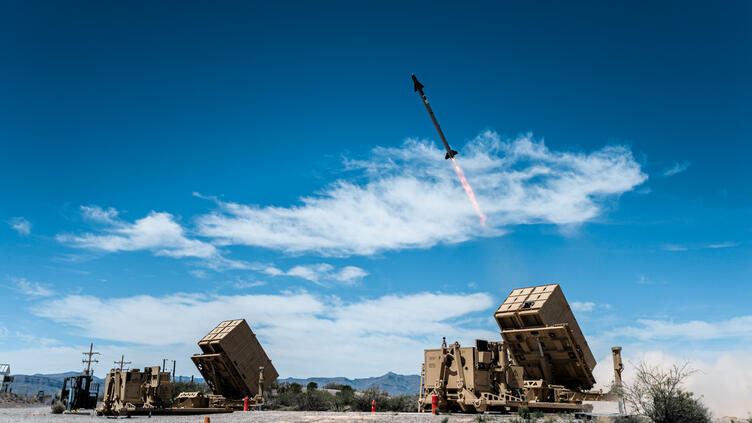
Dynetics has received a $617.2 million US Army contract for the fiscal 2026 production buy of Indirect Fire Protection Capability Increment Two systems, covering launcher systems, retrofit prototype launchers, all-up-round magazines, soldier trainers, weight-representative training devices, contractor logistics services, initial spares, and engineering services. The work is scheduled to run through November 2029.
The size of the contract matters, but so does its composition. This is not a simple hardware order. It brings production, retrofit work, training systems, support services, and engineering activity into the same package, which is usually a sign that a programme is moving beyond early development and toward a more structured fleet build-out.
IFPC Inc 2 is designed to protect fixed and semi-fixed sites against threats including cruise missiles and uncrewed aerial systems. In industrial terms, that makes it a systems programme rather than a launcher story alone. Production of launchers has to stay aligned with magazine supply, software maturity, logistics planning, and the training equipment needed to turn a contract award into an operational fielding pathway.
Retrofit work is another important detail. Bringing earlier launchers into a common standard often signals that configuration control is becoming more important as the programme matures. That raises the burden on engineering change management, documentation, and support planning as much as on the factory floor.
Production now includes the support tail
Air-defence programmes become materially more demanding once they pass the prototype threshold. The launcher may be the most visible output, but trainers, weight-representative devices, spare parts, support engineering, and contractor logistics all consume capacity and planning effort. Those workstreams often run for longer than the initial production surge, which is why they matter to the industrial base.
For suppliers, that broader package also improves planning visibility. Hardware-only awards can create sharp bursts of activity. A contract that includes training, support, retrofit, and spares creates a wider and more durable manufacturing and sustainment footprint around the system.
Standardisation becomes the next challenge
The next pressure point is keeping production flow aligned with test outcomes, budget decisions, and future-rate ambitions. Missile-defence programmes can absorb large amounts of capital very quickly, but they also become expensive if hardware maturity, integration readiness, and fielding tempo drift out of sync.
The Army has already signalled substantial interest in IFPC as part of its wider layered air-defence architecture. The industrial question now is whether launcher production, retrofit activity, training-device manufacture, and sustainment pipelines can move together closely enough to support that ambition without creating rework further down the line.