IN Brief:
- Switzerland has contracted KNDS Deutschland for one prototype and 32 series AGM artillery systems.
- The system combines KNDS’ 155mm Artillery Gun Module with GDELS-Mowag’s Piranha IV wheeled platform.
- Production, qualification, ammunition logistics, simulators, training, and spares are central to the programme’s industrial value.
Switzerland has signed a procurement contract with KNDS Deutschland for a new automated artillery system based on the 155mm Artillery Gun Module mounted on the Piranha IV wheeled platform, giving its M109 replacement programme a defined production route.
The contract covers one prototype and 32 series systems, with the Piranha IV carrier supplied by Swiss manufacturer GDELS-Mowag. The prototype is expected in final configuration in 2027, qualification is planned for 2028, and series deliveries are scheduled from 2031. The wider package includes ammunition logistics, training and simulation systems, spare parts, documentation, tools, projectiles, detonators, and support equipment.
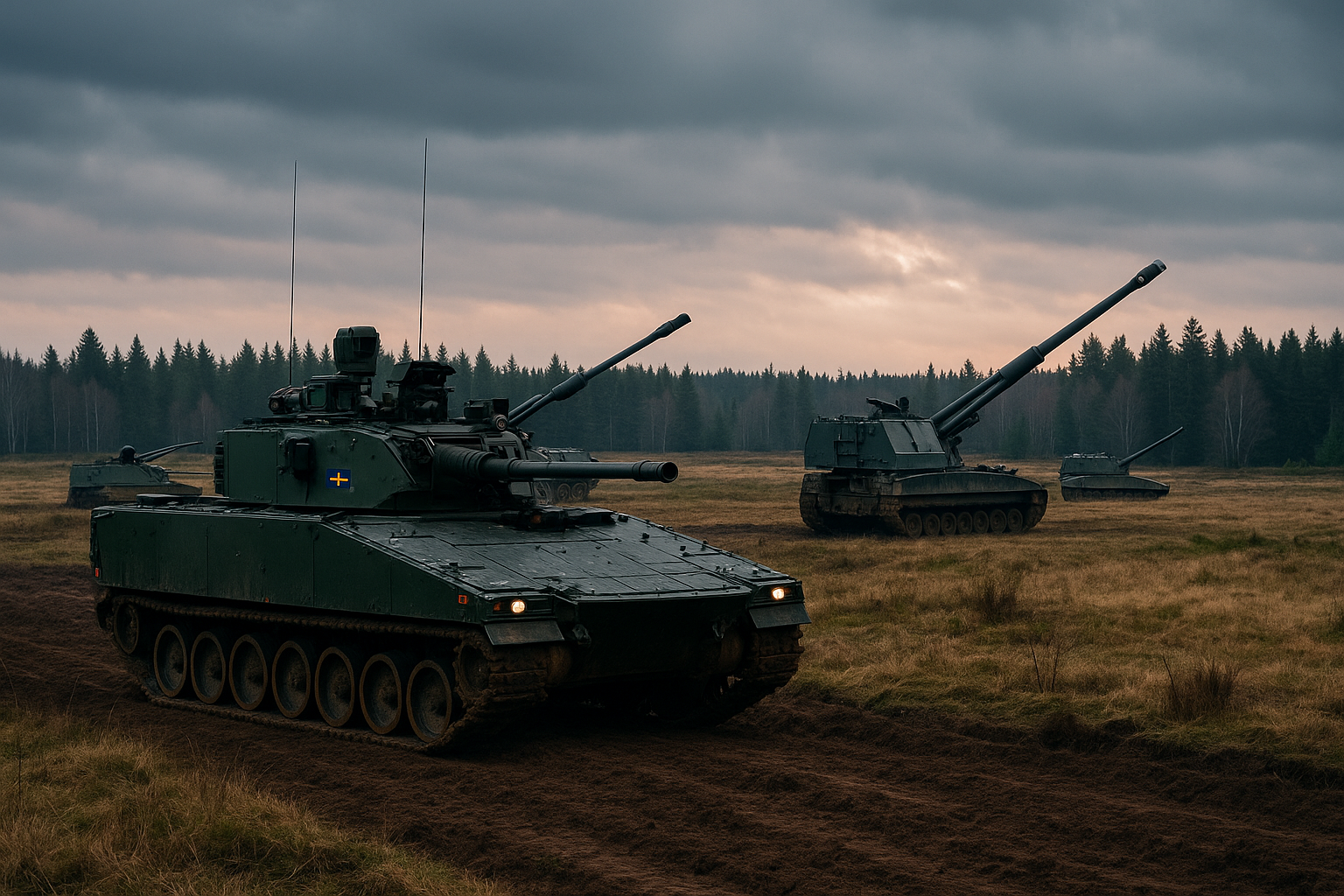
The selection gives Switzerland a wheeled, networked, and more mobile artillery capability intended to improve protection, range, precision, speed of action, and survivability. Moving from legacy M109 tracked self-propelled howitzers to a modern automated module on a 10×10 wheeled platform reflects wider European interest in artillery systems able to shoot, displace, and connect quickly to digital fire-control networks.
The programme combines several production trends. Artillery modernisation is no longer defined only by calibre and range. The system must integrate automated loading, digital command-and-control, navigation, fire-control software, platform mobility, crew protection, ammunition handling, training simulators, and logistics support. Wheeled artillery is also gaining traction as armies look for systems that can redeploy quickly across road networks and dispersed firing positions.
The AGM/Piranha IV pairing shows how modular artillery procurement is becoming. KNDS provides the gun module, while GDELS-Mowag supplies the carrier platform. The core challenge is integrating those elements into a reliable combat system with acceptable weight, recoil management, stability, power distribution, crew ergonomics, sensors, communications, and maintainability. The hardest engineering often sits between the headline components.
Switzerland’s procurement also preserves a domestic industrial element through the Piranha IV platform. That creates local production value while drawing on KNDS’ artillery expertise. The balance between European cooperation and national industrial participation is increasingly common in land systems, as governments try to retain domestic manufacturing skills without funding every subsystem independently.
Europe’s artillery revival is no longer abstract. Long-range fires procurement has been moving across multiple markets, from Canada HIMARS deal brings long-range fires into production pipeline to France’s rocket-artillery direction in France links rocket-artillery replacement to longer-range strike expansion. Switzerland’s order differs in platform type, but it sits within the same return of firepower, ammunition depth, and production capacity to the centre of land-defence planning.
Automation is central to the AGM value proposition. Modern artillery systems need to reduce crew exposure, shorten fire missions, improve consistency, and limit the time spent stationary after firing. That places pressure on mechanical loading systems, electronic controls, fault monitoring, safety interlocks, and maintenance access. Automated ammunition handling must be tested with particular discipline because failures can be dangerous and difficult to recover in the field.
The ammunition side of the package deserves equal attention. Guns are only useful when the ammunition supply chain behind them is deep and dependable. Projectiles, charges, fuzes, detonators, storage facilities, handling equipment, and logistics vehicles all shape the rate at which a force can train and fight. The war in Ukraine has made that point unavoidable for European armies. Artillery recapitalisation without ammunition depth produces impressive vehicles with limited endurance.
The wheeled platform choice points to a concept of artillery operations built around mobility, dispersion, and rapid displacement. Tracked systems remain valuable in heavy formations, but wheeled systems can move faster across road networks and may offer lower sustainment demands. The trade-offs sit in cross-country mobility, protection, platform stress, and firing stability. Switzerland’s qualification phase will show how effectively the AGM/Piranha IV configuration balances those demands.
For suppliers, the contract provides a long production runway. A prototype due in 2027 and series deliveries from 2031 give time to align component production, tooling, testing, training equipment, support documentation, and ammunition logistics. That does not make delivery simple. Artillery supply chains are already under pressure across Europe, with qualified components, skilled welders, precision machining, electronics, explosives inputs, and test capacity all in demand.
Switzerland’s order reinforces the return of heavy, complex, support-intensive land systems. Drones and software dominate much current debate, but artillery still depends on steel, mechanics, hydraulics, electronics, explosives, and disciplined production engineering. The AGM programme will be shaped in factories, test ranges, depots, ammunition plants, and training centres long before the first full battery reaches operational use.