IN Brief:
- The British Army has fielded 10,000 small drones in six months through Project AKSA.
- The effort forms part of a wider investment in attritable systems, electronic warfare, radios, counter-UAS equipment, and autonomous capability.
- The industrial test is whether UK suppliers can deliver useful battlefield systems at financial-year tempo rather than traditional programme speed.
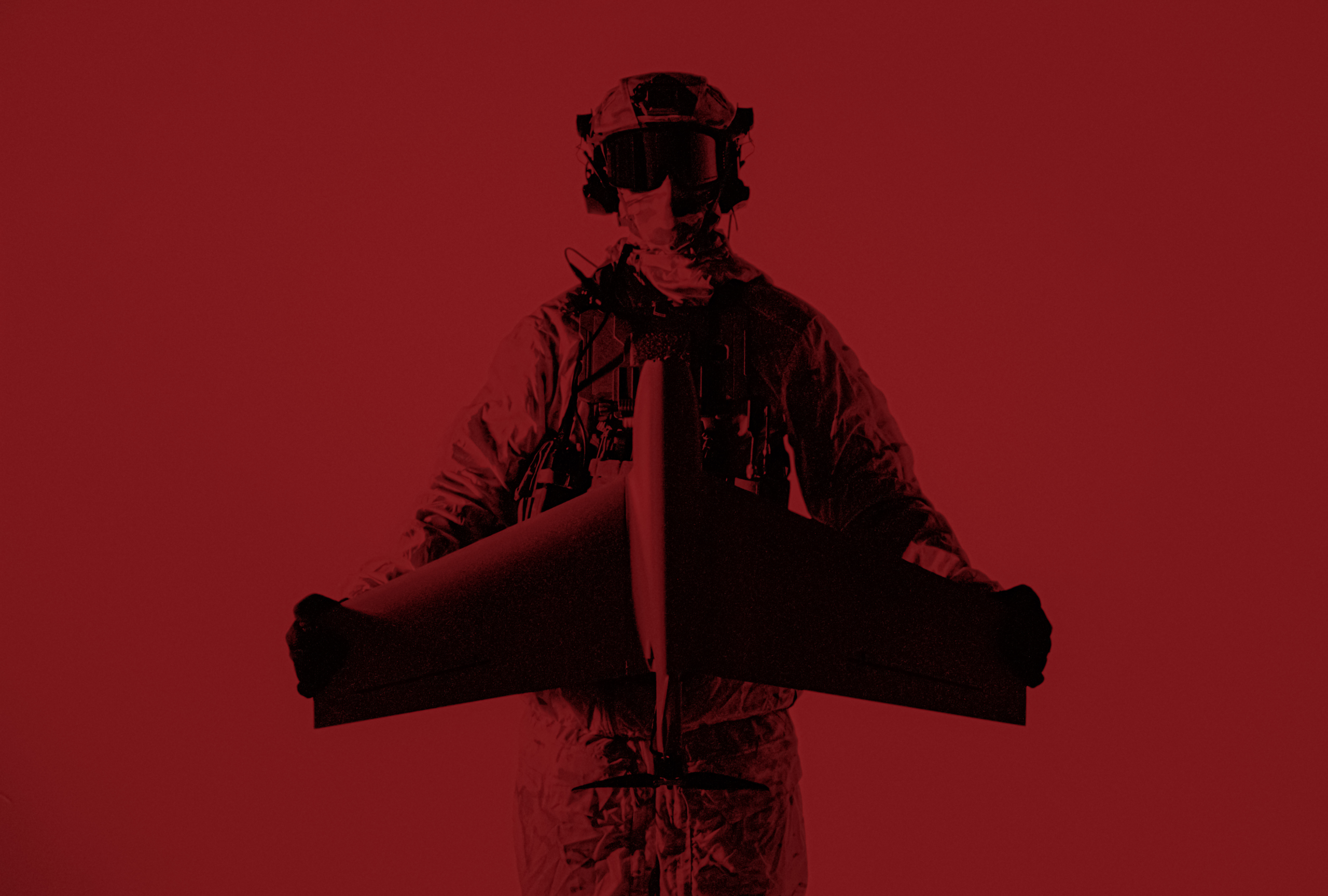
The British Army has fielded 10,000 small drones in six months under Project AKSA, giving the UK defence sector a live test of whether autonomy can move from procurement intention to unit-level capability at speed.
The effort sits inside a wider £300m investment in attritable and consumable systems over the same period. The Army has also been moving thousands of autonomous systems, dozens of operational-level electronic-warfare systems, counter-UAS equipment, and new radios into service, as it tries to reshape the land force around data, drones, electronic attack, and shorter acquisition cycles.
The 10,000-drone figure is striking, although the industrial workload behind it is more important. Small drones are not procured, sustained, and absorbed like traditional armoured vehicles or aircraft. They are closer to consumable battlefield equipment, with shorter design cycles, higher attrition, rapid software iteration, battery and payload variation, and a constant need for training, repair, and replacement. The factory-to-foxhole model requires different habits from both the Army and suppliers.
Project AKSA compresses those habits into a single financial-year tempo. Traditional defence procurement can take longer to approve a modest capability than commercial drone companies take to redesign an entire product line. The battlefield has made that pace increasingly difficult to defend. Drones, jammers, navigation systems, radios, and counter-UAS equipment must evolve together, often in response to adversary adaptations measured in weeks.
The British Army’s 20:40:40 model captures the shift: a smaller proportion of exquisite platforms, a substantial layer of adaptable systems, and a larger base of cheaper, attritable equipment. Manufacturing has to adapt accordingly. The supplier base needs companies that can deliver ruggedised electronics, airframes, payloads, datalinks, batteries, launch systems, training packages, software updates, and repair support without treating every item as a bespoke defence masterpiece.
Britain’s land equipment environment is already split between heavy platform renewal and rapid autonomy scaling, with the Swindon drone centre moving autonomy into test-and-scale work while Boxer deliveries test the rebuild of armoured vehicle production. Project AKSA sits between those worlds. The Army still needs heavy, survivable platforms, while also needing low-cost systems that can be bought, modified, and replaced in volume.
Pairing brigades with multiple industry partners should help close the feedback gap. Soldiers can test equipment, identify weaknesses, and push requirements back to suppliers faster than conventional acquisition structures usually allow. That creates a more useful development loop, but it also demands standards for data, interfaces, batteries, payloads, training, and support. Without them, a rapid drone push can fragment into inventories of incompatible equipment.
Electronic warfare will shape the programme’s durability. Drones that work in benign test conditions may fail quickly in a contested spectrum. Manufacturers must design for jamming, spoofing, interference, emissions control, and degraded navigation. Requirements move quickly into antennas, radios, encryption, autonomy, inertial navigation, mission planning, and operator interfaces. The cheapest drone is rarely the cheapest capability if it cannot operate under the conditions soldiers face.
Counter-UAS integration adds another layer. A force fielding thousands of drones must also protect itself against thousands of hostile drones. Sensors, effectors, remote weapon stations, jammers, command systems, and identification tools must be pulled into brigade-level architectures. The same survivability pressure has already reached legacy artillery, where closed-hatch counter-drone solutions for Paladin show how older platforms are being reshaped around the drone threat.
Sustainment will be a hard test. Consumable systems still need supply chains. Batteries degrade, airframes break, propellers, motors, sensors, and gimbals fail, and software must be updated. Training pipelines must generate operators faster than units consume them. Repair and replacement routes must be built into the procurement model, rather than added after loss rates appear.
For UK manufacturers, Project AKSA is a chance to prove that the domestic base can support rapid, iterative capability at useful scale. It is also a warning. Companies built around slow, high-margin, low-volume models may find themselves outpaced by suppliers comfortable with commercial electronics, modular payloads, and fast production refreshes.
Speed still needs assurance. A drone fielded quickly still needs safety, secure communications, electromagnetic discipline, training, and legal compliance. The strongest industrial models will combine commercial tempo with defence-grade assurance where operational risk demands it.
The 10,000-drone push is therefore a stress test for procurement, production, training, support, software, and tactical adaptation at once. If Britain builds that loop properly, Project AKSA could become a template for wider land transformation. If the loop fragments, the Army risks buying volume without creating durable capability.