IN Brief:
- Serco has been named the successful bidder for the £144.46m Lyneham Technical Training Partnership.
- The proposed contract covers five military schools and 12 service areas, including learning delivery, equipment support, and assurance.
- The standstill period ends on 16 November, with contract signature planned for 18 November 2026.
Serco has been selected for a £144.46 million Ministry of Defence contract covering engineering and technical training at MOD Lyneham in Wiltshire, following a competitive procurement involving three bidders.
The Lyneham Technical Training Partnership will provide training delivery and supporting services across five military training organisations, combining technical instruction with learning design, assurance, planning, equipment support, and programme management.
The MOD published its contract award notice on 5 November, naming Serco Limited as the successful supplier. The decision remains subject to a standstill period ending on 16 November, with contract signature scheduled for 18 November and the initial service period planned to begin the following day.
The announced value is £144,459,613.78 excluding VAT, equivalent to approximately £173.35 million including VAT. The initial contract period runs until 28 March 2031, with provision for an extension of up to two years that could continue until 31 March 2033.
The proposed agreement covers the Defence School of Electrical and Mechanical Engineering, No 4 School of Technical Training, 8th Battalion and REME Arms School, the Defence School of Aeronautical Engineering, and the School of Army Aeronautical Engineering.
These organisations provide instruction in military engineering disciplines, with courses designed to develop the technical knowledge and practical skills required to maintain and support equipment throughout its operational life.
The contract brings together 12 service requirements covering business management, learning assurance, learning design, learning planning, learning delivery, support to learning, equipment support, international defence training, safety, legal services, regulatory requirements, and service agility.
The scope extends beyond classroom instruction. Training programmes require appropriate teaching materials, practical equipment, course planning, administrative support, and procedures for confirming that learning objectives and assessment standards are being met.
Practical engineering instruction presents particular demands because trainees must work with equipment representative of the systems they will encounter during military service. Workshops, laboratories, tools, and technical training devices must be available and maintained in a condition suitable for instruction.
The learning assurance element provides a structured means of examining the quality and effectiveness of the training delivered. Assessment arrangements must be consistent with the requirements of the relevant military organisation, while course documentation and learning materials need to remain aligned with approved technical procedures.
Learning design and planning address different parts of that process. Design establishes the content and structure of training activities, while planning determines how courses, instructors, facilities, and equipment are organised to meet the expected training demand.
Military engineering programmes can require courses in mechanical systems, electrical engineering, aircraft maintenance, and other technical disciplines. Each involves different equipment, operating procedures, and safety requirements, making the coordination of resources an important part of training delivery.
Aircraft engineering instruction, for example, may require the use of representative systems and components to demonstrate maintenance procedures, fault diagnosis, and the interpretation of technical documentation. Comparable requirements apply to mechanical and electrical training, although the relevant equipment and qualification arrangements differ.
The procurement also provides for urgent operational requirements outside the United Kingdom, allowing training to be delivered to partner nations where necessary. The award notice does not identify a confirmed overseas assignment or specify the volume of activity expected under that provision.
Serco’s proposed delivery arrangements include Pearson Education Limited and Inzpire Limited, both identified as partners or subcontractors in the procurement documentation. The notice does not provide a detailed division of responsibility between the organisations.
The MOD conducted the competition under a competitive flexible procedure, receiving three bids. Alongside Serco, the bidders were Capita Business Services Limited and Babcock Land Defence Limited, with all three classified as large businesses.
The award notice identifies optional training courses that have been priced into the total contract value. The announced figure should therefore be understood as the value of the procurement arrangement, including those options, rather than a guarantee that every course will be delivered.
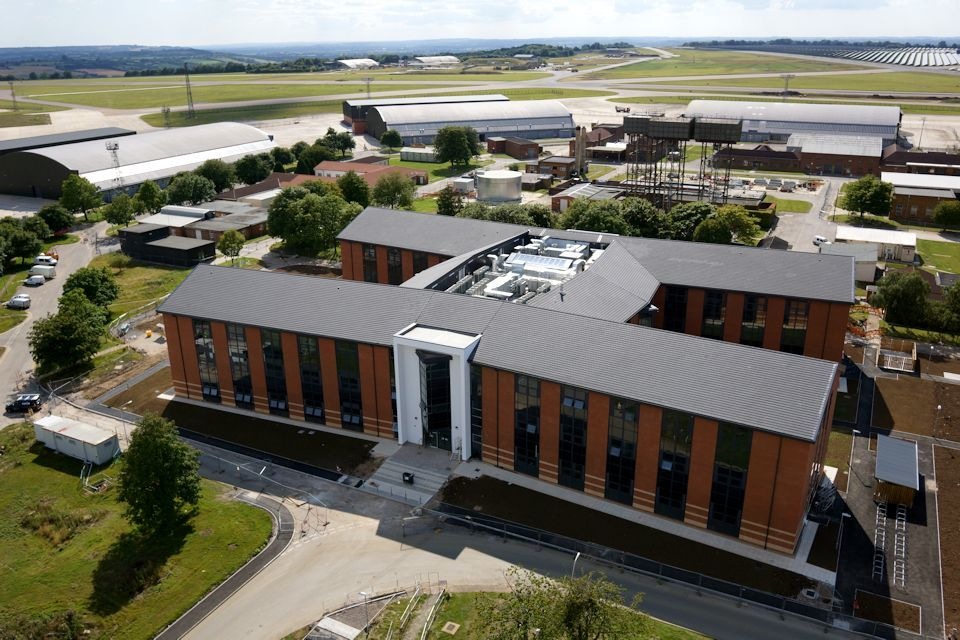
The proposed service contract follows substantial investment in the training infrastructure at Lyneham. In January 2026, the Defence Infrastructure Organisation confirmed completion of an £82 million project providing new technical training facilities and accommodation at the establishment.
The construction programme was delivered by Kier Construction Western & Wales, with Mott MacDonald acting as technical service provider. It included a new training building containing classrooms, laboratories, workshops, and office accommodation.
Three single living accommodation blocks were also completed, providing 96 bedspaces for trainees and another 72 for permanent staff and other RAF personnel undertaking specialist training.
The project supports the relocation of No 4 School of Technical Training from MOD St Athan in South Wales under Project CUBIT. The new facilities were handed over in January, with subsequent fitting-out activity supporting the introduction of training services during 2026.
The wider infrastructure project also includes a planned 2.5MVA solar farm and battery storage installation intended to support the new buildings. The arrangement forms part of the site’s investment in technical training capacity and supporting infrastructure.
Construction and training delivery represent separate contractual responsibilities. The completed buildings provide facilities for instruction, while the proposed Serco agreement addresses how courses, equipment support, learning assurance, and associated services will be managed.
The distinction also affects long-term maintenance arrangements. Training providers must coordinate the availability of teaching equipment and instructional resources, while the buildings and wider estate are managed through the relevant infrastructure responsibilities.
Military technical education is closely connected to equipment sustainment. Personnel trained to maintain aircraft, vehicles, electrical systems, and other equipment must understand the procedures required for inspection, fault identification, repair, and safe return to service.
Those activities are governed by technical documentation, applicable regulations, and the standards established for the equipment concerned. Training therefore needs to remain consistent with the engineering requirements of the systems that personnel will subsequently support.
The partnership’s service agility requirement provides for adjustments to training arrangements as demands change. The procurement notice establishes this as part of the required service scope, although it does not specify the performance measures or response times that will apply to individual course changes.
Service delivery will also depend on the continued availability of appropriately qualified instructors and the equipment required for practical training. Changes to equipment or military engineering procedures may require corresponding updates to course content and supporting instructional materials.
The proposed contract will operate within an established military training environment, where course scheduling, equipment availability, learning assurance, and regulatory compliance must be coordinated across several schools.
The immediate procurement milestone is completion of the standstill period on 16 November. Subject to the award proceeding as planned, Serco is scheduled to sign the contract on 18 November and begin the initial service period on 19 November 2026.