IN Brief:
- ORIGIN and Anduril demonstrated BLAZE integration with Lattice for Air Defense during a Latvian military event.
- The four-day integration connected an existing air defence radar with command software and an autonomous interceptor.
- Further trials will examine the configuration and operating procedures for counter-UAS missions along NATO's eastern flank.
ORIGIN and Anduril Industries have demonstrated an integrated counter-drone system in Latvia, connecting ORIGIN’s BLAZE interceptor with Anduril’s Lattice for Air Defense command platform and an existing military radar installation.
The demonstration took place at a Latvian military training facility in late October, with the results reported on 5 November. Senior Latvian military representatives observed the combined arrangement, which incorporates equipment developed by the two companies into an existing national air defence environment.
According to the companies, integration of BLAZE into Lattice took four days. The work followed a memorandum of understanding signed on 25 September, establishing cooperation on counter-unmanned aircraft technology, integration testing, and operational concepts.
The September agreement provided for technical trials and information exchange, while the subsequent demonstration established that the interceptor could operate within a connected command arrangement incorporating an existing radar.
Anduril’s Lattice for Air Defense platform provides the command-and-control component. Its architecture is designed to bring information from sensors and other equipment into a common operating environment, allowing operators to coordinate responses through the connected system.
The Latvian arrangement used radar equipment already deployed for national air defence. This provided the sensing element, while Lattice connected the available information with the BLAZE interceptor and its associated operating functions.
The integration demonstrates a route for connecting an additional defensive system to existing infrastructure, rather than requiring the replacement of every sensor or command component. The compatibility of such arrangements depends on the interfaces and information required by the participating equipment.
Radar systems detect and track airborne objects, providing information that can be used by a command system to maintain an operational picture. The command layer then supports the coordination of connected equipment, while the interceptor undertakes the flight and tracking functions required for its assigned engagement.
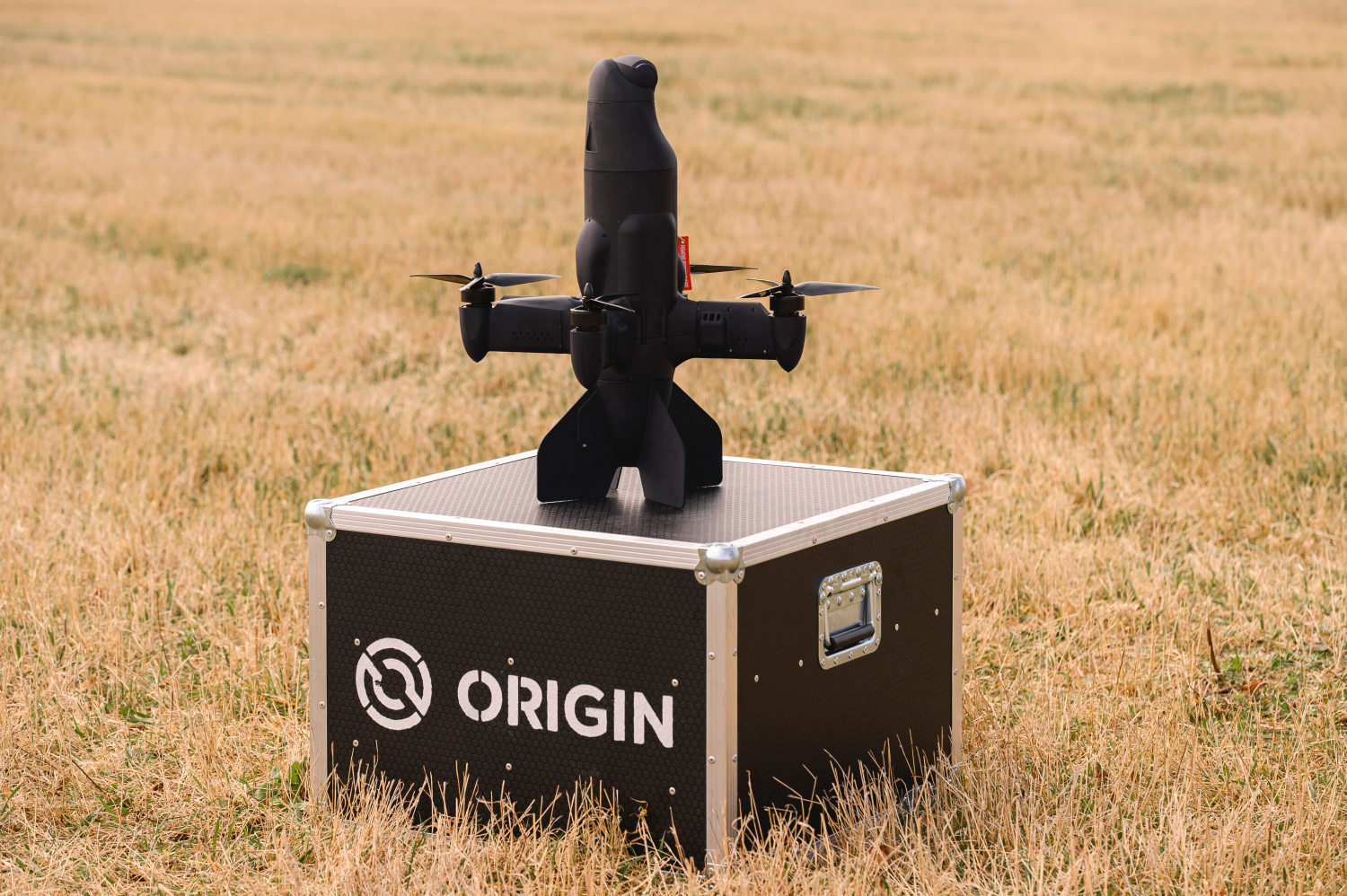
BLAZE is a man-portable autonomous interceptor developed and manufactured by ORIGIN in Latvia. The system combines radar-guided navigation, onboard electro-optical and infrared sensors, and artificial intelligence processing intended to support target acquisition and interception.
ORIGIN describes the initial approach as using radar information to guide the interceptor towards a target. Its onboard sensor suite is then intended to acquire and track the target during the later stages of flight.
The manufacturer identifies operator confirmation as part of the engagement process. Once the required authorisation is provided, the onboard system is designed to follow its attack trajectory while continuing to use the available sensing and guidance information.
BLAZE also incorporates safety arrangements, including an operator override, a wave-off function intended to permit cancellation before the final approach, and procedures for responding to specified failures or operating boundaries.
Those functions form part of the manufacturer’s published product specification. The account of the Latvian demonstration does not describe individual wave-off events or establish which safety functions were exercised during the integration activity.
The equipment’s reliance on several sensing and control functions creates requirements for information transfer between the connected systems. Initial radar tracking, command decisions, interceptor navigation, and onboard target acquisition must operate within a compatible system configuration.
Interface development therefore extends beyond connecting two software applications. Engineers must establish how information is represented, transferred, and interpreted, with the receiving equipment able to use it for the functions required by the overall system.
The companies reported four days of technical integration, but did not disclose the complete engineering preparation that preceded the work. The figure relates to the demonstrated configuration and should not be treated as a standard installation period for every radar, command system, or customer environment.
Different installations may require additional interface development, security assessment, testing, and qualification. The companies have not published a comprehensive list of radar systems certified for use with the combined configuration.
Neither have they disclosed the number of BLAZE interceptors involved in the demonstration, the engagement distances, the number of target aircraft, or a measured interception success rate.
The reported result establishes successful technical integration and demonstration of the connected capability. It does not provide sufficient quantitative evidence to assess the system’s performance against different target types or under sustained electronic interference.
Communications are another consideration for an integrated counter-drone system. The participating components must exchange relevant information through available links, while operators need an accurate understanding of the status of connected sensors and effectors.
ORIGIN describes BLAZE as capable of using onboard sensing and processing in environments where satellite navigation may be disrupted. That capability is part of the product design, although the demonstration account does not publish the precise communications or navigation conditions under which the integrated arrangement was tested.
The wider cooperation between the two companies was established during a Latvian trade mission to the United States in September. Their agreement covers integration, testing, demonstrations, and the development of operating concepts for counter-UAS missions.
The Latvian Investment and Development Agency identified the agreement as part of efforts to connect domestic defence technologies with established international systems suppliers. ORIGIN contributes the interceptor platform, while Anduril provides the wider command software environment.
ORIGIN has also secured national procurement arrangements for BLAZE. Latvia placed a further order in May 2026 under a multiyear framework agreed in December 2025, supporting continued production and development of the interceptor.
The company’s manufacturing activities include the integration of airframe components, electronics, sensors, and guidance systems. Production configurations must remain consistent with the equipment and software approved for the intended customer requirement.
Anduril’s Lattice architecture has been developed to connect sensors and other equipment from different suppliers. In this demonstration, that approach was applied to a Latvian interceptor and an existing radar, establishing a specific example of third-party equipment integration.
The companies have not announced a new procurement award arising from the late-October demonstration. Nor have they established that a complete Lattice-based air defence system has entered operational service with the Latvian armed forces under this cooperation agreement.
Further testing is planned on NATO’s eastern flank, alongside development of operational procedures describing how the connected equipment could be used. Those activities are expected to examine the configuration beyond the initial integration milestone.
Future assessments will need to establish the requirements associated with the intended sensors, command equipment, and interceptor configuration. The late-October demonstration provides an initial system integration result, with operational qualification and any subsequent procurement remaining separate decisions.