IN Brief:
- Alta Ares secured six of the 16 counter-drone framework lots awarded across five suppliers.
- NATO's marketplace covers point, area, border, and convoy protection using different system configurations.
- The 18-month framework allows subsequent national purchases, while NATO has allocated €3.1m for additional testing.
Alta Ares has secured six lots under NATO’s new counter-drone procurement framework, establishing the French defence technology manufacturer as one of five suppliers selected to provide systems for protecting military installations, deployed formations, and other assets against unmanned aircraft.
The NATO Communications and Information Agency selected 16 counter-unmanned aircraft system solutions for its new procurement marketplace, launched on 5 November under the alliance’s Drone Edge initiative.
Alta Ares received six of the available lots, the largest allocation secured by an individual supplier. The other selected companies are Axon Enterprise, Northrop Grumman, OSL UK, and Quantum Systems.
The framework provides participating allies with access to selected equipment through a NATO catalogue. Once a requirement has been identified, eligible customers can procure the relevant solution without conducting another full tender competition.
The marketplace establishes a procurement mechanism rather than a confirmed equipment delivery programme. Alta Ares has not disclosed a guaranteed purchase value or a fixed number of systems to be supplied under its selection, with expenditure dependent on subsequent orders.
The framework contracts are valid for 18 months following signature, with the possibility of extension. NATO intends to conduct further competitions as counter-drone technologies develop, allowing additional capabilities to be considered for the marketplace.
The NCIA assessed submissions against four reference scenarios intended to represent different operational requirements. These cover point protection, area protection, border protection, and the defence of moving military convoys.
Point protection concerns a defined installation or other high-value asset, such as a military base, command post, or critical infrastructure location. The required systems must provide appropriate detection, tracking, and response functions within the protected area.
Area protection extends those requirements across a larger location. NATO’s reference scenario specifies protection of an area up to three kilometres in diameter, potentially encompassing an airbase, logistics facility, or other military installation.
Border protection is assessed against a 20-kilometre segment, introducing a requirement for persistent surveillance and coordinated responses over a longer geographical boundary.
The convoy scenario covers a moving military formation up to 300 metres long, travelling at speeds of up to 50 kilometres per hour. It requires equipment capable of maintaining detection, tracking, and defensive functions while the protected formation moves.
These are procurement assessment scenarios, rather than published performance guarantees for every system selected. NATO has not disclosed the individual technical scores, ranges, or interception results associated with Alta Ares’ six lots.
Alta Ares’ allocation includes area defence and border protection. The company was selected for area protection across fixed, deployable, and mobile configurations, reflecting the different installation and operating requirements covered by the framework.
A fixed counter-UAS installation can use established mounting positions, communications infrastructure, and electrical supplies. Deployable equipment must accommodate transportation and installation at different sites, while mobile configurations introduce additional requirements associated with movement and integration with the protected platform or formation.
Counter-drone architectures generally combine sensing, information processing, command functions, and equipment capable of responding to a detected threat. The interaction between these elements determines how information moves from initial detection through target tracking and the selection of an available response.
Alta Ares develops artificial intelligence software and physical interceptor systems intended to support that process. Its portfolio includes Gamma ISR for sensor-based detection and recognition, together with Pixel Lock software for target tracking and terminal guidance.
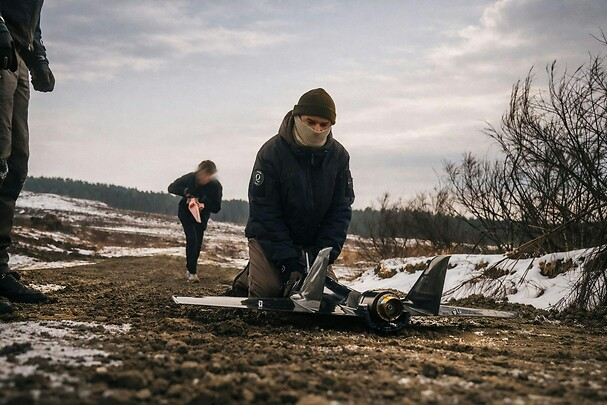
The company also develops two interceptor families. X-Lock is a multirotor system designed for short- to medium-range counter-drone operations, while Black Bird uses a turbojet-powered fixed-wing configuration intended for engagements at greater distances and speeds.
Both platforms incorporate onboard processing capabilities intended to support guidance in contested operating environments. Their different propulsion and flight configurations create distinct requirements for launch arrangements, energy supply, manoeuvring, and integration with supporting sensors.
The company’s published product information identifies Pixel Lock as an autonomous guidance capability designed for environments where satellite navigation may be unavailable or disrupted. The practical operating limits depend on the installed configuration and the conditions encountered during an engagement.
The specific Alta Ares products awarded under each NATO lot have not been completely identified in the public procurement information. Its wider product portfolio therefore illustrates the manufacturer’s capabilities without confirming that every named system forms part of the framework.
NATO selected the 16 solutions after considering evidence from alliance and national innovation programmes, operational activity, and exercises. The NCIA states that the selected capabilities have already been deployed in allied countries and Ukraine.
Operational experience informed the selection process, but the alliance has not published comparable test results establishing the relative performance of the five suppliers. Additional evaluation will take place through a separate €3.1 million allocation for testing by NATO commands and participating nations.
The marketplace follows the launch of Drone Edge at NATO’s Defence Industry Forum in Ankara in July. The broader initiative includes commitments by allies to invest more than $40 billion in counter-drone capabilities over five years.
That investment figure covers wider national expenditure and should not be confused with the value of the new marketplace or Alta Ares’ individual framework awards.
Alta Ares was founded in 2024 and has expanded its industrial and development activities across several allied markets. In June 2026, the company raised €50 million to support product development and manufacturing expansion, including activities in France and Ukraine.
The manufacturer is working with industrial partners to increase interceptor output, with a stated ambition of producing more than 1,000 units per month by 2027. The target remains a planned production rate, and the NATO announcement does not establish that the company has already achieved that volume.
Additional manufacturing capacity will be required to translate future orders into equipment deliveries. Production involves interceptor hardware, electronics, propulsion components, software integration, testing, and the supporting supply chain arrangements associated with each configuration.
NCIA will administer the framework through its Counter-UAS Centre of Expertise, with the selected suppliers available to customers through the new catalogue. Actual procurement volumes, delivery dates, and equipment configurations will depend on orders subsequently placed under the arrangement.