IN Brief:
- RENK's nine-month orders increased 33.6% to €1.66bn, while revenue rose 5.8% to €982m.
- Vehicle Mobility Solutions led growth, with new Leopard 2 and TRACKX transmission orders supporting the manufacturing pipeline.
- The €7.59bn backlog includes firm orders, framework agreements, and estimated future business, with further production expansion planned.
RENK Group recorded a 33.6% increase in order intake during the first nine months of 2026, with expanding demand for military vehicle transmissions supporting additional manufacturing investment at its German facilities in Augsburg and Rheine.
Orders reached €1.66 billion, compared with €1.25 billion in the corresponding period of 2025. Revenue increased 5.8% to €982 million, reflecting customer delivery schedules, while adjusted earnings before interest and tax rose 12.7% to €158.8 million.
The adjusted EBIT margin improved from 15.2% to 16.2%, supported by higher production volumes and efficiency gains in the Vehicle Mobility Solutions business. RENK attributed part of the improvement to its modular production arrangements, which are being introduced progressively across the manufacturing network.
The company’s total reported order backlog reached €7.59 billion at 30 September, compared with €6.68 billion at the end of 2025. The figure includes several categories of business commitments and estimated demand rather than consisting entirely of firm orders.
Vehicle Mobility Solutions remained the principal growth contributor. Order intake increased 46.2% to €1.32 billion, with the segment recording a book-to-bill ratio of 2.0, compared with 1.6 a year earlier.
Revenue in the division increased 12.3% to €650.2 million, while adjusted EBIT rose 23.4% to €129.3 million. Its adjusted margin improved to 19.9%, reflecting the combination of higher activity and manufacturing efficiency improvements.
Important contract activity included an approximately €130 million extension from KNDS Deutschland for HSWL 354 transmissions used in the Leopard 2 main battle tank family. Deliveries under the extension are scheduled to begin in 2029 and continue until 2032.
The HSWL 354 forms part of the Leopard 2 mobility system, transferring engine power through the drivetrain while supporting the operating requirements of a heavily armoured tracked vehicle.
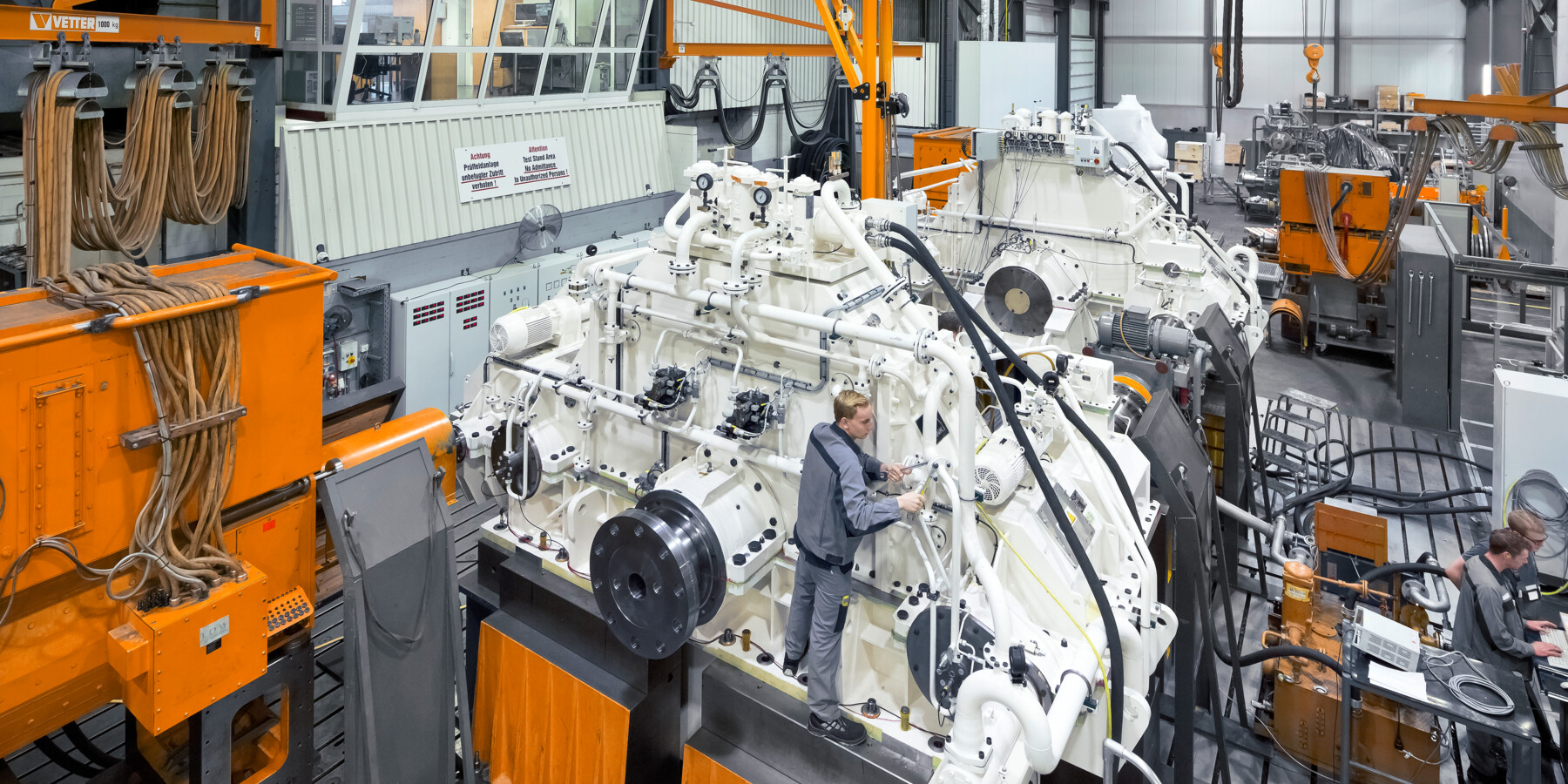
Military vehicle transmissions must accommodate demanding mechanical loads within the space and weight constraints of the host platform. Their design and manufacture involve precision engineering, the integration of mechanical components, and testing against defined operating requirements.
RENK’s transmission production therefore depends on specialist machining capacity and controlled assembly processes. The manufacturer must maintain consistency across production while meeting the technical specifications and delivery requirements associated with each vehicle programme.
The company also secured a €30 million follow-on order from Patria for HSWL 076 transmissions used in the TRACKX vehicle family. Deliveries are expected to begin in 2027, following initial procurement activity involving Finland and Sweden.
The Leopard 2 and TRACKX orders involve different transmission configurations, but both contribute to demand for RENK’s military mobility engineering and production capabilities. Their delivery schedules extend across several years, providing defined manufacturing requirements beyond the current reporting period.
RENK is expanding production capacity to accommodate those commitments alongside other customer programmes. Three new machining centres entered operation at Rheine at the end of August, increasing the site’s ability to manufacture components for military mobility equipment.
The company plans to invest more than €20 million at Rheine through 2030. Defence manufacturing capacity at the site has been growing by more than 30% annually since 2025, with additional equipment and process changes intended to support further output increases.
At Augsburg, RENK is implementing a manufacturing programme designed to more than triple annual transmission output to over 2,000 units by 2030. The target concerns future production capacity rather than a volume already achieved.
The expansion includes a modular production concept intended to improve the organisation of manufacturing activities and increase efficiency. RENK is transferring methods developed through the programme into other facilities, including Rheine, while maintaining series production.
Modular manufacturing arrangements can organise work around defined process stages, with equipment and materials prepared for the relevant operations. Their effectiveness depends on the production sequence, available machinery, component supply, and the requirements of the assemblies being manufactured.
RENK has linked the changes with improvements in scale and operational efficiency, although the company has not disclosed detailed productivity measurements for every process introduced at the expanded facilities.
The production programme must operate alongside existing contractual obligations. Customers specify delivery and release schedules, meaning increased order intake does not necessarily generate an immediate equivalent increase in revenue.
That difference is visible in the nine-month results. Group orders increased by more than one-third, while revenue rose by less than 6%, with RENK identifying the timing of customer deliveries as a principal factor.
The composition of the backlog provides another important distinction. At the end of September, fixed orders accounted for €2.94 billion, while framework agreements represented €1.08 billion and soft orders totalled €3.58 billion.
Fixed orders represent the more firmly established contractual component. Framework agreements provide arrangements under which further business may be placed, while soft orders reflect estimated future volumes associated with sole-source projects and successor programmes.
The €7.59 billion total therefore combines confirmed commitments with less certain future demand. These categories are relevant when assessing the extent to which planned manufacturing capacity is supported by existing contracts rather than anticipated subsequent procurement.
RENK’s Marine & Industry division recorded more subdued activity. Order intake increased 0.9% to €256.9 million, with naval business supporting demand, including orders associated with four Turkish Hisar offshore patrol vessels.
Revenue in Marine & Industry declined 6.3% to €250.9 million, while adjusted EBIT fell to €25.8 million from €31.2 million. Weakness in civilian industrial markets offset some of the benefit from naval activity.
The group is also restructuring its portfolio. Its acquisition of David Brown Defence was completed on 2 November, adding British engineering and manufacturing capabilities associated particularly with naval propulsion systems.
The Huddersfield business has become RENK UK Huddersfield, bringing additional specialist drivetrain expertise into the group. The acquisition follows the company’s expansion of its existing land and marine propulsion activities.
Separately, RENK signed a binding agreement on 22 October to sell its slide bearings division to Miba. The planned disposal will narrow the group’s operating portfolio, with the business due to be classified as a discontinued operation from the fourth quarter under IFRS 5.
That accounting treatment affects RENK’s full-year guidance. The company now expects revenue of approximately €1.4 billion and adjusted EBIT between €240 million and €255 million from continuing operations, excluding the slide bearings business.
The revised forecast is therefore based on Vehicle Mobility Solutions and Marine & Industry rather than the same operating perimeter used for the nine-month consolidated results.
The company is scheduled to present a strategy update in London on 8 December. The presentation will follow the acquisition of the British business, the planned slide bearings disposal, and continued investment in the German manufacturing network.
Production expansion at Augsburg and Rheine remains tied to contracted delivery schedules and the company’s assessment of future demand. The installation of additional machinery and transfer of new manufacturing methods will continue as RENK works towards higher transmission output through 2030.