IN Brief:
- EDGE contributed $50m to Q-CTRL’s $290m Series C fundraising round.
- Q-CTRL develops quantum sensing and map-matching navigation technology intended for conditions in which satellite positioning is unavailable.
- The parties have not identified a specific EDGE vehicle integration, procurement order or manufacturing transfer.
Abu Dhabi defence technology group EDGE has invested $50 million in Australian quantum technology developer Q-CTRL, taking part in a $290 million Series C financing round that is intended to support the expansion of quantum software and navigation systems. The investment gives EDGE exposure to positioning technologies designed for aircraft and uncrewed platforms operating when satellite navigation cannot be trusted. Neither company has announced a specific defence equipment order arising from the transaction.
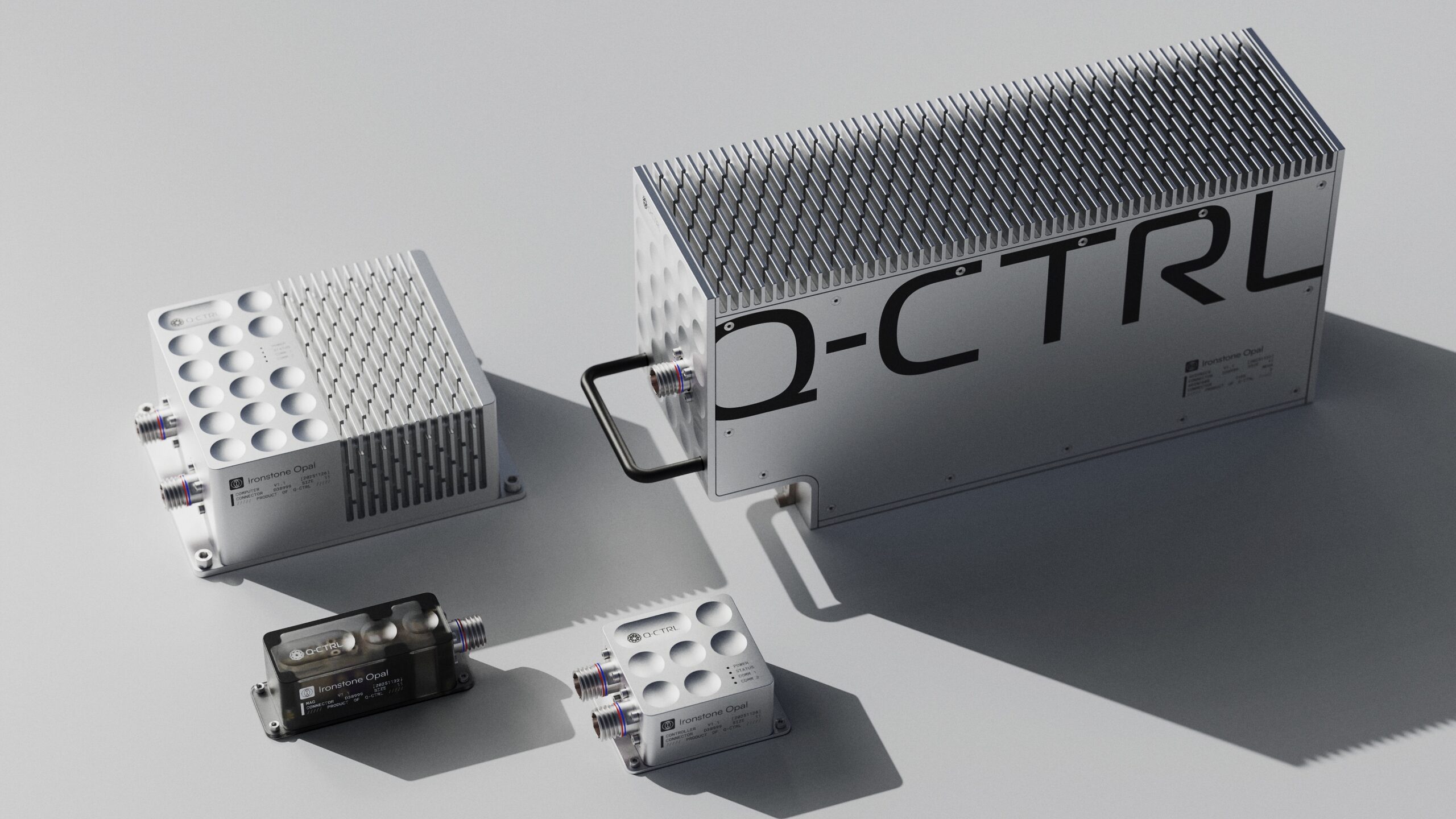
Q-CTRL, headquartered in Sydney, develops software for controlling quantum systems and has built a navigation product known as Ironstone Opal. Its wider funding round was led by Salesforce Ventures and included strategic and financial investors from several industries. EDGE’s contribution forms part of that equity financing rather than a separate $50 million procurement contract. Q-CTRL has said the capital will support its software work and wider deployment of quantum navigation technology.
Satellite navigation signals can become unreliable when obstructed, jammed or deliberately imitated. Aircraft and uncrewed systems commonly use inertial navigation alongside satellite positioning, with accelerometers and gyroscopes estimating movement when a satellite fix is lost. Errors accumulate during that process, so the length of useful operation without external corrections depends on sensor quality and the availability of independent measurements. Q-CTRL is developing one possible additional source of position information for such conditions.
Ironstone Opal approaches that problem by measuring characteristics of the surrounding physical environment. Q-CTRL describes quantum sensors sensitive to small variations in Earth’s magnetic and gravitational fields, combined with software that compares those measurements against mapped geophysical patterns. The resulting position estimate does not require the receiver to acquire a signal transmitted by a navigation satellite. This is a passive measurement method, although its practical accuracy still depends on sensor performance, platform interference and the usefulness of the available maps.
Quantum sensors do not supply a complete navigation solution by themselves. Ironstone Opal’s software must compare measurements collected while a vehicle moves with reference maps, estimate which location best matches the observed pattern and combine the result with an existing inertial solution. Weakly distinctive measurements, inaccurate maps or interference from the host platform can increase uncertainty. Q-CTRL says it uses sensor fusion and software-based noise reduction to address those constraints, with performance still dependent on the installation and operating conditions.
Aircraft integration adds physical as well as computational constraints. A navigation unit has to fit within specified weight, power, cooling and installation limits, and it must withstand vibration and environmental conditions without producing misleading outputs. Data interfaces must deliver position information in a form recognised by existing avionics or flight controllers. Q-CTRL lists different hardware arrangements for crewed aviation and small uncrewed systems, and identifies qualification and interface standards for selected products. Those product claims do not establish that the equipment has been qualified for a particular EDGE platform.
The Australian company reports field validation across airborne, ground and maritime applications, including collaboration with aerospace and defence organisations. Its published performance figures are supplier-reported results for the configurations and test conditions concerned, not a guarantee that a new installation will deliver the same accuracy in every environment. Integration would require testing against the vehicle’s dynamics, local interference, available geophysical data and the criteria of the eventual operator.
EDGE has previously demonstrated autonomous surface craft alongside counter-drone and anti-jamming equipment in a UAE Navy exercise. An independent source of position information could complement such systems, provided it can exchange reliable data with their navigation and control equipment. EDGE has not named a platform for Q-CTRL integration, established a joint development programme or committed to manufacturing the Australian company’s hardware in the UAE. The investment therefore precedes any confirmed defence platform implementation.
Position estimates alone do not confer complete vehicle autonomy. A navigation system may tell a controller where the platform is, while separate software determines a route, manages obstacles, handles communications and commands the propulsion or flight controls. Adding another navigation source can help sustain an estimate under contested conditions; it does not resolve sensor fusion, collision avoidance, command authority or the engineering of an entire autonomous mission system.
Integrating a new positioning system would require evidence that its accuracy, latency and failure indications meet a platform’s operating requirements. Engineers must define how navigation uncertainty is represented, how software responds when sensors disagree, and how faults are recorded for later investigation. Interfaces to existing inertial units and mission computers would also require mechanical, electrical and software validation. No EDGE integration schedule or qualification programme was included in the financing announcement.
EDGE and Q-CTRL have not disclosed the investor’s ownership percentage, board rights, intellectual property access or preferential supply arrangements. A strategic equity holding can support future technical cooperation without conferring an exclusive licence or guaranteeing equipment deliveries. Q-CTRL also has other industrial and financial investors, and its announced funding strategy spans navigation systems and quantum infrastructure software beyond defence platforms.
Q-CTRL plans to extend its quantum software development and the commercial deployment of navigation hardware with the new capital. EDGE’s confirmed commitment is a $50 million equity investment within that financing round. Subsequent vehicle integration, qualified flight or sea trials, a technology licence or a production order would each be separately reportable developments; none was identified in the 13 November announcement.