IN Brief:
- India has approved industry transfer of DRDO-developed technologies covering all conventional missile systems.
- Production remains subject to programme-specific qualification, certification, and regulatory requirements.
- Wider industrial participation could extend missile manufacturing work to Indian SMEs and specialist technology suppliers.
India’s Defence Research and Development Organisation (DRDO) is opening its conventional missile technologies to domestic manufacturers after Defence Minister Rajnath Singh approved their transfer to Indian industry for production.
The decision covers technologies developed by DRDO for all conventional missile systems. Companies taking them into production will remain subject to the relevant qualification, certification, and regulatory requirements, so the approval creates a route into industrial manufacture rather than an unrestricted release of designs or an automatic production award.
DRDO said the mechanism is intended to support the transition from missile development into production, broaden industrial participation, and increase domestic value addition. It also gives Indian small and medium-sized businesses, specialist suppliers, and technology partners a clearer route into programmes that have traditionally depended heavily on state research organisations and established defence manufacturers.
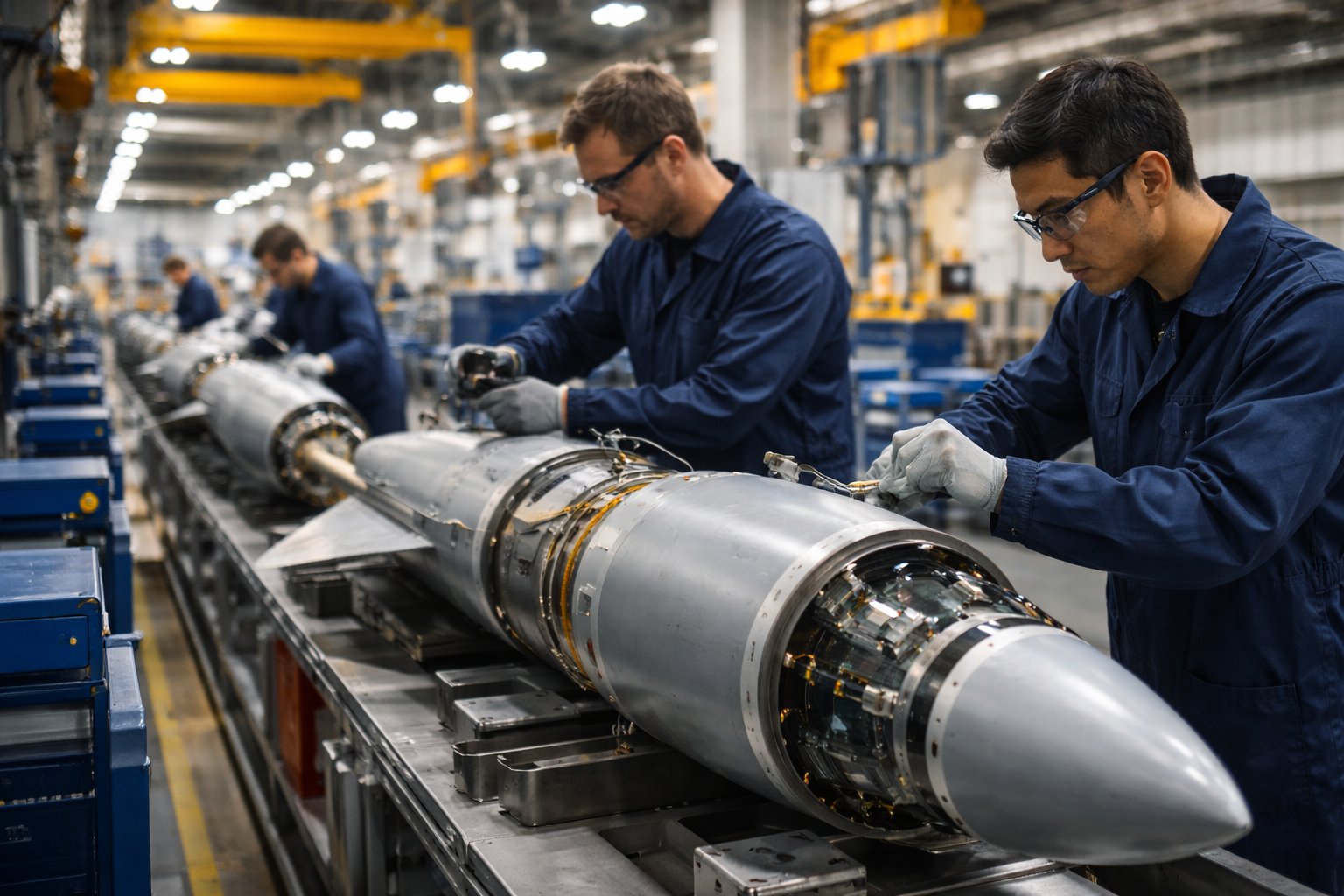
Missile industrialisation extends far beyond final assembly. Guidance electronics, seekers, propulsion, actuation, structures, energetic materials, power systems, software, ground equipment, and acceptance testing all have to conform to controlled engineering baselines. Moving a proven design into series production therefore requires manufacturing documentation, tooling, qualified processes, traceability, configuration control, and repeatable test procedures across the supply chain.
India already uses development and production partnerships to bring manufacturers into DRDO programmes. Under the Development-cum-Production Partner model, capable public and private companies are identified for development and production work, allowing manufacturing knowledge to be built before a programme reaches full industrial maturity. By March 2026, 134 companies had joined DRDO programmes as development-cum-production partners or production agencies, while 2,180 technology-transfer agreements had been signed.
The new missile approval widens the policy framework around that activity. Previous transfers have taken individual technologies and systems into industry, but the 25 August decision applies to DRDO-developed technologies across conventional missile programmes as a class. The practical effect will still be determined programme by programme, because each weapon has its own security, certification, production, and procurement requirements.
For manufacturers, the difficult part begins after access to the technology is granted. Missile production depends on stable supplies of qualified electronics, precision-machined hardware, specialist materials, propellants, warhead components, and test equipment, often over product lives that outlast commercial component cycles. Suppliers must also maintain records and process controls capable of showing that every production batch remains within the approved configuration.
That creates opportunities below prime-contractor level as well as for companies capable of taking responsibility for complete systems. Specialist businesses can enter programmes through cable assemblies, embedded computing, power conditioning, machined structures, composites, thermal management, test rigs, environmental qualification, ground-support equipment, and software integration. The value of the policy will depend partly on how widely those work packages are distributed and whether smaller suppliers can justify the investment needed to meet defence-specific quality requirements.
Production capacity is another constraint. A successful development programme does not create an operational stockpile unless industry can manufacture the system at the required rate, and missile output can be limited by long-lead components, energetic-material capacity, specialist test facilities, or a single qualified supplier. Transferring technology to additional industrial partners can reduce some of those constraints, but only where the customer is prepared to qualify alternative production routes and maintain common configuration control.
Domestic manufacture also gives India more control over upgrades and obsolescence. Electronics and software can change much faster than the service life of a missile, while imported components may become unavailable because of commercial discontinuation, export controls, or changes in supplier strategy. A production base with access to design data and engineering authority is better placed to manage substitutions, but every change still has to be tested and certified against the weapon’s approved performance.
The policy sits within a wider effort to expand India’s defence manufacturing base and reduce dependence on imported equipment. Recent Ministry of Defence data shows more than 2,200 industries in the DRDO production network and thousands of technologies and intellectual-property assets opened to industrial use. Missile manufacture is among the most demanding parts of that agenda because safety, reliability, storage life, and performance have to remain consistent across production lots.
No production quantities, receiving companies, or programme schedules were identified in the 25 August announcement. Those details will emerge through technology-transfer agreements and procurement actions, and they will show whether the policy mainly formalises existing relationships or brings materially more companies into missile production.
The immediate change is administrative but consequential: DRDO now has approval to transfer technologies from all of its conventional missile systems into qualified domestic production. The next evidence of progress will come from named transfers, new industrial partners, and the rate at which those arrangements convert into certified manufacturing capacity and delivered weapons.