IN Brief:
- The AR6 is designed to carry payloads above 200kg across missions extending to 500km.
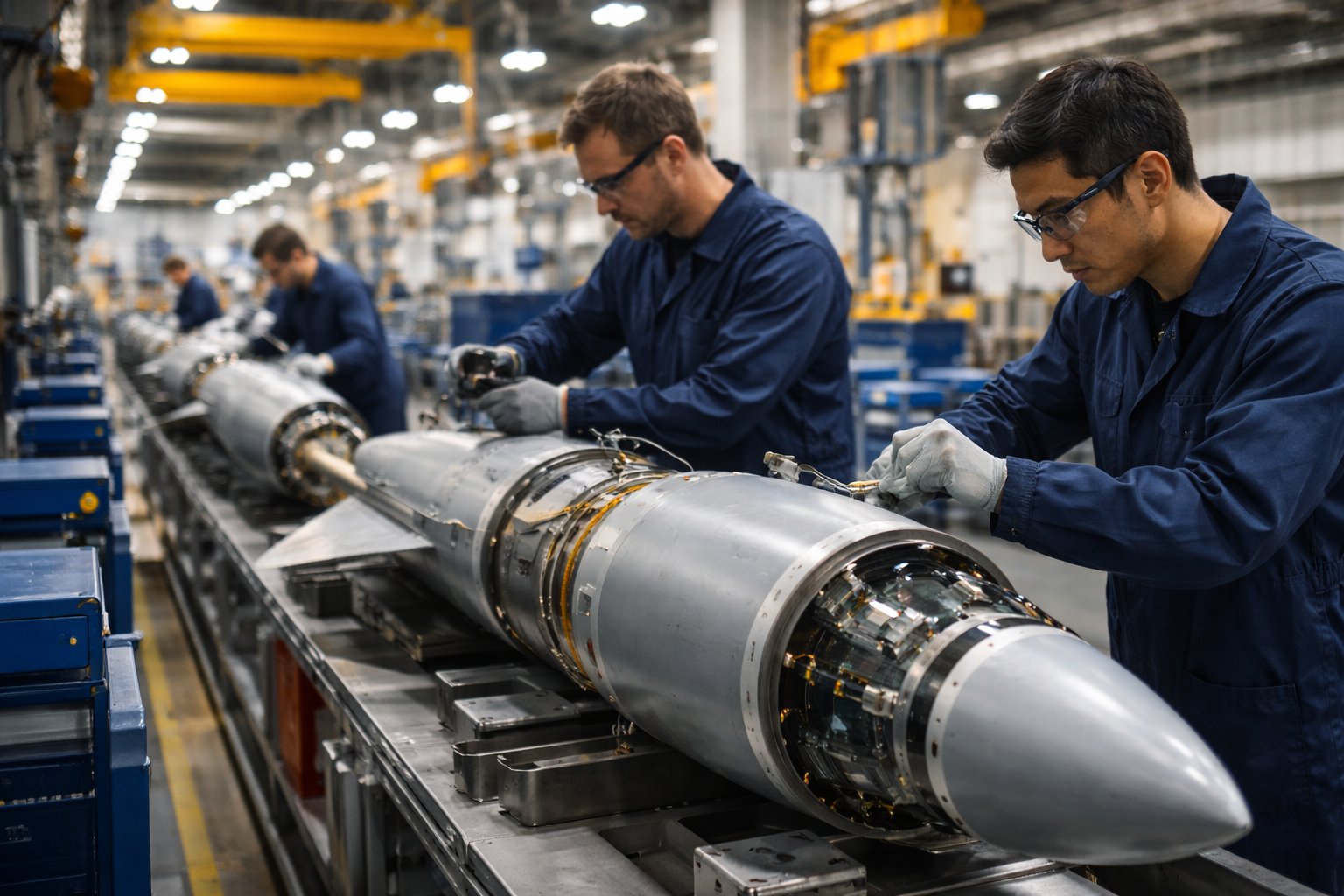
- TEKEVER plans to begin production through its Swindon manufacturing operation during 2026.
- Propulsion, structural weight, autonomy assurance, configuration control, and supplier throughput will govern scalability.
TEKEVER has unveiled the AR6, a British-designed heavy-lift autonomous aircraft family intended for military logistics, civil transport, medical support, offshore work, and disaster response.
The company is targeting payloads above 200kg and mission distances of up to 500km, placing the aircraft well beyond the carrying capacity and radius of smaller electric systems used for short-range delivery. Production is scheduled to begin before the end of 2026 at TEKEVER’s Swindon manufacturing hub, supported by UK SME partners.
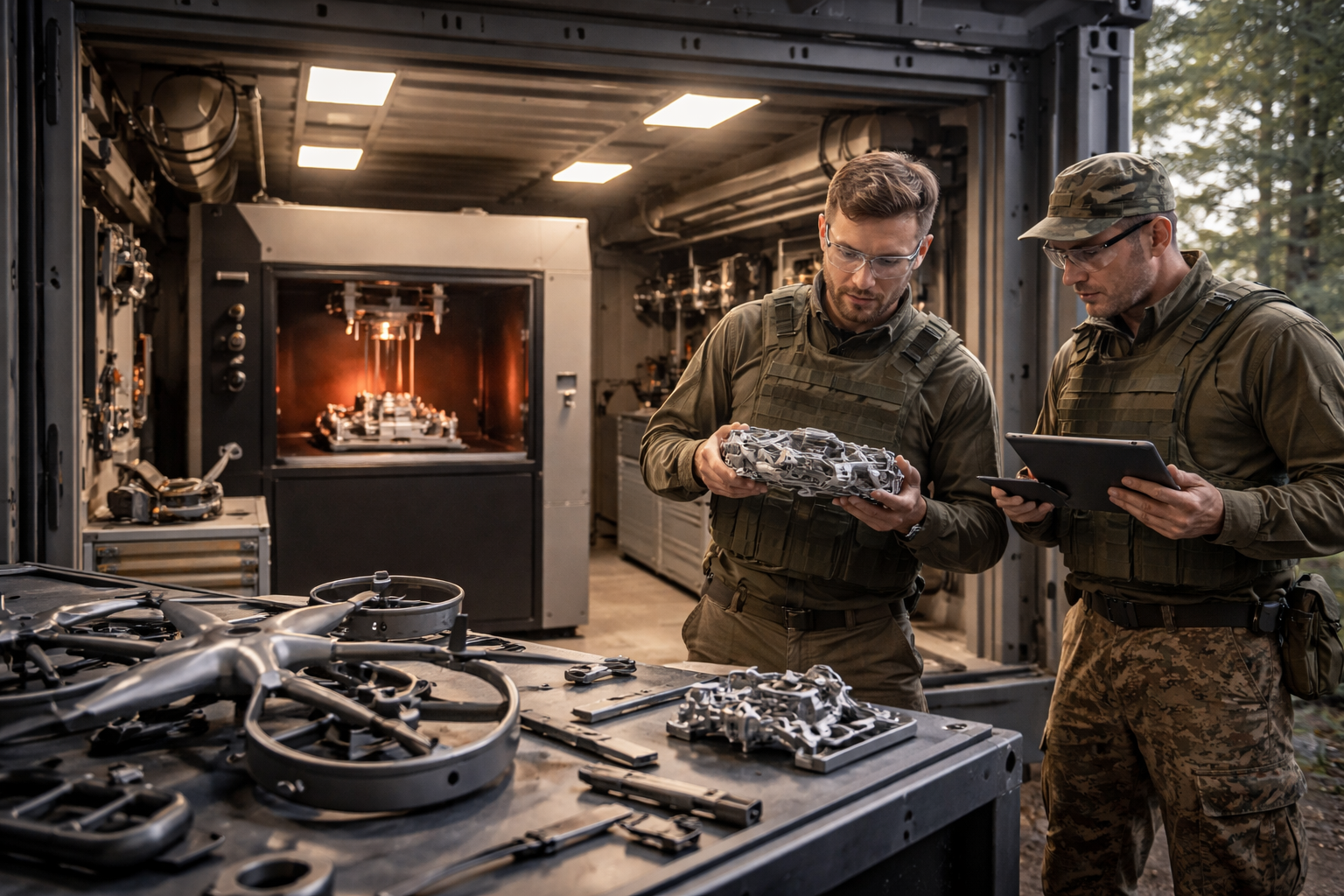
Several configurations are planned rather than a single fixed aircraft, allowing the airframe to be adapted around payload, mission, and operating environment. Military roles include forward logistics, casualty evacuation, support to dispersed forces, and collaborative operation with combat aircraft.
A military variant is intended to operate without dependence on satellite navigation and use TEKEVER’s mission-autonomy software for coordinated missions. That requirement reflects operating conditions in which communications may be disrupted, navigation signals jammed, and remote-piloting capacity constrained.
Heavy lift changes the engineering problem considerably. A 200kg payload may include ammunition, fuel, medical equipment, communications packages, sensors, or urgent stores, but moving it safely over hundreds of kilometres demands more than enlarging a smaller drone.
Structures must carry higher loads without creating excessive empty weight, while propulsion needs sufficient lift and cruise efficiency to preserve useful reserves for wind, diversion, and landing. Transmission systems, actuators, landing gear, and control surfaces all face greater mechanical stress.
Payload variability introduces further complexity. A dense compact load behaves differently from a large lightweight package, while liquid cargo can shift during flight. The aircraft therefore needs defined attachment points, known centre-of-gravity limits, and loading procedures that can be followed away from a specialist airfield.
TEKEVER has highlighted advances in hydraulic and propulsion systems, both of which will shape production reliability. If AR6 combines vertical or short-field operation with efficient forward flight, the resulting mechanism may increase mission flexibility while adding maintenance requirements and additional failure modes.
Autonomous contingency handling will be as important as route planning. The aircraft must respond predictably to sensor faults, unexpected obstacles, poor weather, damaged landing areas, and lost communications, with enough assurance that operators can dispatch it without continuous intervention.
Software releases will need the same configuration discipline as physical components. Aircraft operating together must share compatible autonomy, navigation, and communications baselines, while updates should be tested against representative payloads and degraded conditions before fleet deployment.
The Swindon production plan brings those questions forward quickly. Tooling, work instructions, supplier qualification, acceptance testing, and workforce training must be established while the design is still maturing, creating a familiar tension between rapid entry into production and the cost of changing processes later.
UK SME participation could support rapid development, but smaller suppliers need enough demand visibility to invest in equipment and people. The programme will draw on composites, machined structures, propulsion components, electronics, actuators, wiring, sensors, and ground-control systems, each with different lead times and qualification burdens.
Experience gained from supporting Ukrainian operations gives TEKEVER a source of feedback on autonomy, maintainability, and contested communications. Scaling those lessons into a heavier aircraft will require care, because a system that can be treated as readily replaceable at small-drone scale may need a far more conventional sustainment model once payload and unit value rise.
Britain’s Defence Investment Plan places more than £5bn behind drones and autonomous systems, creating a market signal that should support domestic production. AR6 will test whether that demand can generate repeatable manufacturing and supplier investment rather than another limited demonstration programme.
The logistics case is persuasive where crewed helicopters are scarce, expensive, or exposed. An autonomous aircraft can carry routine supplies on missions that do not justify a crewed platform, provided reliability, turnaround time, and weather tolerance are good enough for planners to trust.
Cost per delivered kilogram will provide a better measure than acquisition price alone. Fuel or energy use, maintenance labour, spares, ground crew, launch infrastructure, attrition, and payload handling all shape the operating economics.
A family approach could help TEKEVER address different customers without redesigning the aircraft completely, although configuration growth must be controlled. Bespoke propulsion, payload, or autonomy requirements can turn a common platform into several low-volume programmes.
Production architecture should therefore favour shared airframe sections, interfaces, software, and support equipment, with differences concentrated in modular mission kits. Commonality will determine whether Swindon can build a family at useful volume or a succession of expensive variants.
AR6 enters a market that includes cargo UAVs, autonomous rotorcraft, converted aircraft, and conventional helicopters. It does not need to replace all of them; it needs to prove that substantial loads can be moved reliably, repeatedly, and at a cost that justifies adding another aircraft type to the logistics system.
The first production aircraft will show whether TEKEVER has balanced payload ambition with supportability. Heavy-lift autonomy becomes operationally useful only when the factory, maintenance system, and software pipeline can keep pace with the missions promised.