IN Brief:
- The Royal Navy is set to procure at least six Common Combat Vessels to replace the Type 45 destroyer fleet.
- The ships are expected to act as control hubs for uncrewed air, surface, and underwater systems.
- The industrial test will centre on UK shipyard capacity, modular mission systems, combat-system integration, and autonomy support.
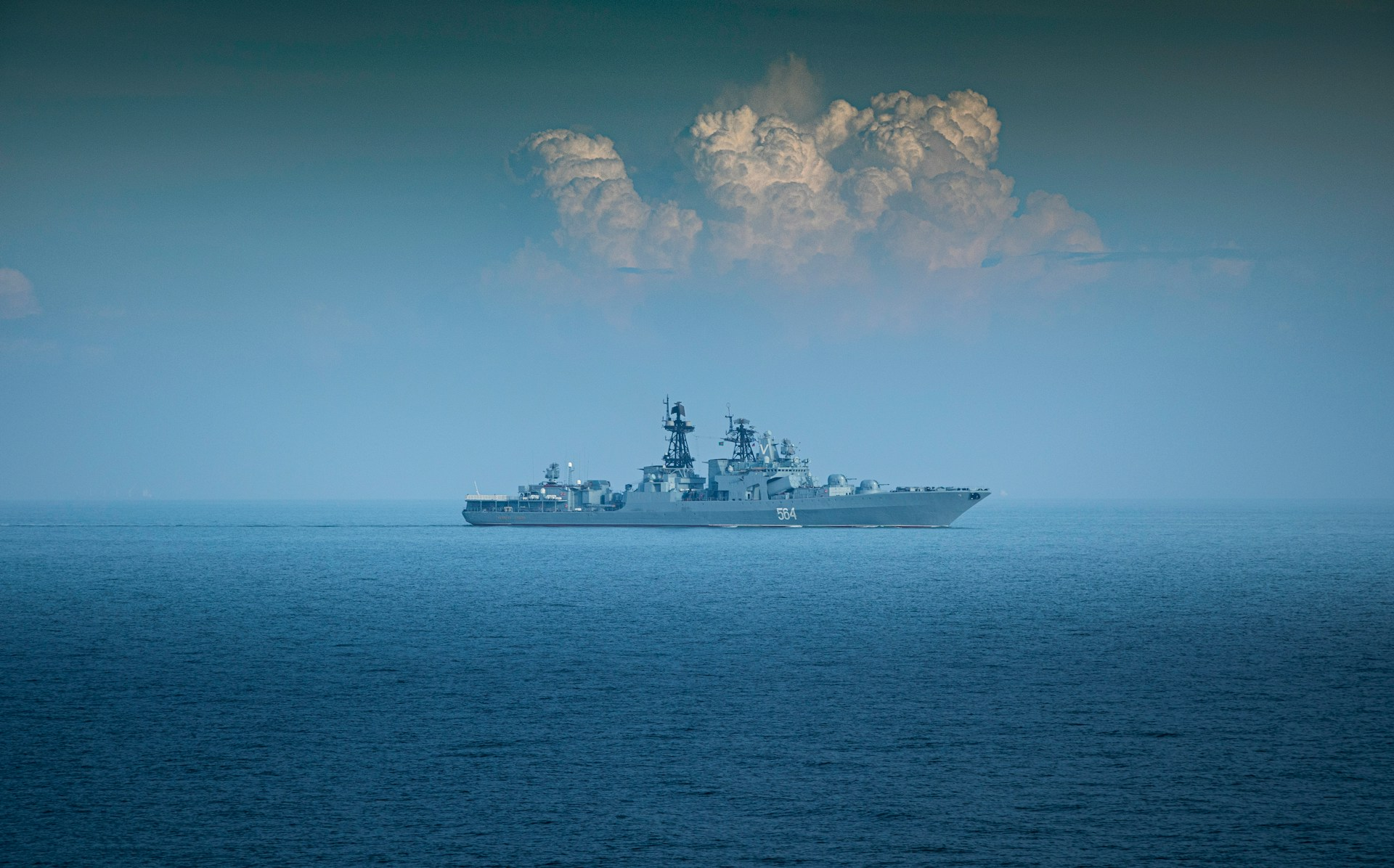
Britain will procure at least six Common Combat Vessels to replace the Royal Navy’s Type 45 destroyers, moving the future surface fleet closer to hybrid warships that coordinate uncrewed systems across air, surface, and underwater domains.
The ships are expected to enter service from the early 2030s, replacing earlier plans for a Type 83 destroyer. Rather than concentrating capability in a small number of large and expensive ships, the Royal Navy is moving toward a mixed force of crewed frigates, autonomous vessels, uncrewed sensing platforms, and new control hubs able to coordinate distributed operations.
For UK industry, the decision creates a shipbuilding and systems-integration task that reaches well beyond hull production. A vessel designed to control uncrewed systems needs robust communications, mission planning, secure datalinks, combat-system interfaces, payload management, cyber protection, and operator workstations that can support multiple offboard assets without overwhelming the crew.
The air-defence requirement remains central. The Type 45 fleet was built around high-end area air defence, and its successor cannot be reduced to a drone carrier with limited survivability. A Common Combat Vessel will need credible sensors, weapons, power generation, cooling, communications, and command systems while also creating room for offboard sensors and effectors. Balancing affordability, missile capacity, autonomy control, and crew size will be the defining design challenge.
British construction gives the programme a domestic industrial role, but it also places pressure on an already busy naval production base. UK yards and suppliers are supporting Type 26, Type 31, submarine work, fleet solid support ships, and a growing autonomy ecosystem. The Common Combat Vessel will need a clear build strategy, stable requirements, and early decisions on design authority, yard allocation, combat-system architecture, and supplier involvement.
Mission spaces will be central to the design. Air vehicles require deck handling, storage, charging or refuelling, payload preparation, maintenance access, and safe launch procedures. Surface vessels need handling systems, ramps, davits, fuel, diagnostics, and sea-state procedures. Underwater vehicles bring pressure-safe storage, cranes, charging, acoustic communications, and post-mission data recovery. A hybrid warship must support these systems in rough weather, with limited crew, while remaining a combatant in its own right.
The Royal Navy’s wider autonomy work is already building the foundations. Maritime crewed-uncrewed networking, such as recent European trials linking helicopters, drones, ships, and combat systems, shows how naval forces are trying to connect sensors and effectors across domains. UK companies are also moving maritime autonomous systems toward production, including SubSea Craft’s MARS USV. A Common Combat Vessel would need to bring that experimental work into a fleet architecture.
Software will shape the ship as much as steel. Naval platforms remain in service for decades, while autonomy, electronic warfare, data processing, and uncrewed vehicle payloads change quickly. Closed architectures would age badly. Open systems offer a route to future upgrades, but only if interface standards, cyber certification, supplier access, and testing regimes are controlled from the start.
Power and cooling margins will also determine whether the class can grow. Sensors, electronic warfare systems, servers, datalinks, future directed-energy options, and high-demand weapons all draw on electrical capacity. A design built too tightly around its initial fit would leave little room for future systems. The Type 45 experience placed availability and propulsion resilience under intense scrutiny; the next generation should not repeat avoidable margin problems.
Crew size will require careful handling. The hybrid fleet model assumes that uncrewed systems can extend reach without increasing manpower in proportion. Operating drones, managing mission data, maintaining offboard systems, supporting cyber assurance, and conducting damage control still need skilled people. A smaller crew may reduce lifecycle cost, but too much reduction can leave a ship stretched during sustained operations.
Exportability could become a useful secondary outcome if the design is kept configurable. Many navies face similar pressures around cost, crew numbers, missile inventory, and uncrewed integration. A modular British design with adaptable sensors, weapons, mission bays, and autonomy interfaces could appeal beyond the Royal Navy. A heavily bespoke ship, tightly bound to national systems, would narrow that opportunity.
The Common Combat Vessel decision puts Britain’s hybrid navy into production terms. The Royal Navy needs more sensors, more missiles, more uncrewed reach, and more fleet mass, but those ambitions will only hold if UK yards, combat-system suppliers, software teams, and autonomy manufacturers can work as a single industrial system. The concept is no longer the hard part. Building it cleanly is.