IN Brief:
- Echodyne and Allen Control Systems have signed a strategic collaboration agreement covering EchoShield radar and the Bullfrog robotic weapon station.
- The companies confirm initial integration of the two systems, with radar position and velocity data supporting Bullfrog's existing sensing capabilities.
- Both businesses have received separate JIATF-401 counter-UAS awards, but no joint procurement contract for the integrated equipment has been announced.
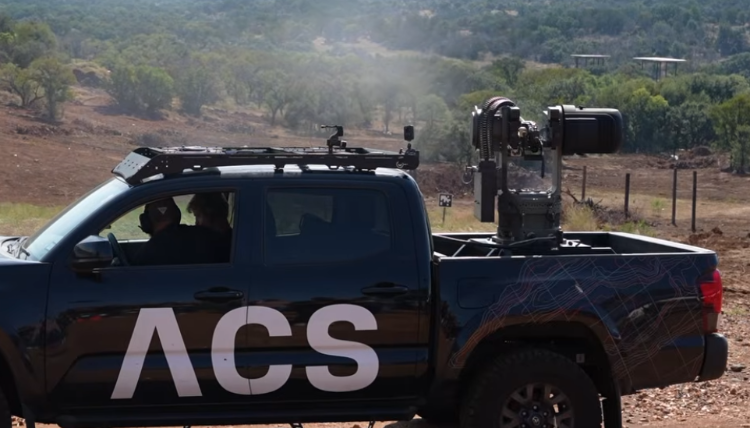
Echodyne and Allen Control Systems (ACS) have signed a strategic collaboration agreement to advance integrated counter-uncrewed aircraft systems combining EchoShield radar with the Bullfrog robotic weapon station. The companies have confirmed initial technical integration of the equipment and intend to expand their development and demonstration activities for land and maritime defence applications, bringing together radar tracking, computer vision and precision robotics.
The agreement covers cooperation between Echodyne’s radar hardware and software development programmes and ACS’s autonomous weapon station technology. EchoShield supplies information about the position and movement of objects in the airspace, while Bullfrog combines electro-optical sensing and robotic controls with existing weapon systems. Connecting the two technologies is intended to improve the information available to the weapon station as it detects and follows uncrewed aircraft. No joint procurement value, production quantity or customer delivery timetable has been disclosed.
Bullfrog was developed to provide a robotic counter-drone capability using established weapons rather than relying exclusively on purpose-built missile interceptors. Its computer vision software and mechanical control system support automated detection, identification and tracking of airborne objects, with engagement arrangements determined by the installed configuration and applicable operating controls. ACS has developed several versions using different conventional weapons, although the October announcement does not identify a specific Bullfrog variant selected for the joint demonstrations.
Echodyne’s contribution is the EchoShield radar platform, which uses its metamaterials electronically scanned array (MESA) architecture. The radar provides location and velocity information for detected objects, supporting surveillance across defined areas without relying on an entirely mechanical scanning arrangement. Its electronically controlled antenna and processing software are intended to provide repeated measurements of small, moving targets. Echodyne positions EchoShield as a compact commercial product suitable for fixed installations and platforms where available space, electrical power and equipment mass are constrained.
Radar and optical equipment provide different forms of information about the same airspace. Radar can maintain measurements of an object’s position and movement under conditions where visual observation may be constrained, while cameras can provide additional imagery for recognising and examining a target. Combining these sensing methods can reduce dependence on either source alone, although the overall performance remains subject to the individual sensors and the environment in which they operate. The companies have not published independently verified detection or tracking improvements for the combined EchoShield–Bullfrog configuration.
EchoShield’s open interfaces are intended to allow its radar information to be used by connected equipment and broader command-and-control systems. The company’s technical documentation describes networked data interfaces and support for fixed and moving installations. Integration requires the connected systems to interpret information consistently and maintain compatibility as software and hardware configurations change. The October announcement confirms successful initial integration but does not disclose the detailed software architecture or formal qualification results for the joint arrangement.
Moving platforms introduce further considerations because their orientation and position change while the radar and other sensing equipment are operating. Echodyne’s wider product architecture includes arrangements for integrating information about platform movement, supporting applications on vehicles and vessels. A completed maritime installation must also account for environmental exposure, equipment mounting and the electrical and communications systems available on the vessel. Neither company has identified a specific ship, uncrewed surface vessel or ground vehicle as the first customer installation for the combined system.
ACS’s Bullfrog has already been associated with several separate military integration programmes. In July 2026, the company announced that the US Marine Corps had selected Bullfrog for integration with its L-MADIS counter-drone capability, extending the service’s available defeat options. That programme concerns the weapon station’s use within an existing Marine Corps system and should not be confused with the newly announced Echodyne radar collaboration. No evidence has been disclosed that EchoShield has been selected as part of the earlier L-MADIS configuration.
The companies also referred to separate awards associated with Joint Interagency Task Force 401’s Domestic Shield activities and counter-UAS marketplace programmes. These initiatives support the assessment and acquisition of technologies intended to counter uncrewed aircraft threats. Echodyne and ACS identified those awards as part of the background to their collaboration, but did not announce a government procurement contract covering EchoShield and Bullfrog as a combined product. Any future customer-specific configuration or production order would require a separate commitment.
Manufacturing forms another element of the companies’ proposed approach. Echodyne describes EchoShield as a commercial off-the-shelf radar produced using established commercial materials and manufacturing processes, while ACS’s architecture incorporates conventional weapons and ammunition already present in military supply chains. The companies argue that these arrangements could offer a more economical alternative for some counter-drone requirements than specialised missile interceptors. Actual costs depend on the selected equipment, maintenance, supporting systems and operating conditions, and no independently verified cost comparison has been released for the new integration.
Eben Frankenberg, chief executive of Echodyne, identified the accuracy and continuity of sensor information as important elements of counter-drone performance. Mike Wior, ACS’s co-founder and chief executive, also emphasised the company’s approach to combining information from multiple sensors within Bullfrog. Their statements describe the objectives of the technical partnership rather than establishing that the joint system has completed military acceptance testing or entered operational service.
The next development work will focus on demonstrating and assessing the integrated equipment for potential customers across land and maritime environments. Those activities are expected to establish further information about the performance of the combined sensing architecture and its compatibility with different host platforms. Until customer orders or qualification milestones are announced, the October agreement represents completed initial integration and an industrial collaboration intended to develop the system further, rather than an approved production programme.