IN Brief:
- Babcock expects to deliver the first Type 31 frigate, HMS Venturer, in 2028.
- Additional workers and extended production shifts could support faster construction at Rosyth.
- The shipyard is progressing through a five-vessel programme while managing rework costs and delivery pressures.
Babcock International is examining ways to accelerate construction of the Royal Navy’s five Type 31 frigates at Rosyth, including additional workers and longer production shifts. The company expects to deliver the first vessel, HMS Venturer, in 2028 and is seeking to limit the effect of delays on the subsequent ships, although any substantial increase in production capacity would require additional funding.
Sir Nick Hine, chief executive of Babcock’s marine business, has acknowledged that the first ship’s delivery timetable has moved by approximately two years. The delay reflects a combination of cost pressures and problems encountered during the early stages of construction. Babcock is working to prevent that change from producing an equivalent delay across the remaining four frigates, whose construction is already progressing through successive stages.
One option under consideration involves recruiting additional personnel and introducing longer working hours at Rosyth. Increased shift coverage would allow production tasks to continue for more of each day, potentially reducing the time needed to complete work that currently follows a shorter schedule. The practicality of the change depends on the availability of suitably qualified trades, supervisors, quality assurance personnel, and supporting industrial services.
Longer production hours also create additional requirements for material supply, equipment maintenance, and coordination between trades. Shipbuilding involves many activities that must be completed in a particular sequence, with access to compartments and production areas shared between structural, mechanical, and electrical teams. Expanding one activity without matching capacity in the others can leave completed work waiting for the next stage of assembly or inspection.
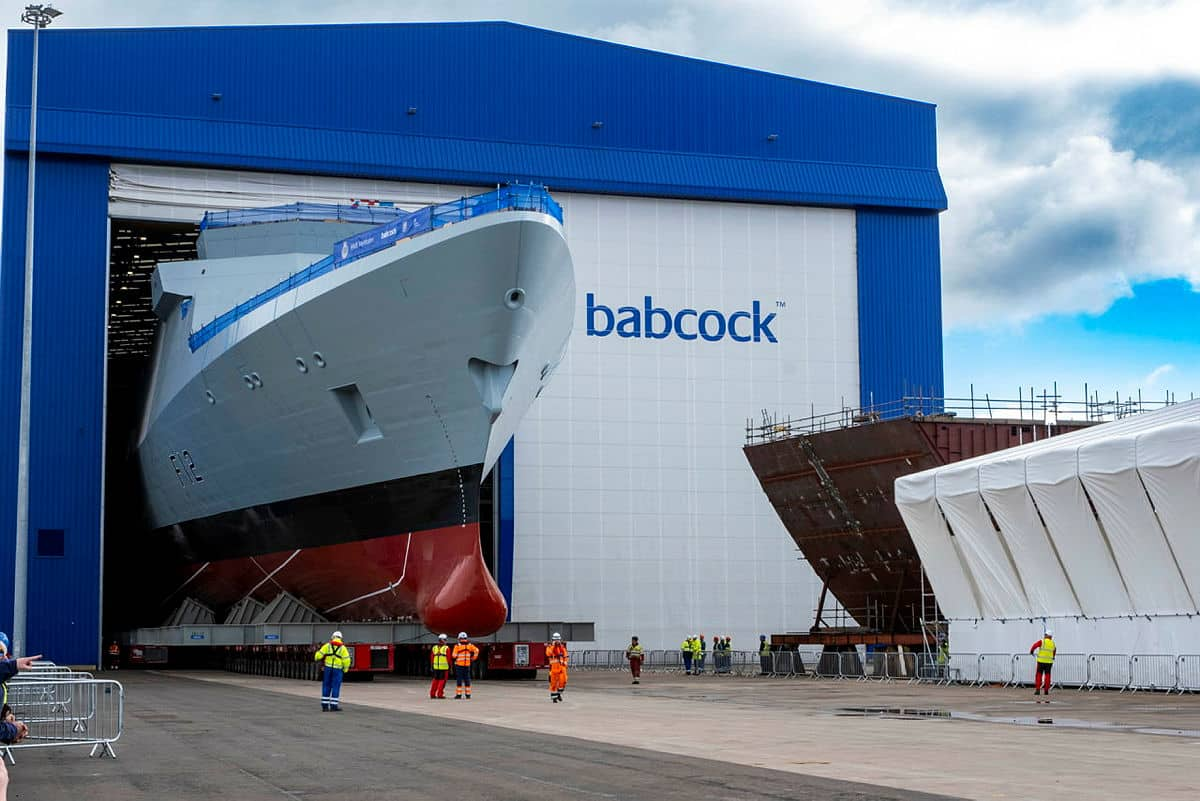
The Type 31 programme was awarded in 2019 under a £1.25 billion fixed-price contract. Babcock’s Arrowhead 140 design forms the basis of the five Inspiration-class frigates, which are intended to provide the Royal Navy with general-purpose surface combatants. Construction takes place in Rosyth’s purpose-built assembly hall, which accommodates large ship sections under cover and allows work on more than one hull to proceed within the same production environment.
The first ship, HMS Venturer, reached the water in 2025 after its principal hull assembly phase. HMS Active followed with rollout and float-off in 2026, while HMS Formidable has progressed through major block construction and keel laying. Steel cutting for HMS Bulldog began during 2026, extending the production sequence into the fourth vessel. These milestones show that several frigates are moving through the yard at different stages of completion.
A floated hull still requires extensive fitting out before delivery. Propulsion equipment, electrical distribution, piping, sensors, accommodation, communications systems, and combat equipment must be installed and integrated according to the approved design. Each system requires inspection and testing, while interfaces between different equipment groups must be verified before the ship can proceed through its later trials.
Work completed out of sequence can create additional cost and delay because access becomes more difficult as equipment and structures are installed. A component that could have been fitted before a compartment was enclosed may require more labour if installation is deferred until later in construction. Similarly, design changes introduced after assembly can involve removing or modifying work already completed, followed by additional inspection and testing.
Babcock has recorded substantial costs associated with the first two Type 31 ships, including a further £140 million charge linked to higher-than-expected rework. The company has also faced higher labour, materials, and energy costs than originally anticipated. These pressures have affected the economics of delivering the vessels under the existing fixed-price arrangement, leaving the financing of any proposed acceleration as a central programme issue.
Additional workers could help reduce the remaining construction period if sufficient tasks can be carried out in parallel. The effect would depend on the stage reached by each ship, the availability of components, and the amount of space in which separate teams can work safely. A revised shift pattern could increase equipment utilisation, but it would also require adequate inspection and supervisory capacity to maintain the approved production standards.
HMS Venturer’s expected delivery in 2028 provides the current reference point for the first ship. Delivery to the Royal Navy is a separate milestone from full operational readiness, which depends on acceptance, certification, training, and any further integration requirements. The timing of those later activities affects when the Navy can employ the ship operationally, even after the shipbuilder has completed its contractual delivery responsibilities.
The distinction is particularly important because Babcock is seeking to coordinate construction with the Navy’s ability to accept and introduce the ships. A faster shipyard programme would not necessarily shorten every subsequent step by the same amount. Acceptance activity, crew preparation, and the availability of supporting resources would need to progress alongside the revised industrial schedule if earlier construction completion were to produce earlier operational capability.
The five frigates will also require continued coordination with equipment suppliers as their individual configurations progress. Type 31 is designed around a modular naval architecture, with the Royal Navy pursuing additional combat capability through a separate equipment insertion programme. The integration of new hardware and associated control systems must be planned around the construction sequence to avoid further disruption to completed compartments and existing installations.
Rosyth’s industrial capacity extends beyond the current construction workforce. Suppliers of electrical equipment, mechanical systems, structural components, specialist materials, and engineering services support the programme across the United Kingdom. Production continuity helps those businesses retain skilled personnel and manufacturing capacity, particularly where equipment requires specialised inspection, certification, or fabrication processes.
Babcock is also pursuing international applications for the Arrowhead 140 design, including programmes involving overseas shipbuilding partners. These developments use the company’s design and systems engineering capabilities, although individual export arrangements have their own manufacturing responsibilities and delivery requirements. Sustaining shipbuilding activity at Rosyth will depend on securing further work as the existing five-vessel programme progresses towards completion.
The immediate decisions concern whether the Royal Navy and Babcock can agree a faster production and acceptance sequence, and what additional resources would be required to deliver it. HMS Venturer remains expected in 2028, while Babcock is seeking to contain delays across the wider programme. The delivery timetable for the remaining frigates will depend on the completion of construction, outfitting, testing, and subsequent acceptance activity.