IN Brief:
- NOCTIS's upgraded ZIRKA interceptor reportedly destroyed a jet-powered Geran-5 while travelling at approximately 400 km/h.
- The engagement was conducted at 3,500 metres by the Retro crew of Ukraine's Darknode Battalion.
- ZIRKA combines onboard computer vision with automated target tracking, while the upgraded aircraft's full specifications remain undisclosed.
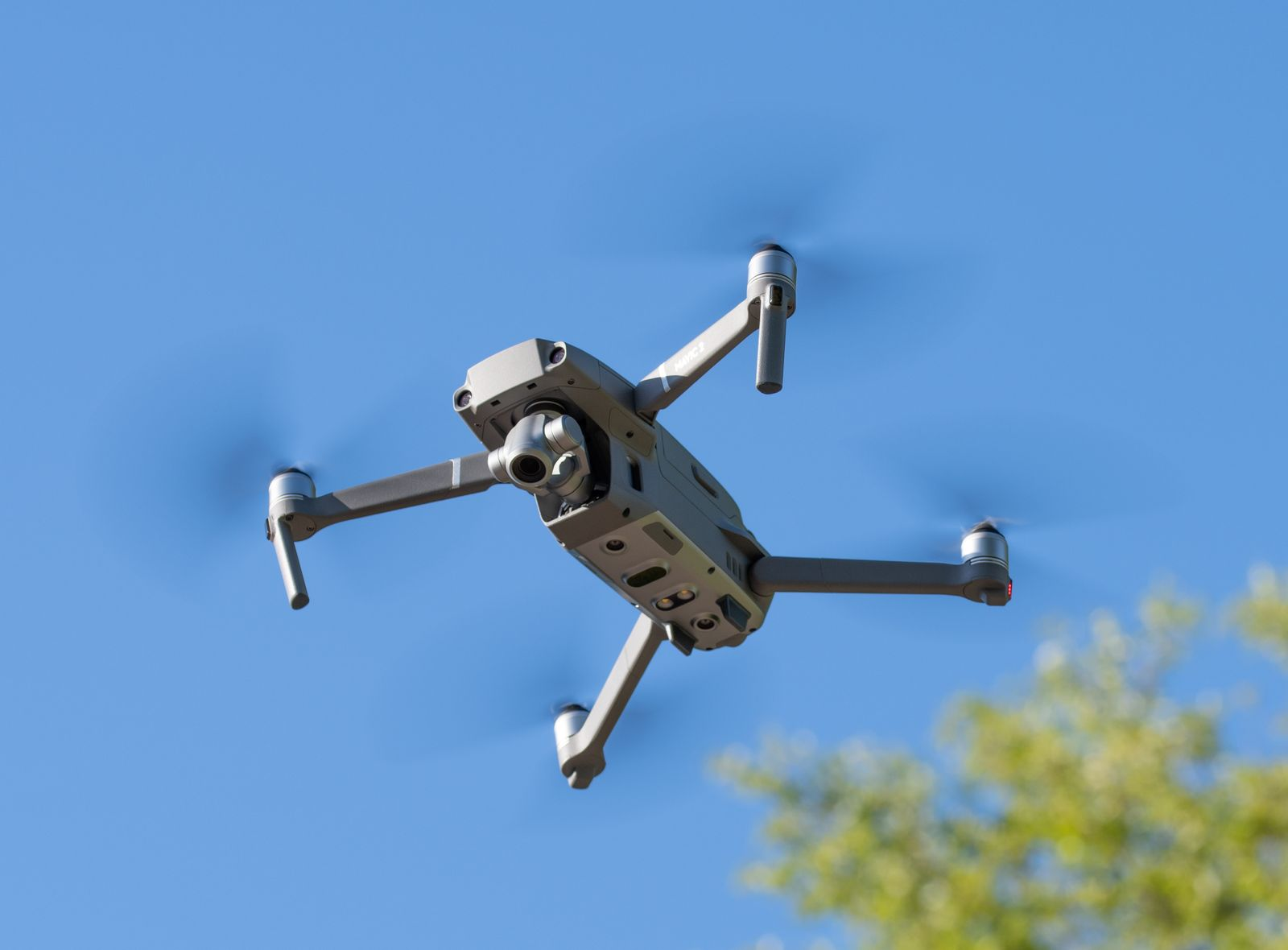
Ukrainian defence technology developer NOCTIS has recorded a high-speed interception involving its upgraded ZIRKA drone, which reportedly destroyed a jet-powered Geran-5 while travelling at approximately 400 km/h. The engagement took place at an altitude of 3,500 metres and extends the programme’s reported performance against a class of aerial targets that places considerable demands on interceptor speed and guidance.
The Retro crew of the Darknode Battalion, part of Ukraine’s 412th Nemesis Brigade, carried out the engagement. Personnel from the brigade have participated in ZIRKA’s development since its early stages, providing experience that has informed the aircraft’s operational configuration. Footage distributed through the ZRK.tech project documents the reported interception, although the upgraded aircraft’s complete technical specifications have not been released.
ZIRKA was first presented in June 2026 as a compact interceptor designed to engage hostile unmanned aircraft. NOCTIS developed the system with investment and technical assistance from Vyriy Industries, establishing a partnership combining software and aircraft development with manufacturing expertise. The initial model was described as capable of exceeding 340 km/h, operating at altitudes up to 6 km, and covering a range of 30 km with approximately 20 minutes of flight endurance.
Those specifications apply to the original aircraft. The latest engagement establishes a reported flight speed of approximately 400 km/h for the upgraded interceptor, but it does not establish the new configuration’s maximum speed, range, endurance, or propulsion specification. Performance during one engagement cannot be treated as a complete operating envelope, particularly when a target’s location and the conditions of an interception differ from those encountered during controlled testing.
ZIRKA’s guidance system was developed around onboard image processing, allowing the aircraft to detect and track suitable aerial targets using video from its sensor equipment. The original configuration used a computer based on the Raspberry Pi 5, running a trained computer vision model that examined video frames for visual characteristics associated with Shahed-type aircraft. This approach combines relatively accessible computing hardware with software developed for a specialised defence application.
Initial target detection is only the first stage of an engagement. Once an object has been identified, the tracking system must continue locating it as the aircraft move and the image changes. Relative position, apparent size, viewing angle, and background conditions can alter the information available to the software. The processing system must provide sufficiently consistent observations for the guidance arrangement to maintain the intercept approach.
The original ZIRKA design was reported capable of detecting appropriate targets at distances of up to 1 km. An operator confirmed the detected aircraft before the system continued tracking automatically, leaving the pilot to adjust closing speed during the final approach. Footage of the upgraded model suggests that optical tracking remains part of its configuration, although NOCTIS has not identified the exact sensors, processor hardware, or software revisions fitted to the aircraft involved.
That division between automated tracking and pilot control reflects the differing tasks involved in aerial interception. Image processing must maintain a target track, while aircraft guidance must account for changes in position and movement. The available time for correction becomes shorter as the aircraft close, placing demands on the responsiveness of the onboard electronics and the flight-control system.
The reported speed and altitude of the Geran-5 engagement demonstrate the conditions reached during this particular operation. They do not establish the target’s independently measured speed, the interceptor’s available manoeuvring margin, or its likelihood of success in different circumstances. Those characteristics would require additional performance data from repeated operations or controlled trials.
NOCTIS has been pursuing further autonomy through development work involving Sweden’s Saab. The programme’s stated objectives include enabling the interceptor to navigate towards an assigned area, detect a target, and complete more of the engagement process with reduced operator involvement. Such functions would extend the earlier arrangement in which the pilot confirms the target and retains responsibility for elements of the closing manoeuvre.
Autonomous navigation and target engagement require different information and control functions. Navigation concerns the aircraft’s movement towards an assigned location, while target detection and tracking rely on the interpretation of sensor information. Bringing those functions together requires the flight-control system to act on the relevant observations while maintaining the operating limits and authorisation arrangements established for the mission.
Previous development plans also identified improved thermal imaging equipment as a route to greater detection capability. Thermal sensors offer a different observation method from ordinary visible-light cameras, potentially supporting target acquisition under a wider range of lighting conditions. The manufacturer has not confirmed that this equipment was installed during the Geran-5 interception, so its planned capability should not be assigned to the aircraft shown in the latest footage.
The relationship between software development and aircraft manufacturing is central to the programme. NOCTIS is responsible for developing and supporting the interceptor technology, while Vyriy Industries has contributed investment and industrial expertise. Scaling production requires consistent assembly of airframes, electronics, propulsion equipment, and sensors, followed by checks to confirm that completed aircraft meet the intended configuration.
Changes to computing or sensing equipment can affect production as well as flight performance. An upgraded component may require new mounting arrangements, electrical connections, software integration, or testing procedures. Maintaining a repeatable configuration becomes increasingly important as a product moves beyond small development batches and towards a larger manufacturing programme.
The original ZIRKA was associated with a reported unit cost of up to $2,000. That earlier figure cannot be applied automatically to the upgraded model, whose equipment configuration and production costs have not been disclosed. More capable propulsion or sensing systems could change material requirements, while manufacturing volume and component availability would also influence the eventual price.
Previous reports described ZIRKA intercepting other jet-powered aerial targets, and the Geran-5 engagement adds another recorded example involving a fast-moving threat. The latest result does not establish an overall success rate or performance against every Geran variant. Further operating evidence will be needed to distinguish the limits of the upgraded aircraft from the conditions achieved during individual engagements.
NOCTIS and Vyriy Industries are continuing work on the interceptor’s sensing, guidance, autonomy, and production arrangements. The reported 400 km/h engagement at 3,500 metres provides a further performance milestone, while disclosure of the upgraded configuration and repeated interception results will establish how those improvements translate into a consistent production system.