IN Brief:
- CSG has made an undisclosed investment that values North Vector Dynamics above US$90 million.
- The agreement links the Canadian CM-70 interceptor programme with CSG manufacturing, integration, and international sales capabilities.
- No customer order, production rate, completed qualification programme, or delivery schedule has been announced.
North Vector Dynamics has secured a strategic investment from European defence group CSG, giving its CM-70 counter-drone interceptor access to a larger manufacturing base, systems integration expertise, and international sales channels.
The parties have not disclosed the investment value, although the transaction places the Calgary company’s valuation above US$90 million. North Vector Dynamics will retain Canadian-controlled intellectual property, design authority, and engineering responsibility, while CSG will contribute industrial capacity and access to markets across NATO and other allied countries.
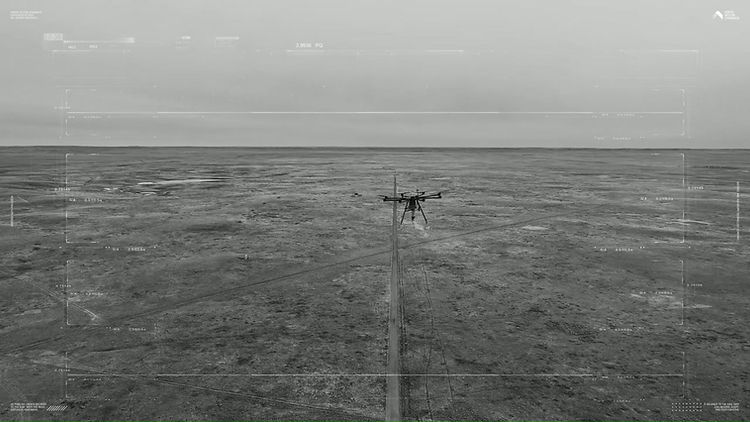
North Vector Dynamics was established in 2022 to develop air and missile defence technology. Its first commercial product is the CM-70, a compact precision-guided missile intended to intercept Group I–III uncrewed aerial systems at short range.
The company publishes a mass of 3kg, length of 0.9m, range of 3.5km, and speed of 900km/h for the interceptor. It uses semi-active laser guidance and is designed for launch from ground, vehicle, or airborne platforms. Those figures describe the company’s current product configuration rather than a customer-qualified production baseline.
The CM-70 is presented as ITAR-free, compliant with US National Defense Authorization Act requirements, and based on an open architecture. North Vector Dynamics says the system can connect with layered air defence and NATO command-and-control environments, although no completed integration programme or named operational network has been disclosed.
Development has received early funding and continuing test support from Defence Research and Development Canada, part of the Canadian Department of National Defence. The company is also working on strike and interception systems spanning different ranges, speeds, payloads, sensing methods, and propulsion technologies.
CSG brings a substantially larger industrial footprint. The group employs more than 14,000 people, operates manufacturing businesses across Europe, North America, and Asia, and reported revenue of €6.7 billion in 2025. Its portfolio includes ammunition, land systems, vehicles, radar, propulsion, air defence, and aerospace businesses.
Its North American expansion already includes a US Army contract associated with the Future Artillery Complex in Iowa, plans for a turbojet and turbofan engine plant, and the establishment of CSG Land Systems North America. The North Vector transaction adds a Canadian missile developer and sovereign design capability to that network.
The investment gives the CM-70 a more credible route towards production, but it does not remove the engineering work between a development system and an accepted military product. Manufacturing drawings, controlled suppliers, test equipment, quality plans, lot acceptance procedures, safety evidence, and configuration management must all be established before output can increase reliably.
Qualification will also depend on the launcher, guidance chain, target designation, command interface, and operating environment. An interceptor may meet its published range and speed while still requiring further work on seeker performance, warhead effects, environmental durability, electromagnetic compatibility, storage life, and integration with the customer’s detection and engagement system.
Open architecture can reduce the effort needed to connect the missile with existing sensors and command systems, but each interface still requires technical definition and verification. Data formats, timing, engagement authority, identification procedures, and cybersecurity controls have to remain consistent across the complete counter-UAS system.
Cost will receive similar scrutiny. Counter-drone procurement is increasingly shaped by the relationship between the price of the target and the price of the effector used to defeat it. North Vector Dynamics describes the CM-70 as a lower-cost alternative to conventional guided missile interceptors, but it has not published a unit price or demonstrated production cost at volume.
The ownership structure provides the Canadian developer with an alternative to an immediate sale to a foreign prime contractor. North Vector Dynamics keeps control of its design and intellectual property while gaining access to CSG factories, supplier management, integration partners, and commercial representation. Neither company has disclosed governance rights, production locations, or the future division of manufacturing work.
CSG chairman and chief executive Michal Strnad said the group intends to provide manufacturing capability and market access as well as capital. North Vector Dynamics chief executive Dr Paul Ziadé said the partnership should accelerate development and deployment of the company’s technology.
The first measurable results will come from completed trials, customer qualification, production planning, and funded orders. Until those appear, the transaction gives CM-70 an industrial route rather than an established production line. Defence manufacturing has no shortage of routes; accepted hardware leaving the factory is the part that counts.