IN Brief:
- The €15.6 million package combines investment from three funds with Portuguese Recovery and Resilience Plan support.
- Neuraspace will expand its AI platform, autonomous mission operations, proprietary sensors, and NeuraspaceDEF service.
- The company reports contracts with NATO and the Portuguese Air Force and selection by an unnamed European defence ministry.
A €15.6 million financing package will allow Neuraspace to expand its artificial intelligence platform, proprietary sensing infrastructure, autonomous mission operations, and defence-grade space awareness services.
The funding combines private investment from Lince Capital, Explorer Investments, and Armilar Venture Partners with support awarded through Portugal’s Recovery and Resilience Plan. Neuraspace has not disclosed the division between private and public funding or assigned values to the individual expansion programmes.
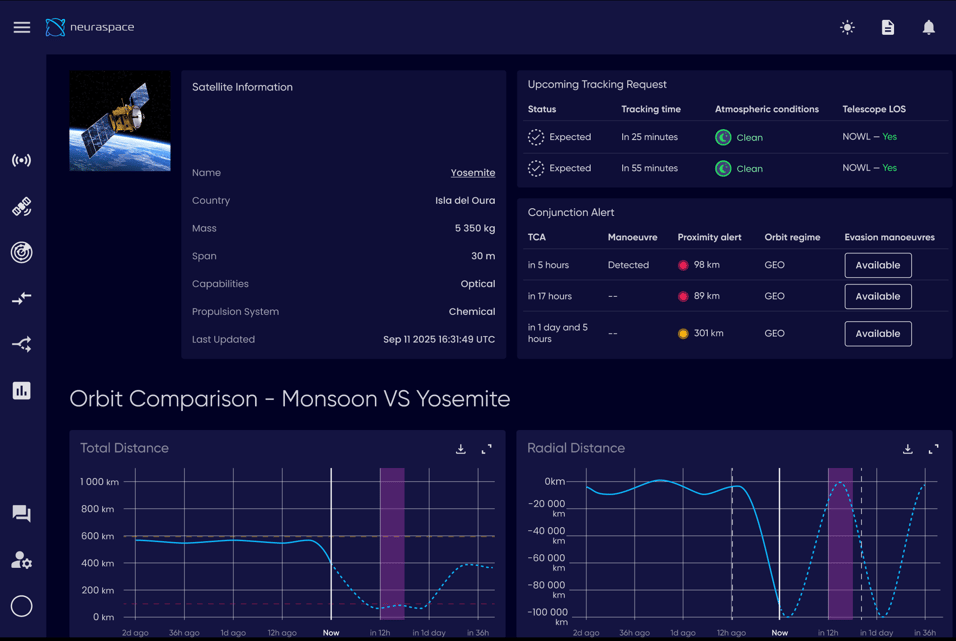
The Portugal-headquartered company provides space traffic management and space domain awareness services to commercial operators, government organisations, and defence customers. Its platform combines astrodynamics, multi-source sensor data, artificial intelligence, and operational automation to support orbit determination, collision assessment, manoeuvre planning, threat alerts, and mission decisions.
Part of the new funding will support NeuraspaceDEF, the company’s dual-use service for governmental and military users. It is intended to combine sovereign and commercial sensor observations, track objects, identify unusual behaviour, assess risk, and provide operators with information for protecting national and allied space assets.
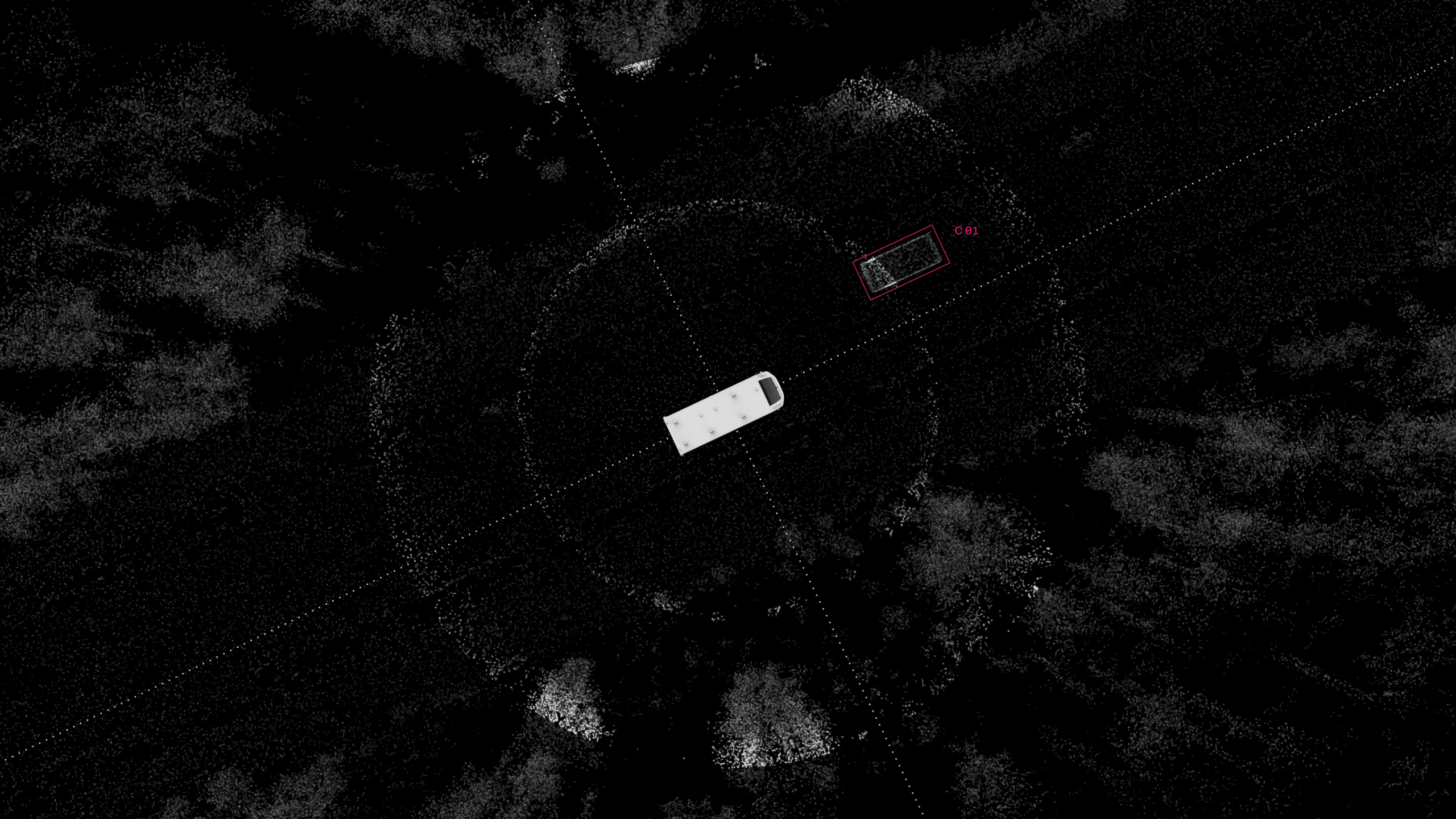
Neuraspace will also increase its own optical sensing infrastructure. Proprietary sensors reduce complete dependence on external catalogues and commercial data providers, although optical observations remain affected by weather, lighting, viewing geometry, and the position of the object in orbit.
The platform addresses those gaps by combining observations from several sources rather than relying on one telescope or sensing method. Data fusion is used to refine orbital tracks, compare predicted and observed behaviour, and maintain confidence in an object’s location as it passes beyond the view of an individual sensor.
Neuraspace says it currently monitors more than 600 satellites for customers including the European Space Agency, Spire Global, GEOSAT, NanoAvionics, Sidus Space, and U-Space. It reported revenue growth of more than 350% over the previous year, although the financing announcement did not provide an underlying revenue figure.
The company also reports contracts with NATO and the Portuguese Air Force. It said it has more recently been selected as prime contractor by an unnamed European defence ministry, but did not identify the customer, programme value, scope, delivery schedule, or operational requirement.
Space traffic management and military space awareness use many of the same engineering foundations. Both depend on accurate orbit determination, persistent tracking, reliable sensor data, and rapid assessment of manoeuvres or conjunctions. Defence users must additionally consider deliberate interference, non-cooperative behaviour, jamming, spoofing, cyberattack, and activity directed against spacecraft or ground systems.
The growing volume of observations makes automation increasingly necessary. More sensors can improve coverage, but they also generate larger numbers of tracks, alerts, and possible correlations. Operators need systems that can prioritise events, show the evidence behind an assessment, and distinguish a meaningful change from poor-quality data or an expected orbital manoeuvre.
Artificial intelligence can assist with that workload, but military adoption will depend on explainable results and controlled decision authority. An algorithm may identify anomalous behaviour or recommend a manoeuvre; responsibility for acting on that recommendation remains with an authorised operator who can understand the data quality and operational consequences.
The same assurance requirement applies to autonomous mission operations. Automated planning can reduce response time and routine workload, particularly where satellite fleets are large, but it must account for fuel, mission priorities, collision probability, communications availability, and the risk created by moving into another object’s path.
Cybersecurity extends across the platform, sensor network, data links, customer interfaces, and operational software. Compromised observations or manipulated orbital data could produce false alerts, conceal activity, or trigger unnecessary manoeuvres. Secure provenance and access controls are therefore as important as the accuracy of the underlying orbit calculations.
European governments have been seeking greater control over the data and infrastructure used to monitor space activity. Neuraspace’s combination of European ownership, proprietary sensors, commercial services, and defence contracts places it within that sovereignty effort, although the financing announcement does not quantify how much additional sensing coverage the investment will create.
Chief executive Chiara Manfletti said the company’s original focus on space safety has expanded as accidental risks and intentional threats have converged. The funding programme reflects that overlap by developing commercial traffic management, defence awareness, sensors, and autonomous operations within the same technical platform.
The financing provides capital for expansion, but operational capacity will be measured through installed sensors, track quality, service availability, accepted defence programmes, and response performance. Space awareness is produced by observations that can be trusted quickly enough to influence a decision; the size of the funding round is only the opening figure.