
IN Brief:
- Raytheon has completed a $50m, 17,000-square-foot expansion at its Forest, Mississippi, manufacturing site.
- The additional capacity supports Next Generation Jammer Mid-Band production, testing, integration, and other airborne radar programmes.
- Forest now provides 445,000 square feet of manufacturing space, with 100 additional skilled jobs planned by 2028.
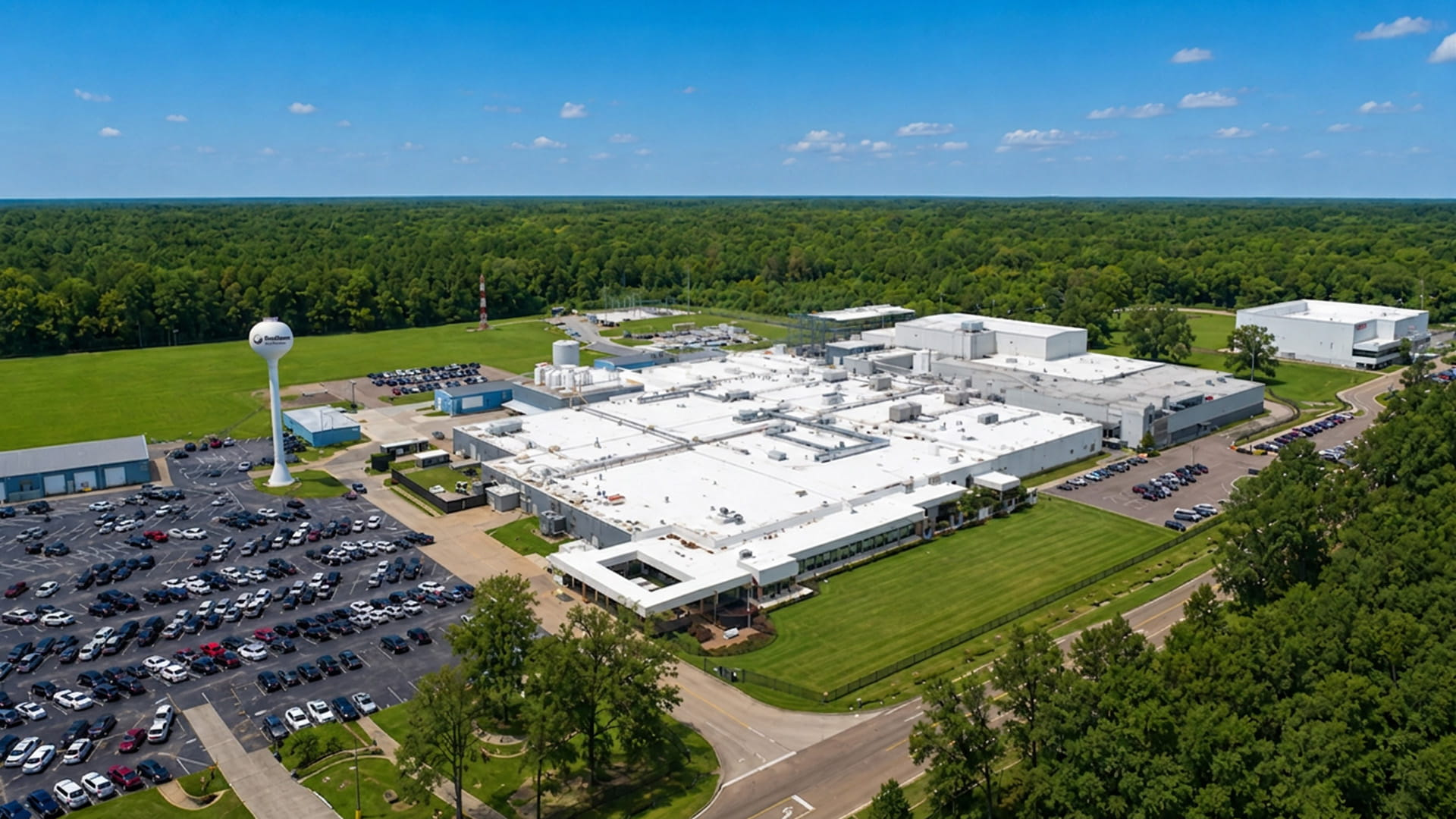
Raytheon has completed a $50 million expansion of its manufacturing facility in Forest, Mississippi, adding production, test, and integration capacity for airborne radar and electronic-warfare systems as several military programmes move through sustained production.
The project adds 17,000 square feet to the site and takes the Forest operation to approximately 445,000 square feet of manufacturing space. Raytheon expects the expansion to create 100 skilled jobs by 2028.
Raytheon will use the new capacity as a hub for production, testing, and integration of Next Generation Jammer Mid-Band pods for the US Navy and Australian government, alongside other airborne radar programmes.
The investment is the third substantial addition at Forest over the past decade. A 20,000-square-foot extension was completed in 2013, followed by a 50,000-square-foot radar production and test facility in 2020, taking cumulative capital investment across the three projects to around $280 million.
Next Generation Jammer Mid-Band is one of the more demanding products passing through the site. Developed for the EA-18G Growler, the pod replaces part of the ageing ALQ-99 electronic-attack architecture and uses active electronically scanned array technology, digital processing, and high-power radio-frequency equipment to disrupt hostile emitters.
Production therefore extends well beyond mechanical assembly. A completed pod combines antennas, RF electronics, power supplies, cooling, processing hardware, software, structural components, and aircraft interfaces that have to operate reliably under vibration, temperature variation, electromagnetic interference, and the aerodynamic loads associated with carriage on a combat aircraft.
Testing and integration capacity can become as restrictive as manufacturing floor space once output increases. Electronic-warfare equipment has to demonstrate transmit and receive performance, processing behaviour, software configuration, and compatibility with the host aircraft before it can move through customer acceptance.
The Forest expansion gives Raytheon additional room around those processes rather than simply increasing the number of workstations available for assembly. Production hardware can only leave the plant at the rate at which it can be integrated, inspected, tested, corrected, and accepted, making test infrastructure part of the effective manufacturing capacity.
The Australian requirement adds another customer to the NGJ-MB production stream. Australia operates the EA-18G Growler alongside the US Navy, providing equipment commonality between the two fleets while still requiring separate customer configuration, acceptance, documentation, and delivery management.
Airborne radar brings a related manufacturing challenge. Radar arrays and their supporting electronics require controlled production of high-value components, repeatable RF performance, thermal management, and extensive functional testing, while software and hardware configurations have to remain synchronised as systems are upgraded.
Raytheon has been expanding radar capacity elsewhere in its US manufacturing network as well. Its SPY-6 operation is also being scaled for higher output, reflecting a wider shift from development-led radar programmes towards larger production and delivery commitments.
The constraints are not confined to the prime contractor’s factories. Radar and electronic-warfare systems depend on semiconductor devices, RF components, specialist materials, power electronics, machined structures, connectors, cables, and thermal-management equipment sourced through a supplier base that has to increase output without eroding qualification standards.
Workforce capacity is similarly difficult to add instantly. Raytheon’s plan for 100 additional posts implies demand for technicians, engineers, assemblers, test personnel, quality specialists, and production-support staff whose experience affects yield and throughput once complex electronic assemblies enter serial manufacture.
The Forest site has now been expanded three times rather than replaced by a single purpose-built facility. That incremental approach allows new capacity to be added around an established workforce and existing production infrastructure, but it also means new processes have to integrate with plant layouts and equipment accumulated across several programme generations.
Electronic-warfare systems also carry a long support requirement after initial delivery. Threat libraries, software, hardware configurations, and mission requirements continue to evolve, so the production and test infrastructure used for new equipment can remain important for repairs, modifications, upgrades, and requalification throughout the product’s service life.
With construction complete, the capital project now gives way to the less visible production task. Forest has another 17,000 square feet and a larger workforce planned, but the useful measure will be how quickly qualified radar and jammer hardware moves through integration, test, customer acceptance, and delivery as programme demand builds towards 2028.
