IN Brief:
- Rheinmetall has received a €1.04bn gross order for additional Bundeswehr IdZ-ES soldier systems.
- The contract covers modernisation and 237 additional platoon systems, with delivery from November 2027 to December 2029.
- Rheinmetall will coordinate more than 30 subcontractors across IT, optics, optronics, protection, clothing, and carrying equipment.
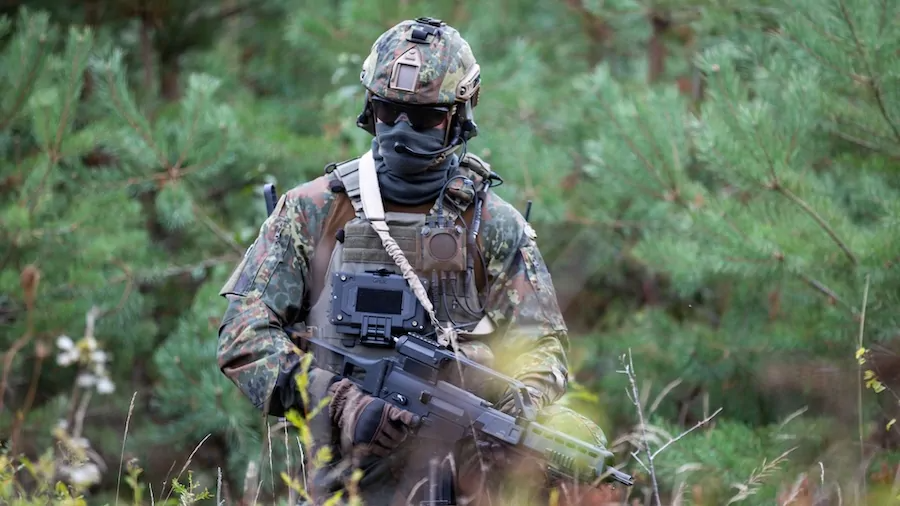
Rheinmetall has secured a €1.04bn gross order from the Bundeswehr to modernise and expand Germany’s Infantry Soldier of the Future – Enhanced System, known as IdZ-ES.
The order was placed by the Federal Office of Bundeswehr Equipment, Information Technology and In-Service Support under a wider framework agreement signed in February 2025. It covers the modernisation of existing systems and delivery of 237 additional platoon systems, with deliveries scheduled from November 2027 to December 2029.
The new order will equip an additional 8,600 soldiers. Once delivered, the Bundeswehr will have 353 platoon systems comprising more than 12,000 individual equipment sets. Rheinmetall expects the order to be booked in its second-quarter 2026 intake.
Each platoon system mainly comprises 35 individual soldier systems plus peripheral platoon equipment. The package includes advanced IT equipment, optics, optronics, military clothing, protection, and carrying systems. Rheinmetall is acting as general contractor and will coordinate more than 30 subcontractors.
Networked soldier production
IdZ-ES is not a single item of equipment. It is a networked architecture combining hardware, software, sensors, communications, protective equipment, power systems, and vehicle interfaces.
That structure pushes production closer to a platform programme than a conventional personal equipment order. Suppliers have to deliver components that work individually, survive field use, and remain interoperable inside a broader digital battlefield network. Electronics and software also require obsolescence management over a service life that can exceed the commercial lifespan of many components.
The latest configuration removes technically obsolete elements and prepares the system for connection to Germany’s D-LBO land operations information and communication network. That makes production more demanding, but it also ties the soldier system into the data architecture linking dismounted troops, vehicles, sensors, and command networks.
Subcontractor coordination at scale
Coordinating more than 30 subcontractors gives Rheinmetall a substantial systems integration task. Electronic devices, optics, optronics, clothing, protective equipment, and load-carrying systems all need to arrive on schedule and remain under configuration control across hundreds of platoon sets.
The delivery window from late 2027 to late 2029 gives industry a defined ramp, but soldier systems are exposed to component supply, software maturity, test capacity, and user-driven changes late in the programme. The equipment also has to remain practical for infantry use, where weight, ergonomics, battery burden, and reliability quickly determine whether digital capability survives contact with the field.
The IdZ-ES order shows how future infantry equipment is being bought as an integrated system rather than as separate clothing, optics, radios, and protection lines. That shift brings land forces closer to platform-style procurement, with the industrial discipline that model requires.