IN Brief:
- LIFT Airborne Technologies has received an $83.4m indefinite-delivery contract ceiling extending to October 2036.
- The programme covers further engineering, qualification, manufacturing, and fielding of fixed-wing aircrew helmets.
- Approximately $4.1m in research and development funding has been obligated initially, with later orders determining additional expenditure.
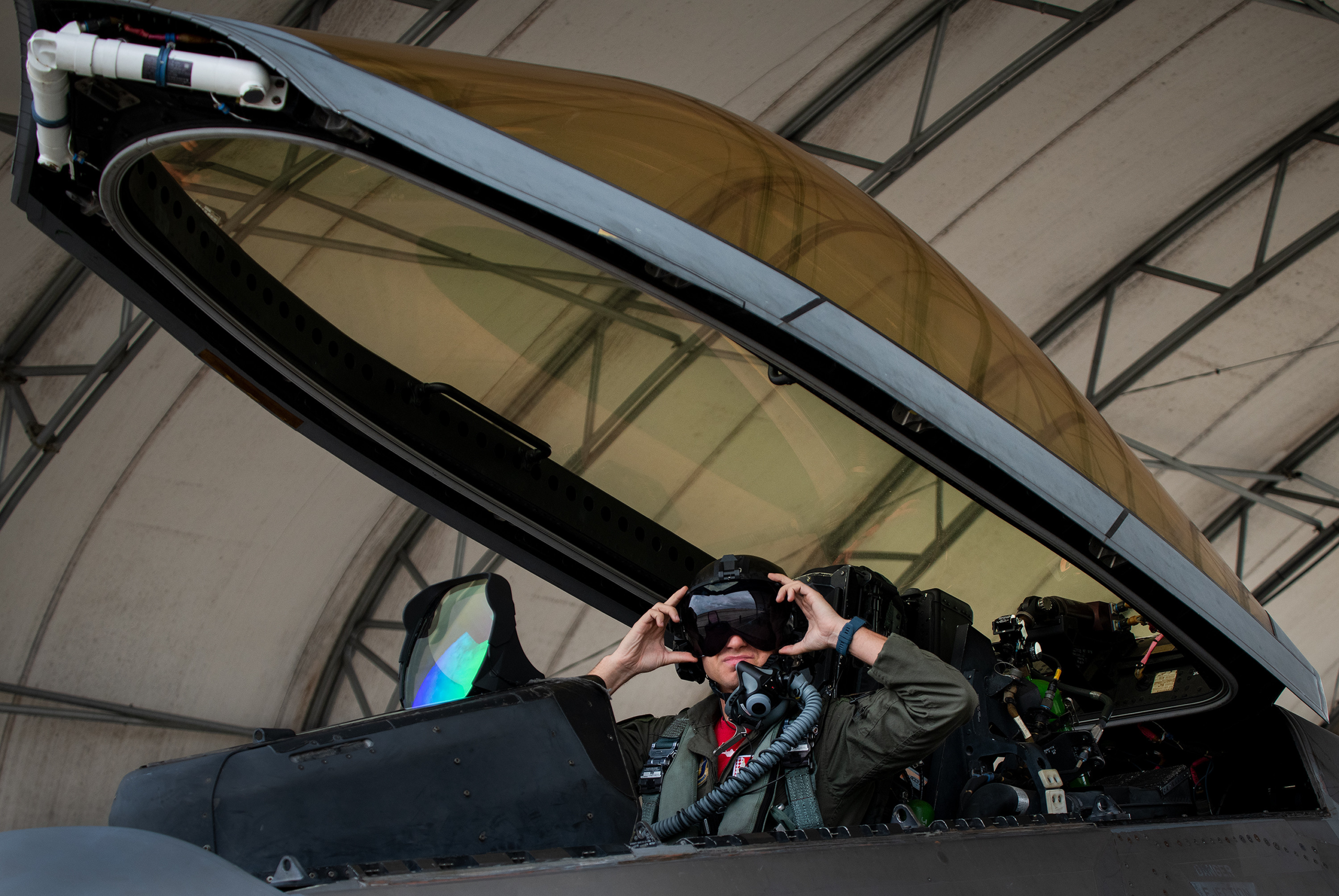
LIFT Airborne Technologies has secured an $83.4 million US Air Force indefinite-delivery contract covering further development, qualification, production, and fielding of next-generation fixed-wing aircrew helmets. The agreement establishes a ten-year procurement framework for equipment intended to improve pilot protection, fit, stability, and compatibility with modern aircraft systems.
The contract, FA8606-27-D-B002, was awarded by the Air Force Life Cycle Management Center at Wright-Patterson Air Force Base, Ohio. Work will be performed in Carson City, Nevada, with completion expected by 30 October 2036. The $83.4 million represents the maximum contractual ceiling, while $4,095,959 in fiscal 2026 research, development, test, and evaluation funding was obligated at award.
The acquisition follows earlier Air Force work to replace the HGU-55 family of fixed-wing aircrew helmets, whose underlying design dates from the 1980s. LIFT was selected in 2022 to continue prototype development after the service evaluated competing concepts. The programme was established to improve protective performance and fit while accommodating the additional equipment now carried by military pilots.
Existing helmets have been adapted over time to support visors, oxygen masks, communications equipment, and other accessories. The addition of head-mounted systems can increase mass and change the way that weight is distributed around the pilot’s head. The Air Force identified those effects as contributors to discomfort and neck strain, particularly during long sorties and manoeuvres involving increased acceleration.
Helmet balance is influenced by the location of attached equipment as well as its total weight. A component positioned away from the head’s centre of rotation creates a turning moment, increasing the effort required to maintain or change head position. Reducing mass can help, but the placement of equipment, the retention system, and the way the helmet fits the wearer also influence stability.
The Air Force’s original requirements therefore combined weight reduction with improved centre-of-gravity characteristics, protection, and accommodation of different aircrew dimensions. A helmet intended for a broad population must remain properly positioned while allowing the wearer to adjust the fit and operate the associated breathing and communications equipment.
LIFT’s development work has produced the AV2.2 next-generation fixed-wing helmet design, which uses a carbon fibre shell and a protective liner combining expanded polystyrene with Koroyd impact-absorbing elements. The shell provides the principal structural enclosure, while the liner is designed to manage impact energy transmitted towards the head. The published arrangement also incorporates airflow paths intended to improve ventilation.
Helmet protection depends on these components functioning together. A shell distributes loads and provides a mounting structure, while the liner manages energy through its material characteristics and geometry. The retention and fitting arrangements must keep the protective system correctly positioned during normal operation and under the conditions specified for qualification testing.
The AV2.2 design includes an adjustable rear retention arrangement that allows the wearer to tighten or loosen the fit. LIFT also identifies an occipital support system intended to reduce unwanted helmet movement, together with interchangeable comfort liners. These features address variations in head dimensions while maintaining the relationship between the protective shell, liner, and attached equipment.
Oxygen-mask compatibility is another design requirement. The manufacturer’s published arrangement uses adjustable bayonet receivers, providing a means of positioning the mask attachments without modifying the helmet shell. Their range of adjustment accommodates differences in facial dimensions, while the complete installation must still be assessed against the applicable breathing equipment and aircraft requirements.
The visor and communications arrangements introduce further integration constraints. A visor must provide the specified level of protection while remaining usable throughout the pilot’s normal range of movement. Communications equipment must fit within the helmet without compromising the retention and protective systems. Changes to any of these elements can alter the complete assembly’s balance, comfort, or performance.
Developmental testing has examined the equipment under representative flying conditions. In 2023, pilots from the 301st Fighter Squadron evaluated LIFT’s next-generation helmet during F-22A Raptor operations at Eglin Air Force Base. Engineers from the 46th Test Squadron and 28th Test and Evaluation Squadron assessed pilot feedback concerning wearability, visibility, communications, and the handling of helmet-mounted equipment.
The F-22 trials formed part of the helmet’s development history rather than confirmation of fleet-wide qualification. Pilot feedback provides information about characteristics that can be difficult to establish through laboratory measurements alone, while formal qualification requires evidence against the applicable protective, environmental, and aircraft integration requirements.
LIFT has reported further testing of its helmet technology, including ejection sled assessments and evaluations against military standards. Those results describe the manufacturer’s development programme and published product configuration. The October contract does not specify an individual helmet variant or establish that every feature described for AV2.2 will be included in all equipment ultimately supplied to the Air Force.
Qualification for military flying equipment must account for impact protection, emergency escape conditions, communications compatibility, environmental exposure, and the operation of associated life-support systems. A component change can require additional testing if it affects the qualified configuration, particularly where different aircraft types use different cockpit equipment or operating procedures.
The new award follows the Small Business Innovation Research Phase III acquisition route, which allows earlier development work to progress into further engineering and procurement. Its scope includes delta development, qualification, production, and fielding. Individual orders will determine the timing and extent of those activities, while the initial funding supports the programme’s immediate research and development requirements.
The Air Force has not identified a total helmet quantity, a complete distribution schedule, or the proportion of the contract ceiling expected to be used. The earlier replacement programme excluded F-35 pilots, who use a separate specialised helmet system, and had envisaged a phased introduction across other fixed-wing aircraft. The latest award does not establish a revised aircraft-by-aircraft allocation.
Manufacturing will also require control of material properties, dimensional tolerances, assembly processes, and the configuration of the protective equipment. Qualified production hardware must remain consistent with the design evaluated during testing, including the interfaces used to attach visors, breathing equipment, and communications accessories.
The ten-year agreement provides a contractual route for LIFT’s helmet programme through October 2036. Further development and qualification activity will establish the configurations approved for production and introduction into service, while subsequent orders will determine actual manufacturing quantities and expenditure beyond the initial $4.1 million commitment.