IN Brief:
- Airbus will lead Spain’s Integrated Combat Training System to replace the Air and Space Force’s F-5 fleet.
- The SAETA II will be based on Turkish Aerospace’s Hürjet platform and adapted for Spanish requirements.
- The programme includes 60% Spanish industrial participation across aircraft conversion, simulators, sustainment, and mission systems.
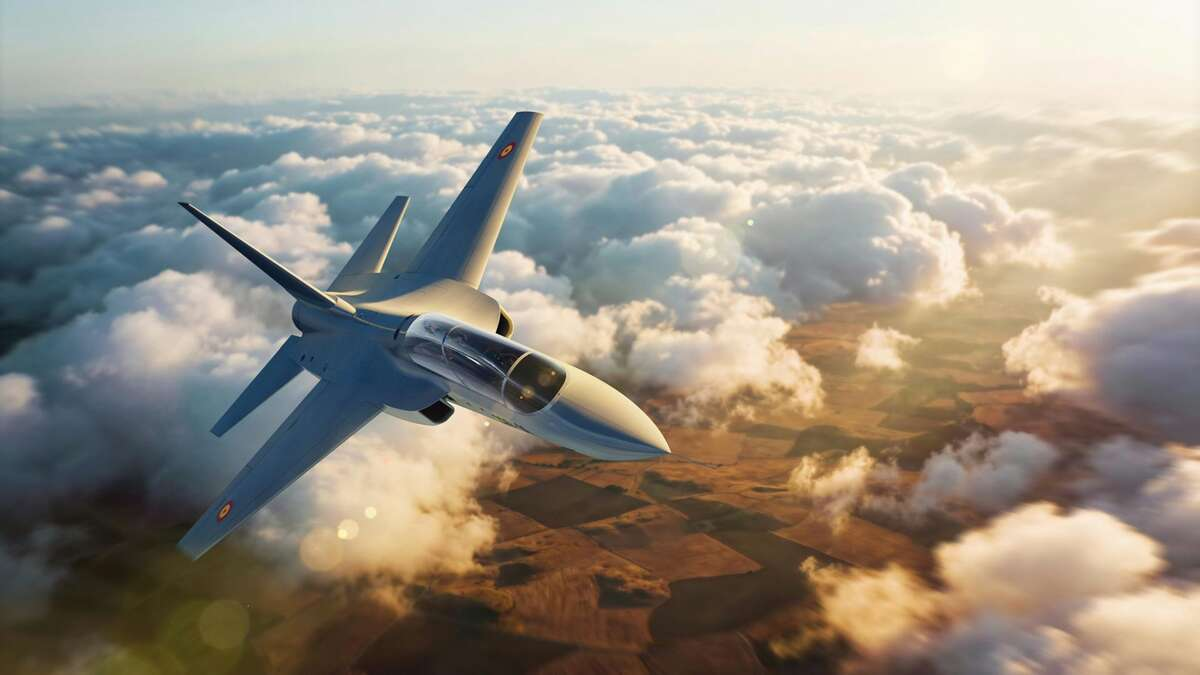
Airbus will lead Spain’s new Integrated Combat Training System, a national programme intended to replace the Spanish Air and Space Force’s F-5 fleet and modernise advanced fighter pilot training.
The programme is based on a co-development agreement between Airbus and Turkish Aerospace, with the Hürjet advanced jet trainer forming the basis of the Spanish SAETA II. The aircraft will be customised to Spanish requirements and supported by an integrated training architecture covering aircraft, simulators, operations, maintenance, and support.
Spain has set a 60% national industrial participation target for the programme. Airbus will act as prime contractor, leading conversion and systems integration, while Turkish Aerospace will provide the baseline Hürjet aircraft.
The system also includes the redesign of the Fighter and Strike School Training Centre at Talavera la Real Air Base in Extremadura. Indra is involved in simulator development, while other Spanish companies are expected to contribute across communications, avionics, training systems, mission equipment, and support.
Conversion work anchors the programme
The industrial core is the conversion of a foreign baseline aircraft into a Spanish training system. That involves avionics, mission systems, communications, flight training tools, ground-based training equipment, and sustainment arrangements aligned to Spanish operational requirements.
The work creates demand across aircraft integration, electronics, simulation, datalinks, maintenance engineering, training infrastructure, and mission support. The aircraft, synthetic training environment, and air base infrastructure must mature together if the programme is to avoid a split between flying hardware and usable training capacity.
Training aircraft become sovereign infrastructure
Advanced pilot training now sits directly between front-line fighter operations, future combat air systems, and national force generation. A modern trainer must replicate sensors, weapons employment, datalinks, electronic warfare pressure, and contested airspace conditions closely enough to prepare pilots for operational aircraft.
The SAETA II programme gives Spain a domestic integration and sustainment base rather than a simple aircraft purchase. It also creates a potential export reference point if the Spanish configuration can combine Hürjet performance, Airbus integration, and national workshare into a competitive training system.